
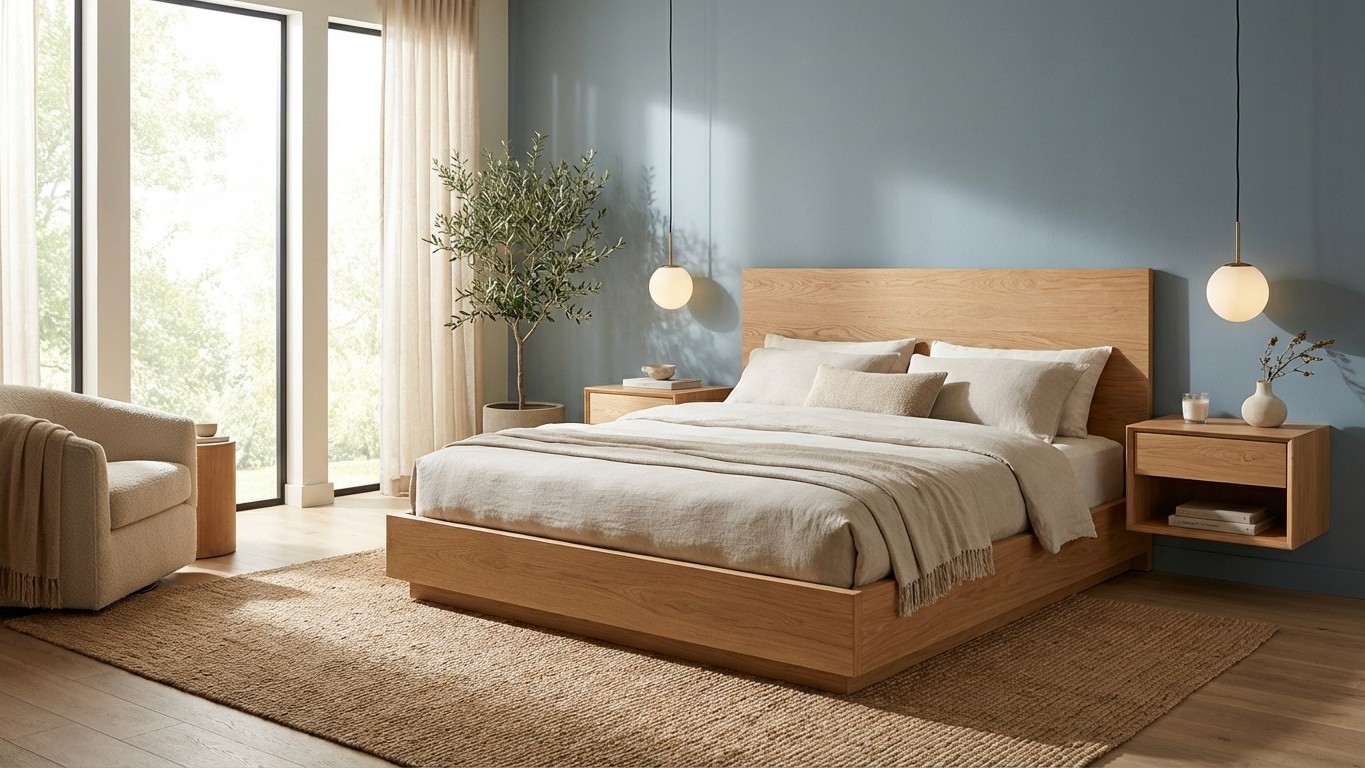
For years, I pushed my bed against the wall, thinking it maximized space and created a cozy sleeping nook. Like millions of others, I assumed this was the smart layout choice for smaller bedrooms. Then I learned about the fundamental rule of bed placement that interior designers and sleep specialists have been advocating for decades: your bed should be accessible from both sides, positioned away from walls whenever possible.
This revelation completely transformed not just my bedroom’s functionality, but the quality of my sleep and daily routines. The science behind proper bed positioning combines ergonomics, psychology, and practical living considerations that most people never consider when arranging their sleeping space.
The Psychology and Science of Bed Placement
When your bed sits in the center of a room or away from walls, it creates what sleep psychologists call “command position.” This placement allows you to see the bedroom entrance while lying down, triggering a subconscious sense of security that promotes deeper sleep. Our brains are evolutionarily wired to feel more relaxed when we can monitor our environment, even during rest.
The positioning also affects air circulation around your sleeping area. Mattresses and bedding need airflow to regulate temperature and prevent moisture buildup. When one side of your bed is pressed against a wall, you create a microclimate that can trap heat and humidity, potentially affecting sleep comfort and mattress longevity.
From a practical standpoint, accessible bed sides transform your morning and evening routines. No more climbing over your partner to get up during the night, no more struggling to change sheets on the wall side, and no more feeling trapped in a corner when you wake up. The psychological impact of this simple change extends beyond sleep, creating a sense of spaciousness and intentional design in your bedroom.
Maximizing Small Spaces Without Sacrificing Functionality
The most common objection to center bed placement is space constraints. However, design experts have developed strategies that prove you can maintain functionality even in compact bedrooms. The key lies in understanding that floor space and visual space operate differently in interior design.
Consider positioning your bed diagonally in smaller rooms, which often provides the necessary clearance on both sides while creating an unexpectedly dynamic visual element. This arrangement can actually make a room feel larger by breaking up the predictable rectangular layout that most people default to.
Another approach involves floating the bed just slightly away from the wall – even six to twelve inches creates the beneficial air circulation and accessibility while preserving most of your floor space. This minimal separation allows for easier sheet changing and cleaning while maintaining the room’s proportional balance.
For truly cramped quarters, prioritize which side needs full access. If one person primarily uses the bed, ensure their dominant side has clear access while the other side can remain closer to the wall. This compromise still provides most of the functional benefits while acknowledging space limitations.
Creating Balance Through Strategic Furniture Placement
When you move your bed away from walls, you create opportunities for more intentional furniture arrangement. Nightstands become functional anchors on both sides, providing symmetry and practical storage. This balanced approach creates what designers call “visual weight distribution” – your eye naturally appreciates the equilibrium of matching elements.
The space behind a centered bed can serve multiple purposes depending on your room’s proportions. A narrow console table can provide display space and hidden storage, while still maintaining the open feeling that makes centered bed placement so effective. Some people discover that this back-of-bed area becomes perfect for a reading chair or vanity, creating distinct zones within the bedroom.
Lighting considerations also improve with proper bed placement. When your bed isn’t shoved against a wall, you can install balanced lighting solutions – matching wall sconces, pendant lights, or table lamps that create ambient illumination from multiple angles. This layered lighting approach contributes to the room’s overall sophistication and functionality.
Implementation and Long-term Benefits
Making this transition requires some planning, especially if you’ve organized your entire bedroom around wall-mounted bed placement. Start by measuring your room and experimenting with different positions before committing to a new layout. Many people are surprised to discover their bedrooms can accommodate centered placement more easily than initially assumed.
The long-term benefits extend beyond immediate comfort improvements. Proper bed positioning often leads to better bedroom maintenance habits – it’s easier to vacuum, dust, and organize when you can access all areas of your sleeping space. The psychological impact of a well-designed bedroom also contributes to better sleep hygiene and overall bedroom satisfaction.
Most importantly, this simple positioning change often serves as a catalyst for broader bedroom improvements. When you experience how much better a thoughtfully placed bed feels, you become more intentional about other design decisions, creating a cascade effect that transforms your entire sleeping environment into a true sanctuary.