
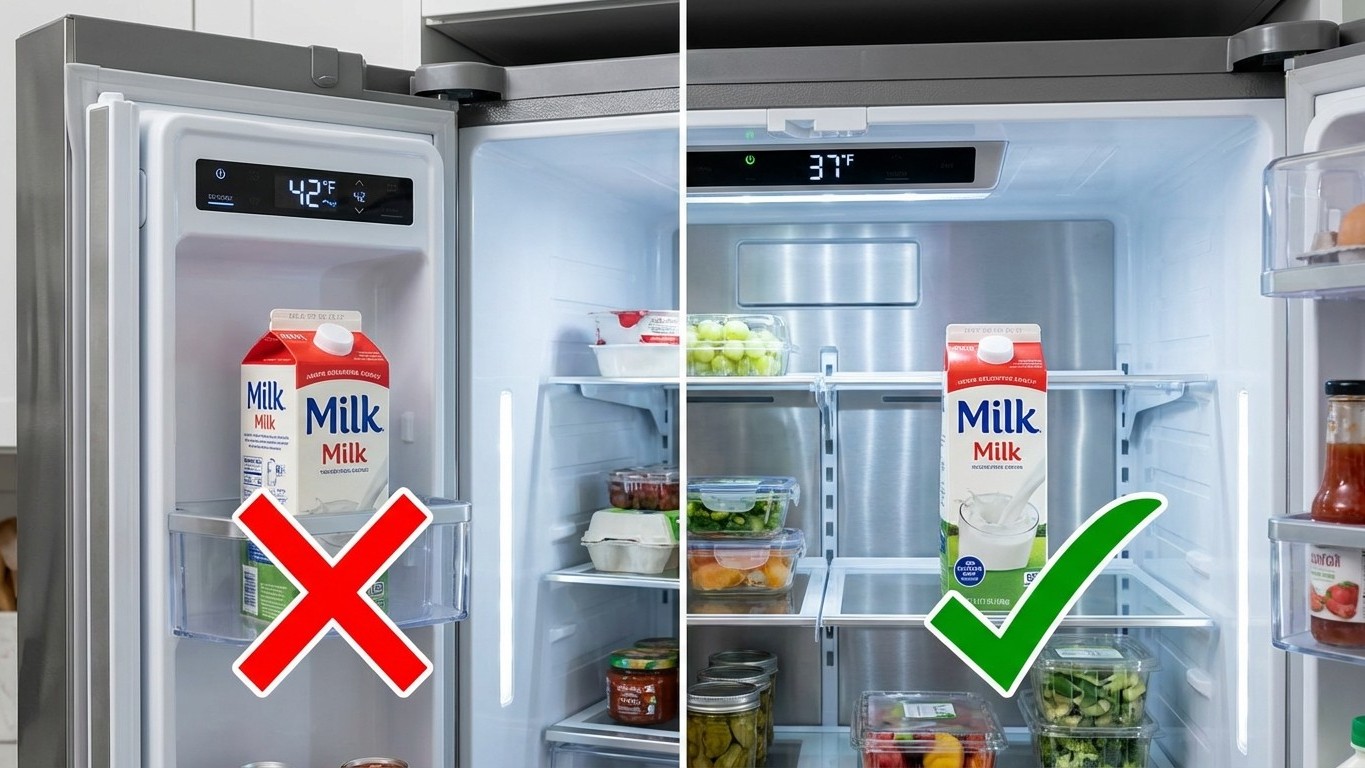
For decades, millions of households have been making the same refrigeration mistake without realizing it. The convenient door compartments of our refrigerators, seemingly designed for milk jugs and cartons, are actually the worst possible location for dairy storage. This widespread habit could be shortening your milk’s lifespan by several days and compromising both taste and safety.
The revelation becomes clear once you understand the science behind refrigerator temperature zones. While we tend to think of our fridges as uniformly cold environments, they’re actually complex ecosystems with significant temperature variations. The door, despite its accessibility and apparent logic as a storage spot, experiences the most dramatic temperature fluctuations in the entire appliance.
Every time you open your refrigerator door, which the average household does between 10 to 20 times daily, the door compartments are exposed to room temperature air. This constant temperature cycling creates an environment where dairy products face repeated warming and cooling cycles. These fluctuations stress the milk’s molecular structure and accelerate bacterial growth, leading to premature spoilage and potential safety concerns.
Understanding Your Refrigerator’s Temperature Geography
Modern refrigerators maintain different temperature zones, each serving specific storage purposes. The back wall of the main compartment typically remains the coldest and most stable area, as it’s closest to the cooling elements and furthest from the door opening disruptions. This zone consistently maintains temperatures between 35-38°F, the ideal range for dairy preservation.
The middle shelves offer excellent temperature stability while providing easy access to frequently used items. These areas experience minimal temperature variation because they’re insulated from the door’s opening effects by the items stored in front of them. The crisper drawers maintain controlled humidity levels but may not always provide the consistent cold temperatures that milk requires.
Meanwhile, the door compartments can experience temperature swings of 10-15 degrees during each opening cycle. When you consider that bacteria multiply rapidly at temperatures above 40°F, these fluctuations create an environment where milk deteriorates much faster than necessary. Food safety experts consistently recommend against storing any dairy products in door compartments for this precise reason.
The Science Behind Milk Spoilage
Milk spoilage occurs through bacterial growth and enzymatic reactions that accelerate with temperature increases. When milk temperature rises above 40°F, even briefly, harmful bacteria like Salmonella, E. coli, and Listeria can multiply exponentially. The proteins and fats in milk are particularly sensitive to temperature abuse, breaking down and creating the sour taste and curdled texture associated with spoiled milk.
Fresh milk contains naturally occurring enzymes that remain dormant at proper refrigeration temperatures. However, when exposed to warmer conditions, these enzymes activate and begin breaking down the milk’s proteins and fats. This process is irreversible, meaning that even if the milk returns to proper temperature, the damage continues to progress.
Professional dairy handlers and food service establishments never store milk in variable temperature environments for these scientific reasons. They understand that consistent cold storage is crucial for maintaining both quality and safety standards. Home refrigeration should follow these same principles to maximize milk freshness and minimize food waste.
Optimal Milk Storage Strategies
The best location for milk storage is on the middle or lower shelves toward the back of your refrigerator. These spots maintain the most consistent temperatures and provide adequate cooling without being so cold that the milk might freeze. Avoid placing milk directly against the back wall in some refrigerators, as this area can sometimes be cold enough to cause partial freezing.
When storing milk, keep it in its original container whenever possible. Commercial milk containers are specifically designed to protect the product from light and contamination while allowing for thermal expansion. If you must transfer milk to another container, choose opaque, food-grade materials that provide similar protection.
Pay attention to your refrigerator’s organization patterns. Items you access frequently should be stored in easily reachable middle shelf areas, while milk can be positioned slightly behind these items to protect it from temperature fluctuations. This arrangement maintains the cold chain while keeping your dairy products accessible for daily use.
Consider the timing of your milk purchases relative to your refrigerator’s capacity. An overcrowded refrigerator cannot maintain proper air circulation, leading to temperature inconsistencies throughout the appliance. Ensure adequate space around milk containers for proper air flow, which helps maintain stable temperatures.
Maximizing Dairy Freshness
Beyond proper placement, several additional strategies can extend your milk’s freshness significantly. Always check the sell-by date when purchasing, and choose containers from the back of the store’s refrigerated display, as these are typically the coldest and freshest options available.
Minimize the time milk spends outside the refrigerator during use. Pour what you need quickly and return the container immediately to its proper storage location. This practice becomes especially important during meal preparation or when serving multiple people, as extended room temperature exposure can reduce milk quality noticeably.
Monitor your refrigerator’s overall temperature with an appliance thermometer placed in the main compartment. The ideal temperature range for dairy storage falls between 35-38°F. If your refrigerator runs warmer than this range, even proper milk placement won’t provide optimal preservation.
Understanding proper milk storage transforms a simple household habit into an effective food safety and quality preservation strategy. By moving your milk from the convenient but problematic door storage to the stable environment of your refrigerator’s main compartment, you’re likely to notice improved taste, extended freshness, and reduced food waste. This small change in refrigerator organization reflects broader principles of food safety that professional kitchens have followed for generations, bringing restaurant-quality preservation practices into your home.