
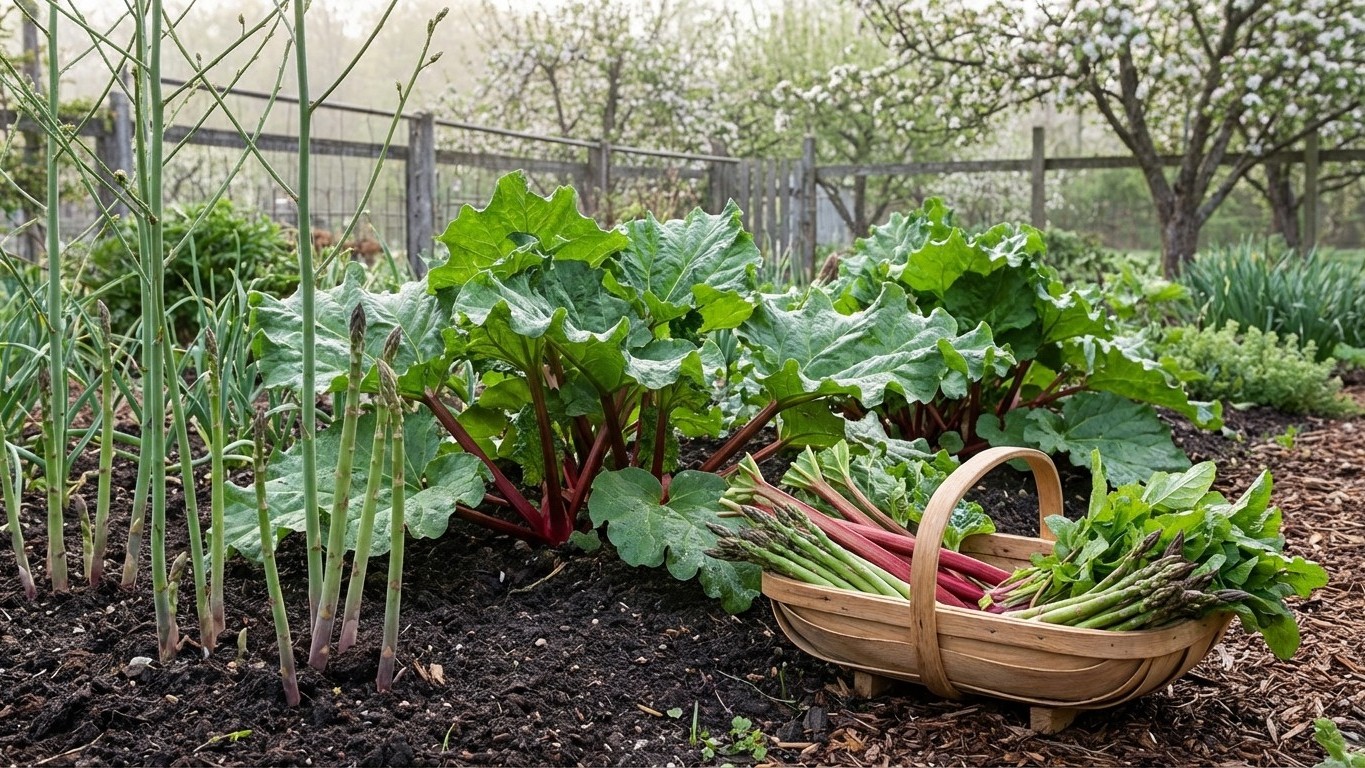
Imagine walking to your garden every week and harvesting fresh, delicious vegetables without having planted a single seed that year. This isn’t a gardener’s fantasy—it’s the reality of growing perennial vegetables, plants that produce food year after year with minimal maintenance once established.
Three years ago, many Gardeners discovered what experienced homesteaders have known for generations: certain crops can be planted once and harvested for years, offering an economical and effort-saving way to grow delicious food. Unlike the endless cycle of annual vegetables that demand replanting, weeding, and constant attention, these remarkable plants return faithfully each season, often producing even more abundantly as they mature.
The Champion of Set-and-Forget Vegetables
Asparagus stands as the ultimate example of this gardening approach. Asparagus beds can be productive for 15, 20, and sometimes up to 30 years, and once established, can be productive for decades. After the initial patience required—waiting three growing seasons before harvesting to allow the crowns to become fully established—gardeners are rewarded with weekly harvests that can last up to 8 weeks for established plants.
During peak season, spears can grow up to 2 inches per day, producing bountiful harvests, which means you may need to harvest every other day, and then as it gets warmer, every day, since a spear can grow 15cm or 6 inches in a day when the weather is right. This incredible productivity from a plant that requires virtually no annual input represents the perfect marriage of minimal effort and maximum reward.
The maintenance routine couldn’t be simpler. Once the bed is well established, usually the third year, asparagus does not need fertilizing, but will still benefit from about half an inch of compost on top of the crowns. The most demanding task is the annual fall cleanup, cutting back the fern-like foliage after it yellows.
The Reliable Ruby-Red Producer
Rhubarb represents another stellar example of plant-once, harvest-for-decades gardening. A healthy plant will remain productive for 10 years or more, and you may have a bountiful harvest for well over 10 years without replacing your rhubarb plants. Some gardeners report harvests extending even longer, with well-cared-for plants living to provide harvests for over 20 years.
What makes rhubarb particularly appealing is its forgiving nature. Rhubarb requires little maintenance and is inexpensive, needs very little care, is bothered by few pests and diseases, and is very long-lived. The harvest window extends 8 to 10 weeks long, lasting through mid-Summer, providing consistent weekly harvests of tart, versatile stalks perfect for pies, jams, and savory applications.
Like asparagus, rhubarb demands patience initially. Harvest nothing the first year and sparingly the second year to allow the large leaves to provide sufficient energy for crown and root development, then from the third year on, you may start harvesting in spring to early summer.
A Whole World of Perennial Possibilities
Beyond these two champions, an entire ecosystem of perennial vegetables awaits discovery. The edibles in these groups will give you yields year after year, usually without you having to do anything other than mulch and prune them. From the crisp, peppery leaves of watercress to the nutty tubers of Jerusalem artichokes, these plants represent a paradigm shift toward sustainable, low-input gardening.
Perpetual spinach provides a continuous harvest throughout the year, especially in regions without harsh winters, growing best in partial shade and ideal for gardeners looking for a reliable and low-maintenance source of greens. Walking onions live up to their name by literally planting themselves, as mature bulbs on top become heavy, gracefully fall over and plant themselves where they land.
The benefits extend beyond mere convenience. Once perennial crops are established, they require little care from you, are deeper rooted than annuals so they are hardier in times of drought, and are often more resistant to pests, disease and the pressure from other plants they share space with. This resilience translates to more reliable harvests and less anxiety about crop failures.
The Investment That Keeps Paying
While the initial establishment period requires patience, the long-term rewards are substantial. Perennial vegetables generally require much less maintenance than annual vegetable gardens, with good bed mulch keeping weeds down and top-dressing with compost often enough to maintain soil fertility, since you’re not disturbing the soils each year.
Smart gardeners recognize that this approach saves the hassle of buying-cable-organizers-after-discovering-this-free-method-behind-my-tv/”>buying seeds every year, saves time sowing them, and saves the effort of caring for young plants as they establish—once perennial crops are in, You Can almost sit back and relax. The weekly harvest routine Becomes a meditative garden walk rather than a race against weeds and weather.
Perhaps most remarkably, these plants often improve with age. Mature asparagus crowns produce more spears, established rhubarb plants develop larger, more robust stalks, and perennial herbs like chives multiply into generous clumps that can be divided and shared with neighbors.
The secret to success lies in viewing these plants as long-term garden investments rather than quick returns. Plant them with the same consideration you’d give to fruit trees—in permanent locations where they won’t be disturbed by annual garden cultivation. Prepare the soil well initially, provide appropriate spacing, and then step back and let these remarkable plants demonstrate the power of perennial productivity.
Three years from now, you too could be walking to your garden for that weekly harvest, grateful for the wisdom of planting once and enjoying the bounty for decades to come.