
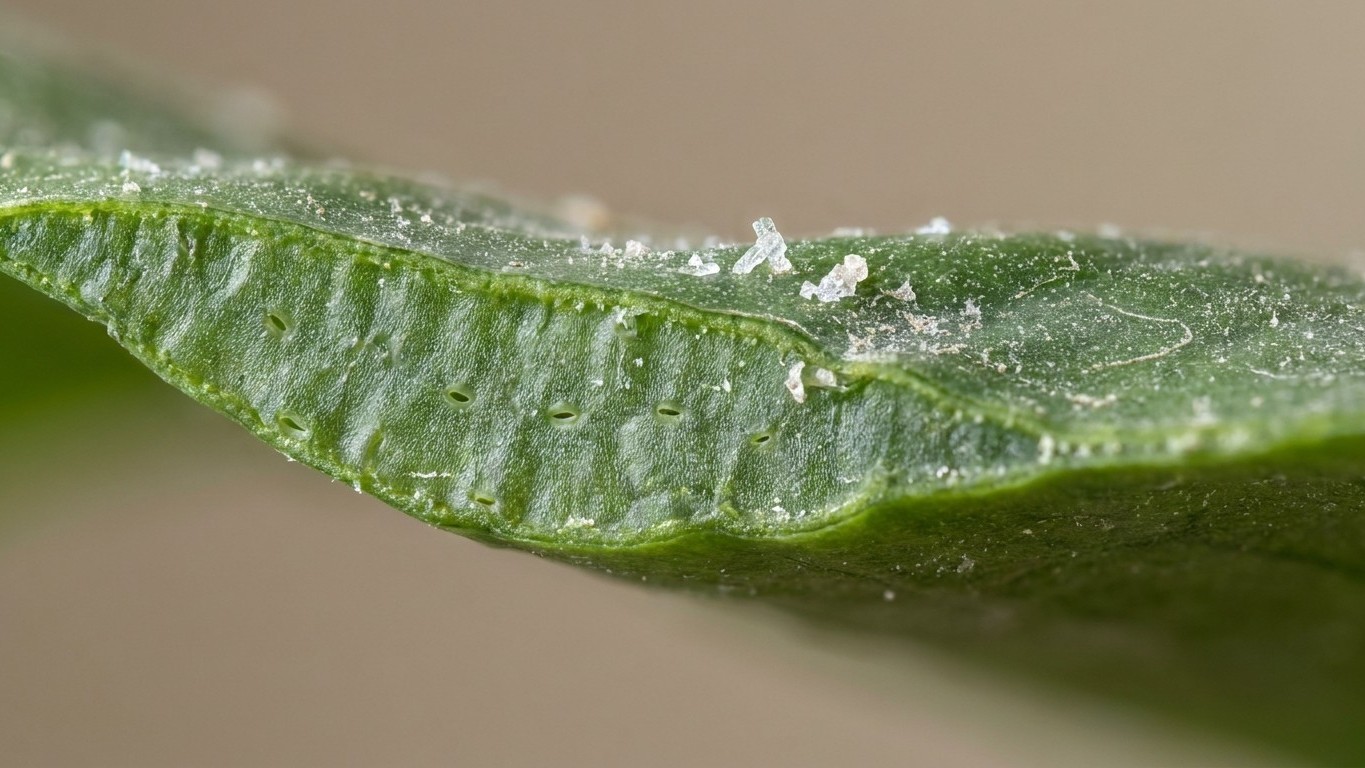
Leaf shine sprays, misting bottles, damp cloths, there’s an entire ritual that plant parents have built around keeping their Monstera looking glossy and lush. The problem is, a lot of that ritual is actively working against the plant. A botanist examining Monstera leaves under a microscope found something most of us would rather not see: a layer of residue clogging the very structures the plant relies on to breathe.
Key takeaways
- A botanist found that weekly spraying leaves white mineral deposits that clog the pores plants use to breathe
- Commercial leaf shine products attract dust like sticky traps, reducing photosynthesis and stressing the plant
- The Instagram-worthy glossy leaf trend directly contradicts how Monsteras actually evolved to thrive
What’s actually happening on the surface of a Monstera leaf
Monstera deliciosa leaves are covered in tiny pores called stomata, mostly concentrated on the underside of the leaf. These aren’t decorative features, they’re the plant’s respiratory system. Through stomata, the leaf exchanges carbon dioxide and oxygen, and regulates moisture loss through transpiration. Block them, even partially, and you’re essentially asking the plant to breathe through a wet paper bag.
The waxy upper surface of a Monstera leaf already has a natural shine to it. That’s a cuticle, a protective layer the plant secretes itself, made of a substance called cutin. It’s water-resistant, reflects excess light, and slows moisture evaporation. When you spray anything on top of it, whether a commercial leaf shine product or plain tap water, you’re adding a foreign layer over something the plant engineered over millions of years of evolution.
Under magnification, weekly spraying leaves a mineral deposit trail. Tap water contains calcium carbonate, magnesium, and various dissolved minerals. Each spray leaves a tiny residue. Over weeks, those residues accumulate into a visible white or grey film, the same logic as limescale building up in a kettle. The difference is that on a leaf, that film scatters light instead of reflecting it, making leaves look duller than they would without any intervention at all.
The leaf shine product problem is worse than you think
Commercial leaf shine sprays occupy a strange niche in the plant care world. They’re marketed to make leaves gleam, and short-term, they do. The silicone or oil-based formulas coat the cuticle and give that satisfying showroom gloss. But botanists and plant physiologists have been pushing back against these products for years, and the microscope evidence is not flattering.
Oil-based products in particular attract dust and airborne particles at a much higher rate than a clean leaf surface. Within days, a freshly sprayed Monstera leaf acts like a sticky trap. The dust layer that builds up actually reduces photosynthesis by blocking the light that reaches chloroplasts beneath the surface. It’s a self-defeating cycle: spray to make it shine, it attracts more dust, absorbs less light, looks worse faster.
There’s also a temperature concern. Leaves coated with a film, whether from hard water or shine products, can absorb heat differently than bare leaves. In a sunny window, a coated leaf can experience slightly elevated surface temperatures, which stresses the plant and can cause the subtle yellowing or brown-tipped leaves that growers often misattribute to underwatering or low humidity.
What botanists actually recommend instead
The answer turns out to be almost offensively simple. A soft, slightly damp cloth, no additives, plain distilled or filtered water if you want to be precise. Wipe the upper surface of each leaf gently, supporting the underside with your other hand to avoid tearing. That’s it. No spray, no product, no misting routine.
The frequency depends on your home environment. Dusty apartments or homes near busy streets might need a wipe every two to three weeks. A home with good air circulation and low dust accumulation? Once a month is generous. The goal is to remove the dust that blocks light, nothing more.
For the underside of leaves, where the stomata actually are, even less intervention is better. A very gentle wipe if you see visible debris or signs of pests, but otherwise, leave it alone. Running water, like a gentle shower with lukewarm water, is actually one of the best ways to clean a Monstera without any residue risk. Let it drain thoroughly before returning it to its spot.
Banana peel is one home remedy that keeps circulating online, supposedly polishing leaves to a natural shine. The mild sugars and potassium do give a brief gloss, but they also leave an organic residue that encourages fungal growth and attracts insects. Appealing idea. Mediocre outcome.
The bigger lesson hiding in the microscope image
What the botanist’s microscope image really reveals isn’t just the damage from spraying, it’s how much of mainstream plant care advice is built around how plants look to us, not how they function for themselves. The glossy Monstera in the Instagram photo is the goal, and the entire spray ritual exists to serve that aesthetic. The plant’s biology is incidental.
Monsteras are native to the tropical forests of Central America, where rain washes their leaves clean and humidity keeps the air moist without residue. They didn’t evolve to be wiped with olive oil or misted with London tap water. The closest you can get to their natural conditions indoors isn’t a spray bottle, it’s good light, well-draining soil, and occasionally running them under a lukewarm shower.
One detail that rarely gets mentioned: Monstera leaves that are genuinely healthy produce a deeper, more saturated green that looks naturally shiny without any help. The quest for leaf gloss is often masking the underlying issue, insufficient light or inconsistent watering that leaves the plant producing thinner, less vibrant foliage. Fix the growing conditions, and the shine follows on its own.