
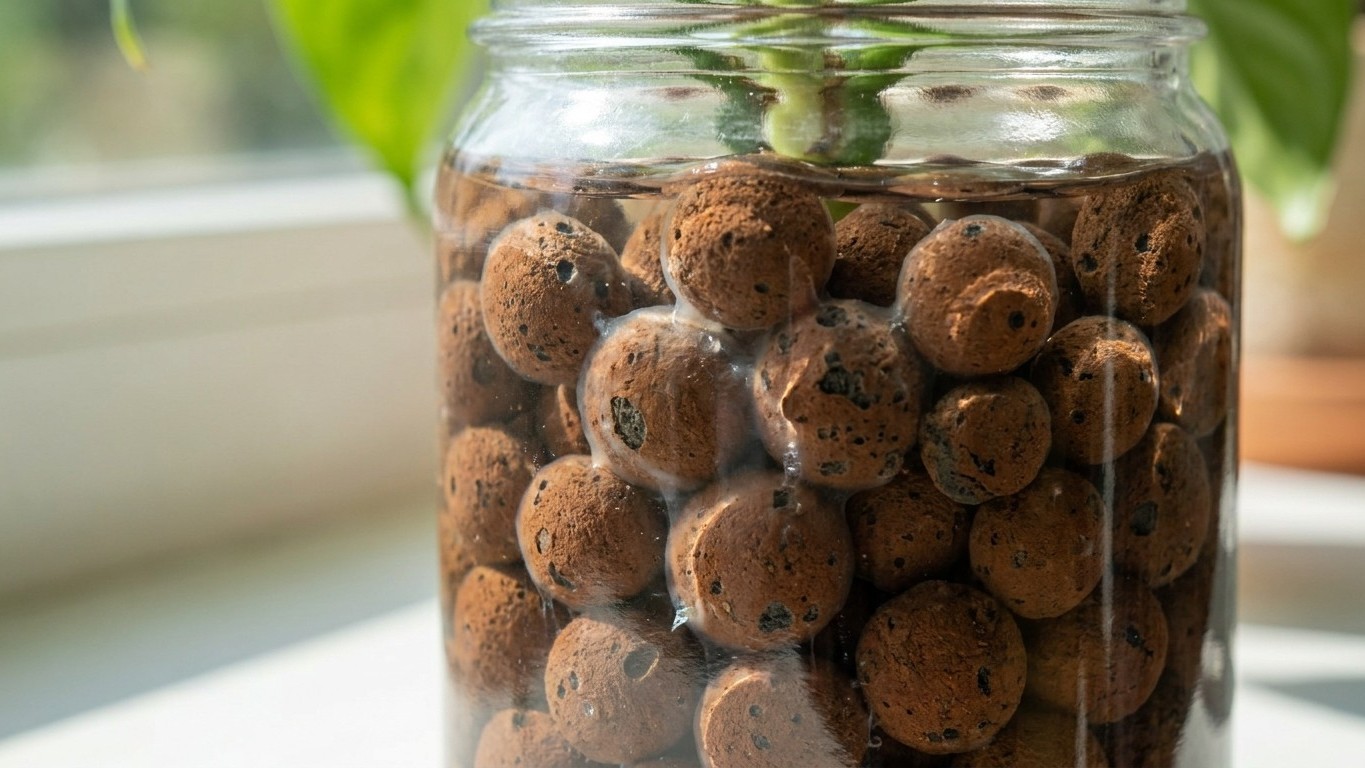
That thin white film coating your recycled LECA balls is not mineral buildup from your tap water. It’s a biofilm, a structured community of bacteria and, in some cases, opportunistic fungi — and it’s almost certainly the reason your cuttings keep rotting at the stem base within days of being transferred to your semi-hydro setup.
The confusion is understandable. LECA (Lightweight Expanded Clay Aggregate) looks clean enough after a rinse. The balls are hard, inorganic, and feel nothing like soil. People assume ceramic clay can’t harbor the same pathogens that destroy cuttings in a damp potting mix. That assumption is wrong, and the consequences are expensive in both plants and frustration.
Key takeaways
- That innocent-looking white film is a structured bacterial city, not mineral deposits
- Standard rinsing and boiling won’t eliminate it—but one specific method most growers overlook actually works
- Your cutting’s open wound makes it defenseless against pathogens that established plants could normally handle
What that film actually is, and why it’s dangerous
Biofilm forms when bacteria colonize a surface, produce a protective polysaccharide matrix, and anchor themselves to it. On LECA balls, this happens rapidly in the reservoir environment: warm water, organic debris from root shed, dissolved nutrients, and low oxygen near the base of the pot create near-perfect conditions for bacterial proliferation. The white or cream-colored film you see is that matrix, essentially a bacterial city with walls, infrastructure, and a strong resistance to casual rinsing.
For established plants with mature root systems, a moderate biofilm load is manageable. Roots have defense mechanisms, and a healthy plant in full growth can outpace the damage. A freshly cut stem with a raw wound at its base has none of those defenses. The moment you nestle that cutting into biofilm-coated LECA and add nutrient solution, you’re essentially pressing an open cut into a contaminated surface. Pythium (a water mold technically distinct from true fungi but equally destructive) and various bacterial species can infiltrate the wound tissue within 24 to 72 hours. The cutting looks fine for three or four days, then collapses from the base up.
The recycling mistake almost everyone makes
After a plant dies or gets repotted, the standard home-grower habit is to collect the LECA, give it a good rinse under the tap, maybe soak it for a day, and call it ready. Some people boil it briefly. None of these steps reliably eliminate biofilm, because biofilm is designed to resist exactly that kind of mechanical disruption. The polysaccharide matrix acts as a physical barrier, and the bacteria embedded within it can survive temperatures that would kill free-floating cells in solution.
Effective sterilization requires either a chemical oxidizer, hydrogen peroxide at a 3% solution works well, with a minimum 24-hour soak — or a dilute bleach solution (roughly 1 part bleach to 9 parts water) followed by an extremely thorough rinse. The hydrogen peroxide route has become the preferred method in semi-hydro communities because it breaks down into water and oxygen, leaving no residual toxicity for roots. After the soak, the LECA should be rinsed with clean water multiple times, then allowed to dry completely before reuse. Drying matters: many of the organisms in biofilm cannot survive desiccation, so skipping straight from the soak to immediate reuse misses a kill step.
One detail most guides omit: the reservoir itself, the pot, and any net cups or inserts also need the same treatment. Sterilizing the LECA while dropping it back into a container coated with old biofilm defeats the entire process. Think of it like washing your cutting board while leaving the counter dirty.
How to protect your cuttings during the critical rooting window
Even with freshly sterilized LECA, the first two to four weeks of rooting represent a high-risk window. A few protocol adjustments reduce losses significantly. First, keep the reservoir level lower than you normally would for an established plant, the water line should sit well below the base of the cutting, letting the bottom portion of the LECA wick moisture upward rather than submerging the stem. This keeps the wound site in a humid-but-not-wet zone, which is hostile to anaerobic bacterial growth.
Plain water performs better than diluted nutrient solution during early rooting. Nutrients accelerate biofilm formation by providing a food source for bacteria, and a cutting doesn’t yet have the root surface area to absorb much anyway. Introduce a mild nutrient solution only after you see confirmed root development, typically visible through a clear pot or by gently lifting the cutting to check.
Adding a small amount of hydrogen peroxide directly to the reservoir, around 1 to 2 ml of 3% H2O2 per liter of water, keeps the water oxygenated and creates a low-level oxidizing environment that discourages pathogen growth without damaging emerging roots. This is a practice borrowed from commercial hydroponic operations, where water quality management is treated with the same seriousness as light and temperature. Some growers also use a small aquarium air stone at the base of the reservoir; dissolved oxygen inhibits the anaerobic organisms most likely to attack wounded stem tissue.
The LECA you bought new isn’t automatically safe either
New LECA straight from the bag carries dust, fine clay particles, and sometimes residual kiln compounds that can alter pH and stress fresh cuttings. Most experienced semi-hydro growers soak new LECA for 24 to 48 hours, changing the water twice, before first use. The water often runs tan or orange from clay fines. Using it before this prep doesn’t introduce biofilm, but it can cause pH swings in the reservoir that weaken the cutting and make it more susceptible to whatever organisms do arrive later.
Semi-hydro has a real learning curve, and most of the failure stories trace back not to the method itself but to contaminated or poorly prepared substrate. LECA’s longevity and reusability are genuine advantages over soil, a single bag, properly maintained, can serve for years across dozens of plants. That value disappears fast when shortcuts in cleaning turn every new cutting into a gamble.