
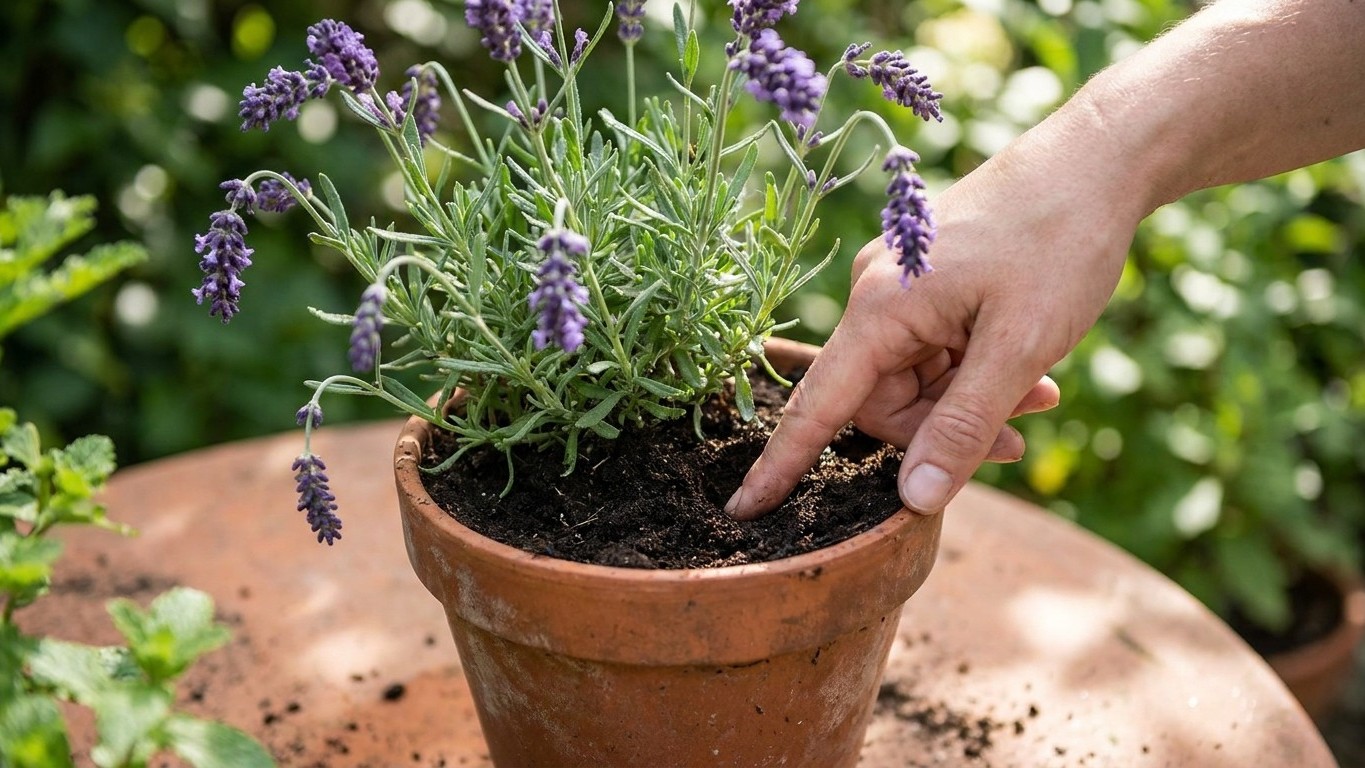
My lavender was drooping. A little sad-looking, stems slightly limp, the purple just starting to fade. So I did what any caring gardener does: I reached for the watering can. My neighbor leaned over the fence, watched me for exactly two seconds, and said : “scratch the base before you pour anything.” I stopped. She was right. And that five-second lesson probably saved my plant’s life.
The soil was already damp. What looked like thirst was something far more dangerous: the early stages of root rot. A lavender plant can droop and wilt even when the soil feels moist or soggy, because the roots are suffocating and can no longer transport water effectively. Adding more water at that point is the equivalent of giving a drowning person more water to drink.
Key takeaways
- A drooping lavender isn’t always thirsty—it might be suffocating from too much water
- The ‘scratch the base’ technique reveals what your plant actually needs in seconds
- Root rot from overwatering is the #1 killer of potted lavender, and it’s completely preventable
Why lavender hates your watering instincts
Lavender evolved in the Mediterranean, thin, rocky soil, baking sun, summers with little rain. Its roots are designed to find water in dry conditions, not to survive in wet ones. That heritage explains everything. The plant’s entire physiology is calibrated for drought. We, on the other hand, are conditioned to associate drooping with thirst. With lavender, that logic is dangerously backwards.
Watering lavender is where many beginners, and even experienced gardeners, make mistakes, as it’s often overwatered. Lavender absolutely prefers to be on the drier side. The cruel irony is that yellowing leaves or wilting can be signs of both overwatering and underwatering. If your plant is wilting and the soil is damp, it’s likely overwatering and root rot. The symptoms overlap, which is exactly why grabbing that watering can is such a reflexive, and costly, mistake.
When lavender is overwatered, it tends to go leggy and produces fewer flowers. When it’s underwatered as an established plant, it typically just gets on with life. If you’re going to err in one direction, err on the side of too little water. Underwatering an established lavender is a minor inconvenience. Overwatering it is potentially a death sentence.
The scratch test, and what it actually tells you
The “scratch the base” advice my neighbor gave me refers to a simple two-step diagnostic. First, press your finger into the soil near the base of the plant, not just the surface, but a couple of inches down. Then, if you have suspicions about the stem, lightly scratch the lower woody part: brown and dry means healthy dormancy; mushy and dark is a red flag for rot already in progress.
The key is to allow the soil to dry out completely between waterings. When in doubt, stick your finger two inches into the compost. If it’s dry, water. If it’s damp, leave it. That’s it. No app, no moisture meter required. Just your index finger and thirty seconds of patience. The mantra is: “When in doubt, don’t water.” Overwatering is far more detrimental than underwatering for established lavender.
Potted lavender adds a specific layer of complexity. Pots dry out much faster than in-ground soil, so container lavender will require more frequent watering, even when established. Water when the soil is bone dry to the touch throughout the pot, or if the pot feels very light when lifted. This might be every one to two weeks in moderate weather, and potentially once a week or even more frequently during hot, sunny, windy periods. The weight of the pot is one of the most underrated signals: bone-light means it’s time, heavy means step away.
How to read the warning signs before it’s too late
The signs that a lavender plant is being overwatered include yellowing or browning leaves, drooping leaves and stems, mold on the surface of the sodden soil, or a rotten smell. That sour or musty odor rising from the soil base is particularly telling. A musty or sour smell rising from the soil base confirms that anaerobic conditions are developing at root level and fungal activity has begun. At that stage, you’re no longer dealing with a watering problem, you’re dealing with a biological one.
Root rot in lavender has been associated with several fungal pathogens, including Fusarium, Phytophthora, Pythium, and Rhizoctonia. These organisms thrive in waterlogged, oxygen-poor soil, which is precisely what an over-watered pot creates. They don’t announce themselves until the plant is already struggling, which is why catching the signs early, the yellowing lower leaves, the soft stems, the smell, is so important.
The good news: an overwatered lavender can recover. The first move is to stop adding any moisture to the plant until the soil dries out, this may take several weeks, but the lavender’s well-developed roots will be capable of sourcing any moisture it needs. Do not water the plant again until the soil is completely dry, then put together a new watering schedule to avoid overwatering happening again. If the damage runs deeper, gently remove the plant from its pot, trimming away any affected roots, then place it back into fresh, dry, well-draining soil.
Setting up your pot to work with the plant, not against it
The most common reason potted lavender dies is root rot due to overwatering. Because lavender is native to a hot, dry Mediterranean climate, it grows best when you wait until the soil is almost dry before watering. But beyond timing, the container itself matters enormously. Because good drainage is essential to the health of potted lavender, always choose a container with several drainage holes at the bottom to prevent water retention. Another way to help prevent the soil from becoming too soggy is to use pots made of unglazed terracotta or clay, since their porous walls allow for better airflow.
To replicate the plant’s native conditions, consider adding some perlite or coarse sand to your potting mix to help facilitate drainage and prevent root rot caused by soggy soil. Adding perlite or small stones to the mix can improve drainage significantly, allowing water to pass through while letting air reach the roots. Terracotta, grit, drainage holes, elevated pot feet, these aren’t decorative choices. They’re structural ones that determine whether your lavender survives a rainy week.
One more thing worth knowing: too much water as well as overhead watering can lead to both stem and root rot. Lavender plants should be watered from below at the base of the plant to avoid wetting the leaves, which helps prevent fungal diseases and keeps the plant healthy. Water at the crown, where stem meets soil, and you’re inviting a host of problems that have nothing to do with how much you’re pouring. Direction matters as much as frequency.
There’s a detail most guides skip: lavender actually signals thirst differently than it signals drowning. Underwatered lavender turns crispy, the leaf tips go grey-brown, the foliage feels papery or stiff, and the plant may take on a dry, slightly bleached appearance. That texture is your green light to water. Soft, yellowing, translucent lower leaves? Put the can down and call your neighbor.
Sources : homesandgardens.com | evergreenseeds.com