
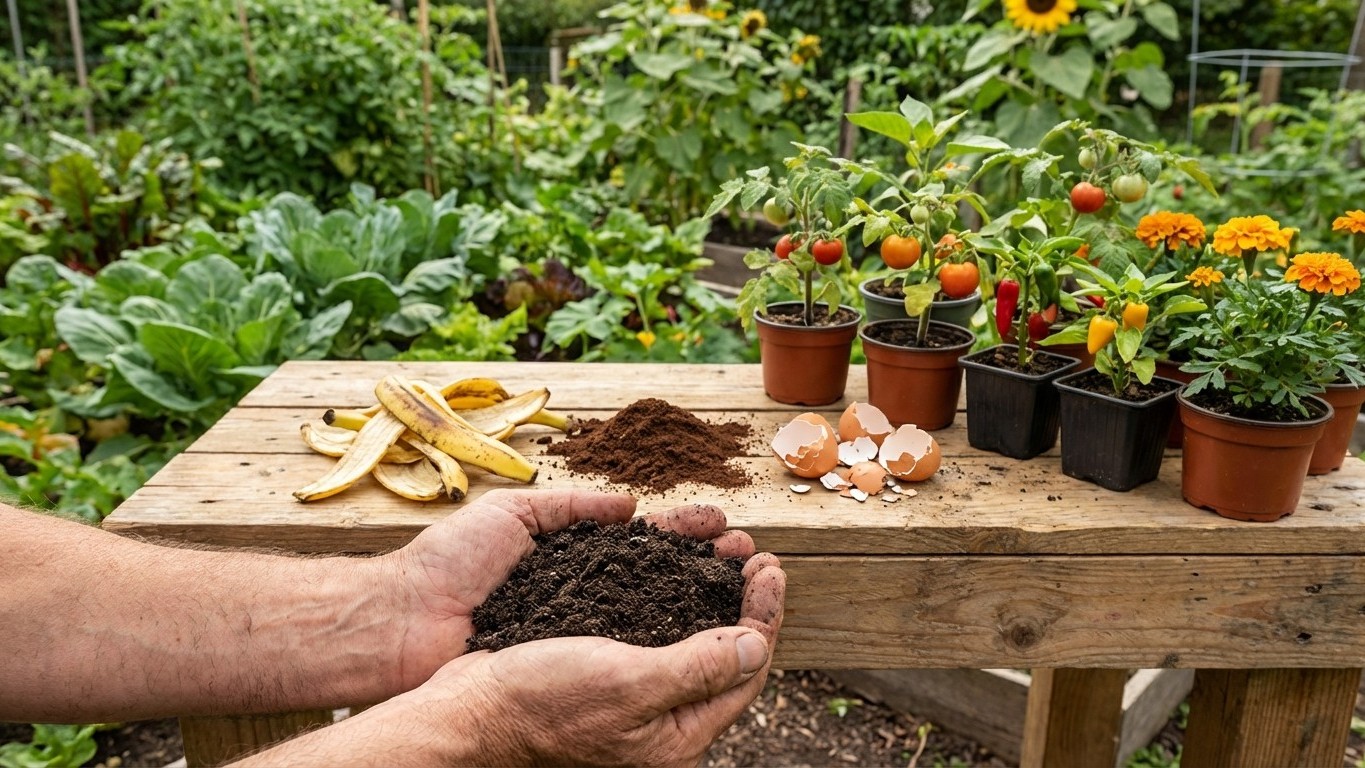
Every morning, millions of Americans toss potential garden gold straight into their trash cans. That banana peel from breakfast, the spent coffee grounds, and cracked eggshells? In the US, 24% of landfill space is taken up by food waste, with a significant impact on the economy and the environment. Professional gardeners have long understood what most homeowners overlook: these everyday kitchen scraps are nature’s own fertilizer factory, capable of delivering nutrients that rival expensive store-bought alternatives.
The secret isn’t complicated wizardry or expensive equipment. It’s understanding what your kitchen waste can offer and how to harness its power effectively. Kitchen scraps, on the other hand, are free and overflowing with the good stuff plants crave: nitrogen, potassium, calcium, and phosphorus. When you break scraps down properly, they become rich compost or natural fertilizers that boost soil health, improve drainage, and even help retain water.
The Science Behind Kitchen Scrap Power
What makes kitchen scraps so valuable isn’t just their availability—it’s their nutrient profile. The results indicated that the wet fertilizer mixture is more effective in promoting plant growth than the dry mixture. Recent research from 2024 studying coffee grounds, eggshells, and banana peels confirms what experienced gardeners have known for generations: these materials create a complete nutrient package when used together.
The eggshells provide calcium, phosphorus, and magnesium. The banana peels contribute potassium, and the coffee grounds give the plants a boost of nitrogen. This trio creates what professionals call a “complete” fertilizer—one that addresses the three primary nutrients plants need (nitrogen, phosphorus, potassium) plus essential micronutrients that support healthy growth and disease resistance.
The timing advantage is equally impressive. The bacteria break down the food and, within 24 to 72 hours, produces a clear, odorless liquid fertilizer. “It’s high in carbon and nitrogen and other properties we want,” Gonzalez-Ospina said. While traditional composting takes months, smart processing of kitchen scraps can deliver results in days, not seasons.
The Professional Method: Maximizing Nutrient Release
The difference between amateur and professional approaches lies in preparation and application. Before you use eggshells, sterilize them; we don’t want to spread salmonella around. Sterilize on low heat in the oven for a few minutes or in a microwave on high power for at least 10 seconds. Don’t rinse them, as this will wash away some of the organic matter from the shell, which you want to keep.
For banana peels, size matters. Banana peels decompose relatively slowly, usually taking several weeks to months. Cutting them into smaller pieces can help speed up the process. Professional gardeners often freeze peels first, which breaks down cellular structure and accelerates decomposition when added to soil.
Coffee grounds require the most finesse. Just like you may need that cup of coffee to energize your day, our plants need the nitrogen and minerals found in used coffee grounds to boost their life. Other natural elements that sustain houseplants and outdoor plant life, such as calcium, copper, and potassium, are also found in our caffeine byproduct. However, moderation is key—Some experts suggest using the grounds only on acid loving plants or on alkaline soil, Start slowly by mixing modest amounts in to your potted plants or garden. Try one tablespoon for pots and one cup for gardens.
Application Strategies That Work
Professional application goes beyond simply scattering scraps around plants. The most effective method involves creating layered nutrition systems. Dig a hole or trench about 6–12 inches deep in your garden bed. Dump in your scraps (no meat or dairy). Cover with soil and forget about it. Worms and microbes do the rest. In 4–6 weeks, your scraps are gone and your soil is richer. This “trench composting” method delivers nutrients directly to root zones while preventing pest attraction.
For immediate results, liquid fertilizers offer faster nutrient delivery. If you are afraid of attracting pests or animals, try liquefying the banana scrap in a blender with one quart of water before pouring the mix onto your plant or bush. This approach bypasses decomposition time while providing readily available nutrients that plants can absorb within hours.
Strategic plant pairing amplifies results. Crushed or powdered eggshells are especially helpful for plants that need an extra boost of calcium to support strong cell walls and steady growth. Tomatoes, peppers, and eggplants benefit the most because added calcium helps prevent blossom-end rot over time. Leafy greens like kale, cabbage, and broccoli also respond well, as calcium supports vigorous foliage production.
Beyond Basic Composting: Advanced Techniques
The most sophisticated approach involves understanding seasonal timing and soil conditions. The coffee grinds provide nitrogen & tannic acids to the soil. Acid loving plants such as azaleas, blueberries, butterfly weed, camellias, ferns, gardenias, lupines & rhododendrons especially love coffee grinds. This targeted application ensures maximum nutrient uptake while avoiding potential pH conflicts.
Storage and preparation timing also separate professionals from amateurs. I just keep the peels, egg shells and coffee grounds in freezer bags until I’m ready to add water and puree so they don’t attract bugs or smell. This preservation method maintains nutrient integrity while preventing pest issues that derail many amateur efforts.
The environmental impact extends far beyond individual gardens. When kitchen waste ends up in landfills, it contributes to methane production. When you make compost from kitchen waste in a controlled environment like a bin or composting pile, you reduce greenhouse gas emissions and help combat climate change. Every household that adopts these practices contributes to broader sustainability goals while creating superior growing conditions.
The transformation from kitchen waste to garden wealth represents more than cost savings—it’s a complete shift in perspective about resources and waste. Turning your kitchen scraps into garden gold isn’t just about saving money (though you will!). It’s about closing the loop—feeding the soil that feeds you. Whether you dive into composting, brew a batch of banana tea, or bury your peels in a trench, you’re reclaiming value from waste and becoming a little more self-sufficient every day. When you master these professional techniques, every meal becomes an opportunity to strengthen your garden’s foundation, proving that the most powerful fertilizers often come not from store shelves, but from your morning breakfast routine.