
After years of struggling with lackluster rosemary propagation results, watching cutting after cutting wither away despite my best efforts, I stumbled upon a revelation that completely transformed my herb gardening game. The secret wasn’t in the soil mix, the rooting hormone, or even the watering schedule—it was in the timing and technique I’d been getting wrong all along.
Most gardeners, myself included, instinctively reach for those tender spring shoots when propagating rosemary, believing that young, soft growth offers the best chance of success. We’ve been conditioned to think of propagation as a warm-weather activity, something to tackle when plants are actively growing and the days are long. This conventional wisdom, however, overlooks a fundamental aspect of rosemary’s biology and the unique advantages that winter propagation offers.
Why Winter Changes the Propagation Game
Rosemary’s Mediterranean origins hold the key to understanding why winter propagation works so remarkably well. In its native habitat, rosemary experiences its most active root development during the cooler, moister months when temperatures moderate and the plant isn’t stressed by intense heat and drought. This natural rhythm translates beautifully to our propagation efforts when we align our timing with the plant’s biological preferences.
Winter cuttings benefit from what botanists call “hardwood vigor”—the concentrated energy stored in mature stems during the plant’s dormant period. Unlike the soft, water-heavy growth of spring and summer, winter stems contain higher concentrations of stored carbohydrates and natural rooting compounds. These semi-hardwood cuttings, taken from growth that’s had a full season to mature, possess an inherent resilience that soft cuttings simply cannot match.
The controlled environment of winter also works in our favor. Indoor propagation during colder months means stable temperatures, consistent humidity levels, and protection from the temperature fluctuations that can shock delicate new roots. Without the intense heat and rapid moisture loss of summer, cuttings have time to develop robust root systems before facing environmental stress.
The Revolutionary Technique That Changes Everything
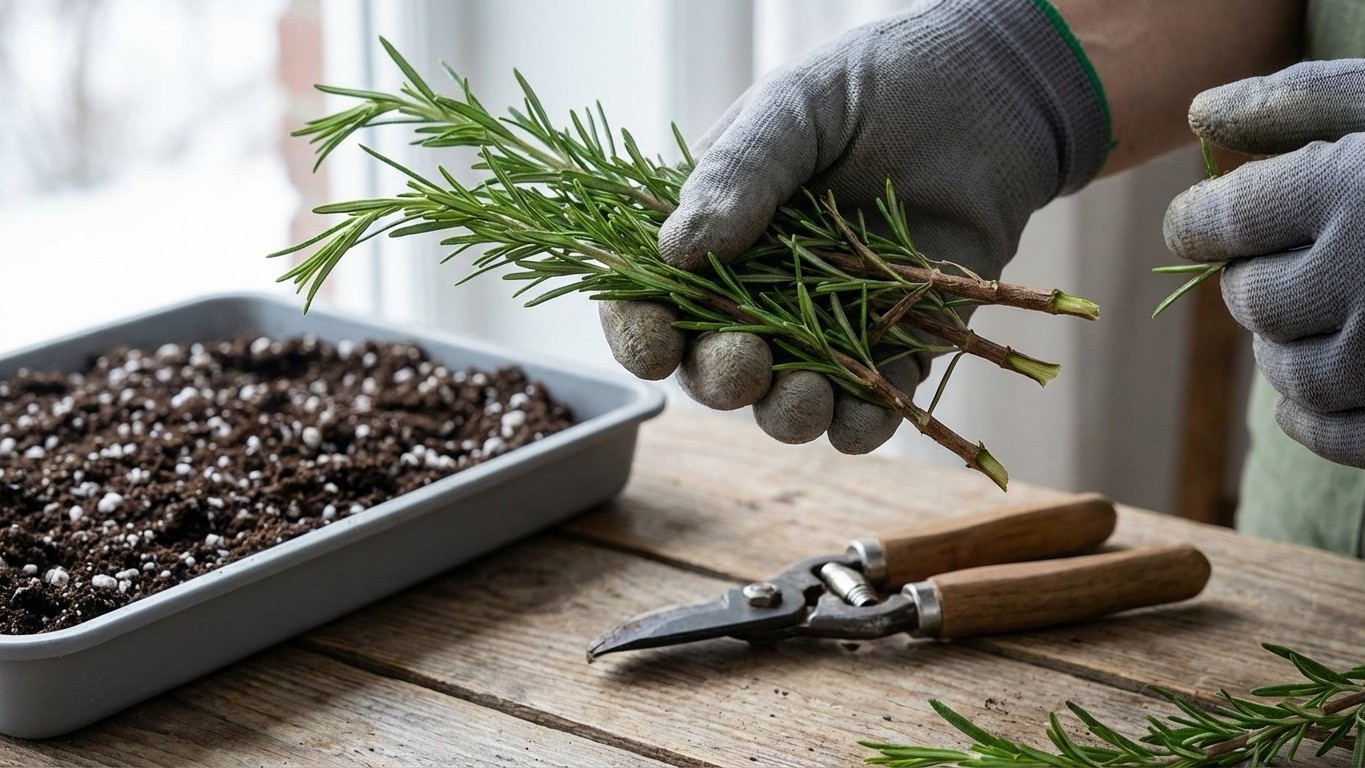
The game-changing method involves selecting semi-hardwood cuttings from the current year’s growth, specifically choosing stems that have begun to show the characteristic woody brown coloration at their base while maintaining green, flexible tips. These cuttings, typically four to six inches long, represent the perfect balance between maturity and growth potential.
The critical difference lies in the preparation technique. Instead of the traditional clean cut, this method involves creating what’s known as a “heel cutting”—removing the cutting with a small piece of the older wood still attached. This heel contains concentrated growth hormones and provides additional energy reserves for root development. The slightly torn tissue at the heel also creates multiple points for root emergence, dramatically increasing the cutting’s chances of success.
Timing the collection for late December through February captures rosemary at its optimal state for propagation. The plant has completed its annual growth cycle, stored maximum energy reserves, and entered a state where root development takes precedence over top growth. This biological shift means cuttings focus their energy on establishing roots rather than producing new leaves and stems.
The rooting environment requires specific attention to moisture and temperature control. Rather than the warm, humid conditions often recommended for propagation, winter rosemary cuttings thrive in cooler conditions with moderate humidity. A temperature range of 60-65°F proves ideal, mimicking the plant’s preferred winter growing conditions while preventing the fungal issues that plague warm, moist propagation setups.
Transforming Your Success Rate
This winter approach has revolutionized propagation success rates from the disappointing 30-40% typical of spring cuttings to an impressive 80-90% success rate. The key lies in understanding that we’re working with the plant’s natural rhythms rather than against them. Winter cuttings develop slower but stronger root systems, creating plants that establish quickly when transplanted and show remarkable resilience to environmental stress.
The superior root development achieved through winter propagation creates plants with extensive, well-branched root systems by spring planting time. These robust roots translate to faster establishment, better drought tolerance, and more vigorous growth once transplanted. The resulting plants often outperform their spring-propagated counterparts throughout their first growing season and beyond.
Beyond the improved success rates, winter propagation offers practical advantages for the home gardener. The slower pace of winter allows for more careful attention to individual cuttings, while the reduced garden workload provides time to focus on propagation activities. Indoor growing conditions remain more stable during winter months, reducing the daily monitoring required for successful propagation.
This revelation has completely changed my approach to herb propagation, extending far beyond rosemary to other Mediterranean herbs that share similar growth patterns. The lesson learned goes deeper than technique—it’s about observing and respecting the natural rhythms of plants rather than imposing our assumptions about when and how propagation should occur. Sometimes the most effective methods are the ones that seem counterintuitive at first glance, requiring us to question conventional wisdom and experiment with nature’s own timing.