
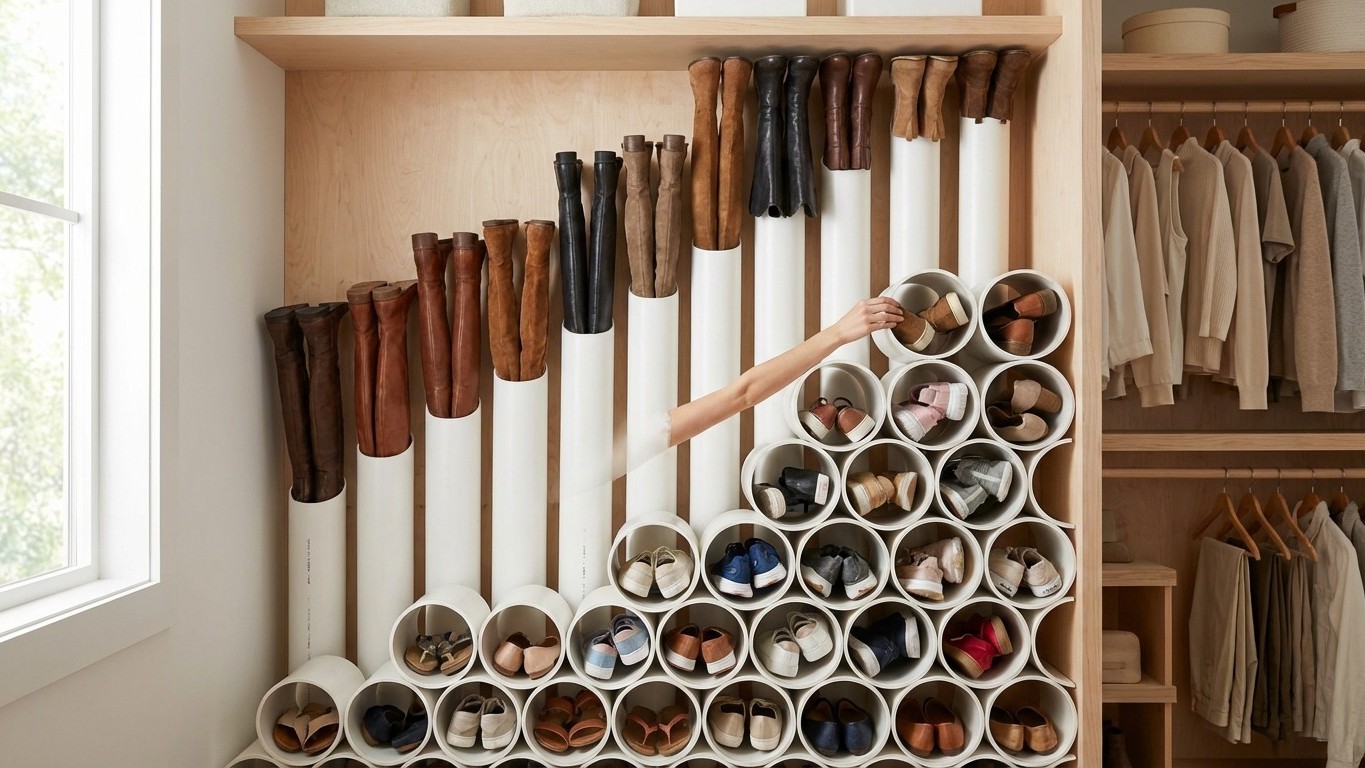
The moment I realized I could transform simple PVC tubes into the most efficient shoe storage system I’d ever used, my relationship with expensive shoe racks changed forever. What started as a desperate attempt to organize my overflowing closet became a revelation that saved me hundreds of dollars and maximized my storage space in ways I never thought possible.
Like many homeowners, I had fallen into the trap of buying increasingly elaborate shoe storage solutions. Metal racks that took up floor space, over-the-door organizers that couldn’t handle boots, and those flimsy fabric cubbies that collapsed under the weight of anything heavier than flip-flops. Each purchase promised to be the answer to my shoe chaos, yet my closet remained a battlefield of mismatched pairs and toppled storage attempts.
The PVC Pipe Revolution
The breakthrough came during a home improvement project when I had leftover PVC pipes sitting in my garage. These weren’t fancy tubes – just standard 4-inch diameter PVC pipe from the hardware store, the kind typically used for plumbing projects. As I stared at my shoe disaster one evening, something clicked. These tubes could hold boots upright, preventing the dreaded slouch that ruins leather and creates wrinkles in tall footwear.
The first experiment was simple: cutting the pipes into segments slightly shorter than my tallest boots. The results were immediately impressive. Boots that had been flopping over and losing their shape suddenly stood at attention, maintaining their structure and making selection effortless. But this was just the beginning of what PVC tubes could accomplish in shoe organization.
The versatility became apparent as I explored different applications. Wider tubes accommodated multiple pairs of flats or sandals, creating vertical storage towers that used minimal floor space. Smaller diameter pipes worked perfectly for organizing athletic shoes, keeping pairs together while allowing air circulation that prevented odors from building up.
Creative Applications Beyond Basic Storage
The real genius of this system emerged when I started thinking beyond conventional storage approaches. By mounting larger tubes horizontally in my closet, I created slide-out shoe slots that functioned like drawers. Each tube could hold two to three pairs of shoes, and the smooth interior made retrieval effortless – no more digging through piles or knocking over carefully arranged displays.
For seasonal storage, longer tubes became perfect repositories for out-of-season footwear. Winter boots stored in Summer, summer sandals protected during cold months, all while maintaining their shape and staying dust-free. The tubes stack efficiently in storage areas, garage shelves, or under-bed spaces, maximizing every inch of available room.
The customization possibilities proved endless. Different tube diameters accommodate various shoe types – narrow tubes for heels, wide tubes for sneakers, extra-large versions for work boots. By cutting tubes to specific lengths, I created storage solutions that fit perfectly in awkward spaces: under stairs, in narrow closet sections, or along basement walls.
Cost comparison revealed the financial wisdom of this approach. a single length of PVC pipe, costing under ten dollars, provided storage for dozens of shoe pairs when cut appropriately. Traditional shoe racks holding the same number of pairs would cost ten times that amount, not including the floor space they consume or their tendency to tip over when fully loaded.
Implementation and Practical Benefits
Setting up this system requires minimal tools and skills. A hacksaw or pipe cutter handles the sizing, while sandpaper smooths any rough edges that might snag delicate materials. For permanent installations, simple brackets can mount tubes to walls or inside closets, though many applications work perfectly as standalone units.
The maintenance advantages over conventional shoe storage are significant. PVC tubes wipe clean easily, resist moisture that can damage wooden racks, and won’t rust like metal alternatives. They’re Lightweight enough to move when rearranging spaces, yet sturdy enough to handle heavy footwear without bending or breaking.
Air circulation through the tubes prevents the musty odors that plague closed shoe storage systems. This feature particularly benefits athletic shoes and work boots that accumulate moisture during use. The open-ended design allows natural air flow while keeping shoes organized and accessible.
Beyond Shoes: Expanding the Concept
The success with shoe storage opened my eyes to broader organization possibilities. The same tubes work brilliantly for storing umbrellas, walking sticks, fishing rods, and other long items that typically create storage headaches. In craft rooms, they organize rolls of fabric, wrapping paper, or architectural drawings. Garages benefit from tube storage for tools, sports equipment, and garden supplies.
This simple discovery fundamentally changed my approach to home organization. Instead of buying specialized storage products for every organizational challenge, I Learned to see common materials through the lens of creative problem-solving. Sometimes the best solutions aren’t found in storage catalogs but in the plumbing section of the hardware store, waiting for someone to recognize their hidden potential.
The transformation from chaotic shoe pile to organized, accessible storage happened without breaking the bank or sacrificing closet space to bulky furniture. These humble tubes proved that effective organization doesn’t require expensive solutions – just creative thinking and willingness to see everyday materials in new ways.