
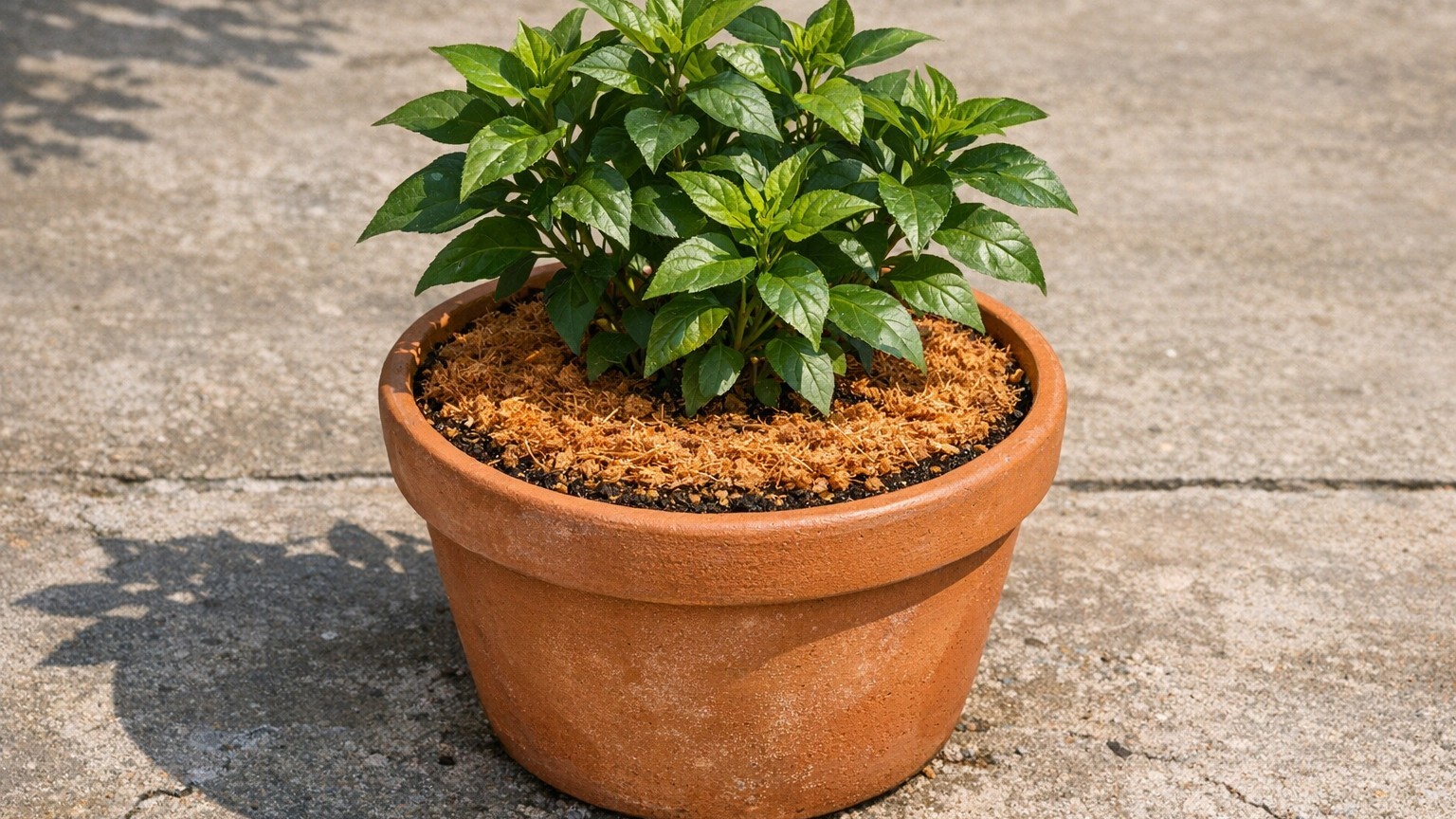
The soil in a terracotta pot on a sunny patio can lose nearly all of its surface moisture within hours on a hot July day. Bare soil exposed to direct sun, even in a container, evaporates water at an alarming rate. One layer of the right natural material on top of that soil changes everything: watering frequency drops, plants look visibly healthier, and the whole cycle of daily checking-and-worrying just… stops.
The material in question is organic mulch. Not some specialty product. Not a gadget. Just a thin covering of natural matter, coconut coir, shredded bark, pine needles, compost, or even clean straw — spread across the top of your potting soil. Gardeners have been doing this in ground-level beds for decades, but applying the same logic to pots and containers remains surprisingly underused.
Key takeaways
- One natural material can reduce your watering schedule from daily to twice a week
- The soil temperature and moisture retention science behind why this actually works
- Which mulch materials perform best for containers — and which ones to absolutely avoid
Why Bare Pot Soil Is the Enemy of Your Watering Schedule
When sunlight hits bare soil, it speeds up evaporation. Water stored in the ground escapes into the air faster than plants can absorb it, leading to dry, cracked soil and plants that need constant watering. In a container, this problem is amplified. In-ground plants have an insulating layer of surrounding soil. Container plants don’t. The pot wall, especially dark plastic in direct sun, absorbs radiant heat and transmits it straight into the root zone. The result: you water in the morning, and by afternoon the soil feels bone dry again.
Mulch’s ability to minimize evaporation ranges from 28 to 58.8%, while controlling soil temperature by maintaining an increase of just 2 to 3°C, thereby enhancing soil moisture by up to 4.6 to 22%. That’s not a marginal improvement. That’s the difference between watering every day and watering twice a week.
The Best Natural Materials for Potted Plants
Coconut coir is the standout performer for containers. Coconut coir holds roughly ten times its own weight in water, making it the highest-moisture-retention organic mulch available. It’s also pH-neutral, sterile (no weed seeds), and lightweight, which matters on balconies and rooftop gardens where weight adds up quickly across multiple pots. One caveat worth knowing: if coir dries out completely between waterings, it can become temporarily water-repellent — scratch the surface layer lightly before watering if you notice water beading off rather than absorbing.
Shredded bark is the workhorse option, widely available, affordable, and attractive. Shredded bark works exceptionally well in large ceramic, terracotta, and wooden containers. It’s ideal for acid-loving plants like blueberries, azaleas, and hydrangeas, as it gradually adds acidity to the soil as it breaks down. Pine bark suits evergreens; cedar bark works well for flowering perennials.
Pine needles deserve more credit than they get. Pine needles, also known as pine straw, offer a unique mulching option that’s particularly beneficial for acid-loving plants. This lightweight, slow-decomposing material provides excellent protection while gradually increasing soil acidity. Practically speaking, pine needles break down slowly, providing up to 12 months of protection before needing replacement. Their natural water-shedding structure creates perfect drainage pathways, preventing waterlogged soil in containers. The lightweight, interlocking nature of pine needles helps them stay in place despite wind and watering.
Compost deserves a mention too, though it plays a double role. Compost mulch delivers nutrients directly to container plants as it breaks down. Unlike decorative mulches, compost contains essential macronutrients like nitrogen, phosphorus, and potassium that gradually release into the soil. This slow-release feeding system eliminates the need for frequent fertilizing while improving soil structure and microbial activity in containers.
One material to skip: rubber or synthetic mulch. Rubber mulch is among the worst choices for moisture retention. Despite marketing claims, it offers very poor water-holding capacity. It neither absorbs water itself nor improves soil structure.
How to Actually Do It (Without Overcomplicating It)
The depth question trips people up. Container gardens require shallower mulch layers than traditional garden beds. The ideal depth is 1 to 2 inches, with larger pots able to handle up to 2 inches and smaller containers needing just 1 inch. This provides adequate protection without taking up too much valuable soil space in the container. Think of it as a light blanket, not a heavy duvet.
The golden rule, the one most people ignore until a plant rots, is to keep mulch away from stems. Never create “mulch volcanoes” against plant stems, as this promotes rot and disease. An inch of clearance around the base of each plant is all it takes. After that, the mulch does its job silently.
Mulches act as an insulating layer, moderating soil temperature fluctuations. They keep the soil cooler during hot days and warmer during cold nights. Maintaining a more stable soil temperature reduces the rate of moisture loss through evaporation and creates a favorable environment for root activity and water absorption. For outdoor potted plants baking on a concrete patio, where reflected heat from the surface compounds the problem, this temperature regulation effect is a genuine game-changer.
For indoor pots, the calculus shifts slightly. Coconut coir and decorative stone are the best choices for indoor pots, they’re sterile and won’t introduce insects. Avoid outdoor organic mulches like bark, straw, or compost that may harbor fungus gnat larvae or mold when kept in the stable warmth of a home.
What to Expect by the End of Summer
The difference in watering frequency with mulched containers is dramatic. During hot summers, bare containers often need watering twice daily, while properly mulched ones might go 2 to 3 days between waterings. For anyone who travels, works long hours, or simply forgets, that buffer is the difference between coming home to thriving plants and coming home to casualties.
Organic mulch also promotes a healthy soil microbe population that enhances root growth, facilitates water and nutrient uptake, and reduces root rot and other soil-borne diseases. As organic matter decomposes, it increases soil fertility. The plants don’t just survive summer. They use the energy they would have spent coping with stress on growing instead.
Proper mulch application allows the soil to remain consistently moist, preventing drying that might lead to stunted growth. As mulch nurtures the ground, it encourages roots to extend deeper and spread wider, enhancing nutrient absorption and stabilization. By September, those pots that once looked ragged by mid-July will have a density and vigor that’s hard to attribute to anything else, until you remember the thin layer of coir or bark you almost didn’t bother adding back in June.
Sources : amazon.com | bloomingexpert.com