
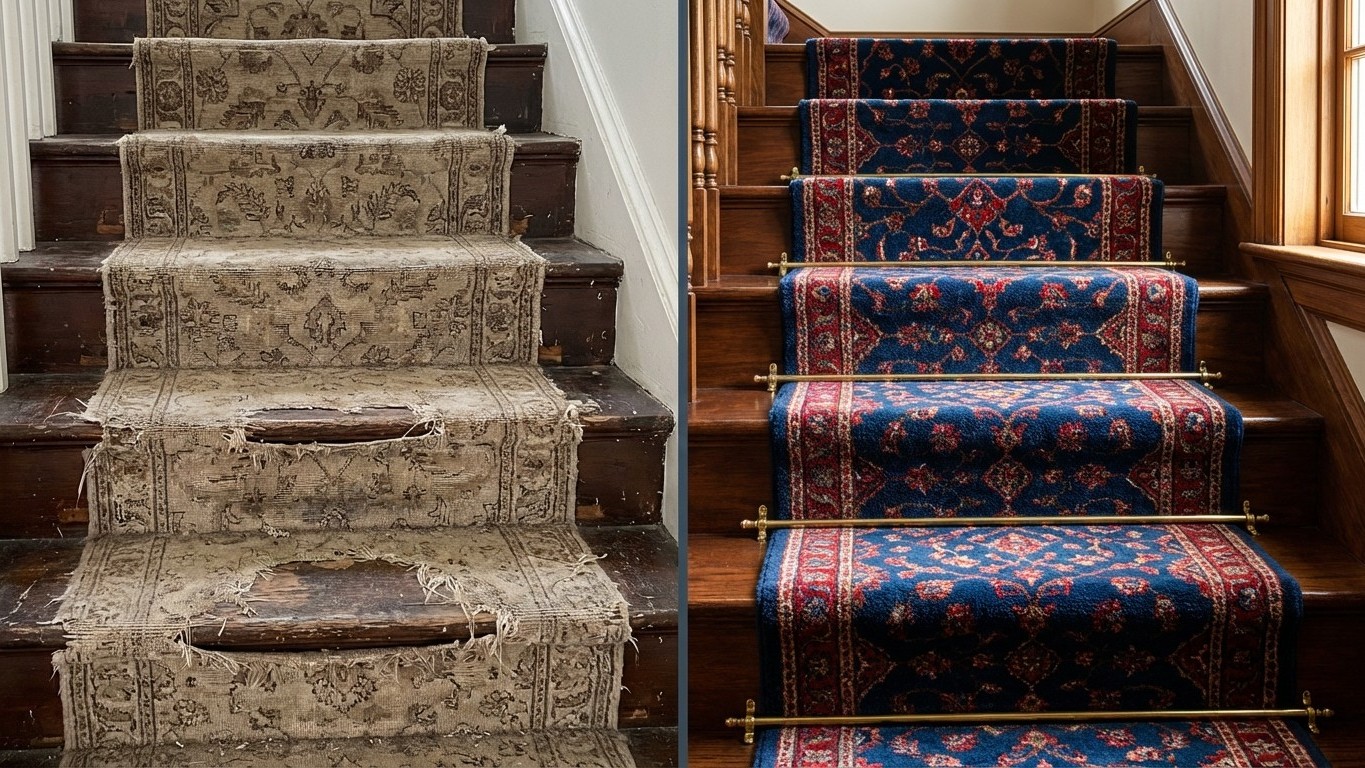
Twelve months ago, I installed what I thought was the perfect stair runner in my home. Today, I’m staring at threadbare patches, frayed edges, and worn spots that make my beautiful hardwood stairs look worse than before I started. The painful truth? I made several critical mistakes that doomed my runner from day one.
The signs were there early on. By month three, I noticed the carpet fibers beginning to flatten in the high-traffic center of each step. By month six, the edges were starting to fray despite the supposedly professional installation. And now, just one year later, I’m facing a complete replacement – along with the expensive lesson that not all stair runners are created equal.
My biggest error was choosing style over substance. Seduced by a gorgeous geometric pattern and an attractive price point, I opted for a synthetic blend runner with a relatively low pile density. The salesperson assured me it would handle foot traffic just fine, but what they didn’t explain was how the construction quality would impact longevity. The backing was thin, the fibers were loosely woven, and the overall weight felt light – all red flags I should have recognized.
The Material Science Behind Stair Runner Durability
Understanding why my runner failed requires diving into the fundamentals of carpet construction. Stair runners face unique challenges that regular area rugs simply don’t encounter. Every step creates a grinding motion against the nose of each stair, while the constant pivoting and turning generates lateral stress that can separate fibers from their backing.
Natural fibers like wool possess inherent resilience that synthetic materials struggle to match. Wool fibers can bend thousands of times without breaking, thanks to their complex protein structure. They also naturally resist staining and retain their shape better over time. My synthetic runner, by contrast, began showing permanent compression marks within weeks of installation.
The pile density proved equally crucial. High-quality runners feature tightly packed fibers that support each other under pressure. My low-density choice left individual fibers vulnerable to crushing and premature wear. When examining potential replacements, I learned that quality runners should feel substantial in weight and spring back quickly when pressed down.
Backing material represents another critical factor I initially overlooked. Premium runners use dense, durable backing materials that maintain their grip and prevent stretching. My failed runner had a thin synthetic backing that began separating from the carpet face after just a few months of use, creating dangerous loose spots that caught toes and heels.
Installation Factors That Determine Longevity
Even the best materials can fail with poor installation, and here too I made costly compromises. To save money, I chose the most affordable installation option, which meant using standard carpet tacks rather than proper stair rods or specialized gripper systems.
The installation team stretched my runner too tightly, creating stress points that accelerated wear. Proper installation requires leaving slight slack to accommodate the natural movement that occurs with foot traffic. They also failed to use adequate padding, which serves as a crucial shock absorber for the repeated impact of footsteps.
The securing method matters tremendously for stair runners. Traditional stair rods distribute tension evenly and allow for easy maintenance or replacement. Tackless strips, while more affordable, create concentrated stress points that can cause premature failure. Adhesive methods, which I initially considered, would have made future replacement nearly impossible without damaging the underlying stairs.
Learning from Failure: What I’ll Do Differently
My replacement strategy focuses on quality over initial cost savings. I’m investing in a wool runner with dense pile construction and professional-grade backing. The upfront expense stings, but spreading that cost over ten to fifteen years of expected life makes it far more economical than replacing cheap runners annually.
Professional installation with proper stair rods represents another non-negotiable upgrade. The installation cost may be higher, but the long-term benefits in durability and maintenance flexibility justify the investment. Quality installers understand the unique stresses that stair runners face and adjust their techniques accordingly.
I’m also planning for proper maintenance this time. Regular vacuuming with appropriate settings, prompt attention to spills, and periodic professional cleaning will help maximize the life of my investment. Rotating the runner occasionally, if the installation method allows, can help distribute wear more evenly.
The experience taught me that stair runners represent a long-term home improvement decision, not a quick decorative fix. Cutting corners on materials or installation inevitably leads to premature replacement, safety hazards, and frustrated regret. While my one-year failure was expensive and embarrassing, it provided invaluable education for making better choices going forward.
My advice to anyone considering a stair runner? Invest in quality materials, professional installation, and proper maintenance from the beginning. The few hundred dollars saved by choosing cheaper options will cost you thousands in repeated replacements and potential safety issues. Learn from my mistake – your stairs and your wallet will thank you.