
For years, I walked into furniture stores and online shops, drawn to beautiful rugs that looked perfect in isolation. I’d bring them home only to discover they made my carefully curated living room look oddly disjointed. My dining area felt cramped despite having plenty of space, and my bedroom seemed to shrink around a rug I was certain would be the perfect centerpiece. The problem wasn’t the rugs themselves – it was my complete misunderstanding of how size and proportion work in interior design.
The revelation came during a consultation with an Interior designer friend who took one look at my space and immediately identified what I’d been doing wrong. She introduced me to what she called the “two-thirds rule” – a simple mathematical principle that has since transformed every room in my home and saved me from countless expensive mistakes.
The Two-Thirds Rule Explained
The two-thirds rule states that your rug should cover approximately two-thirds of your seating area or main furniture grouping. This isn’t just an arbitrary number pulled from design magazines – it’s based on how our eyes naturally process spatial relationships and create a sense of harmony in a room.
When you place a rug that covers two-thirds of your furniture arrangement, you create what designers call a “grounded” look. The rug becomes an anchor that visually connects your pieces while still allowing the floor to breathe around the edges. This proportion feels neither overwhelming nor inadequate – it’s the sweet spot that makes everything look intentional and well-planned.
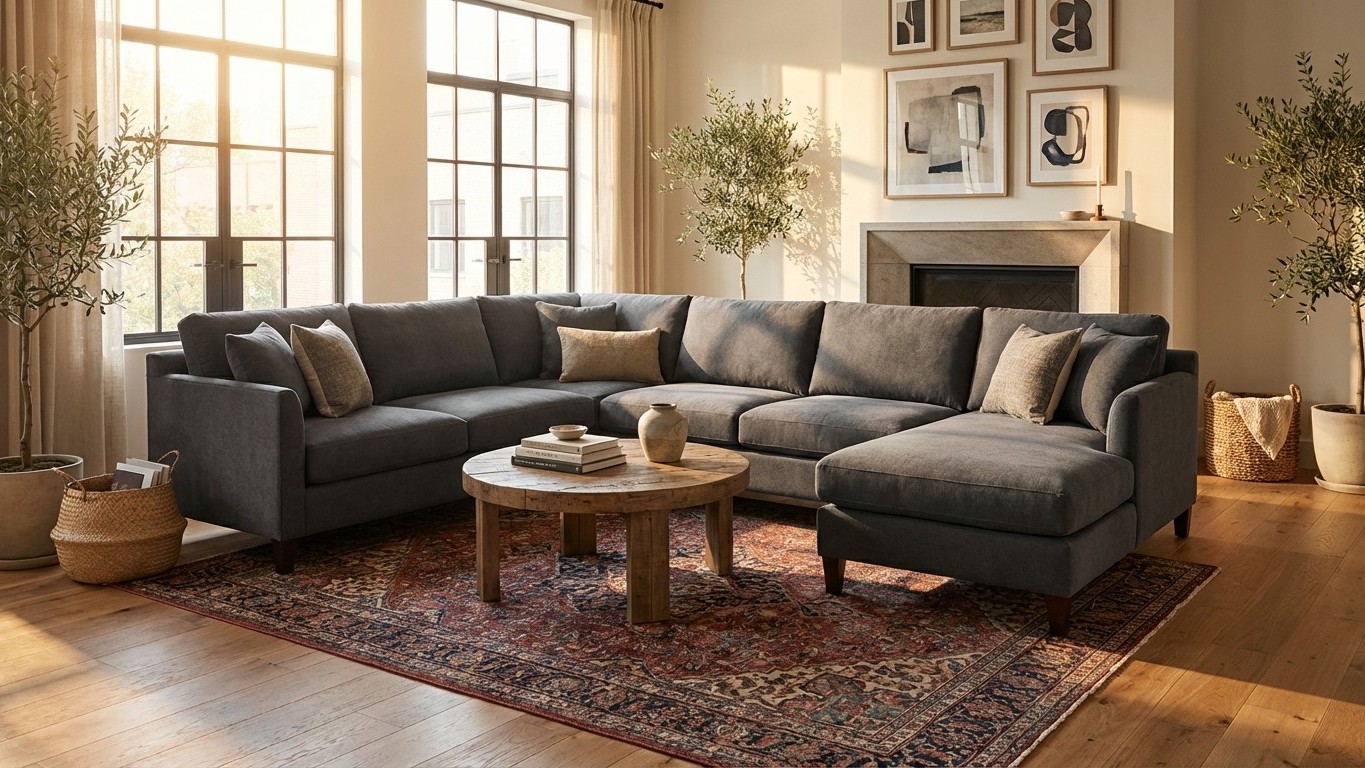
Think of it this way: if you have a sectional sofa with a coffee table, the ideal rug would extend under about two-thirds of the sofa’s footprint, with the coffee table sitting completely on the rug. The remaining third of the sofa might extend beyond the rug’s edge, creating a natural transition between the defined seating area and the rest of the room.
Room-by-Room Applications
In the living room, this rule transforms how you think about furniture placement. Instead of choosing a rug first and hoping it works, you start by measuring your seating arrangement. A common mistake is buying a rug that only fits under the coffee table, leaving all your seating floating on bare floor. The two-thirds rule ensures your seating feels cohesive and purposeful.
Dining rooms present their own challenges, and this is where I made some of my costliest errors. The rule here focuses on the dining table and chairs. Your rug should extend far enough that chairs remain on the rug even when pulled out for seating. Following the two-thirds principle, if your table is six feet long, your rug should be at least eight feet long to accommodate the table plus the space needed for chairs.
Bedrooms often feel the most personal, which is why rug mistakes here can be particularly frustrating. The two-thirds rule suggests that your bedroom rug should cover the area from about two-thirds down the length of your bed, extending equally on both sides. This creates a luxurious feeling when you step out of bed while maintaining proper proportions with your other bedroom furniture.
Why This Rule Works So Well
The effectiveness of the two-thirds rule lies in how it balances definition with openness. Rooms need defined spaces to feel organized and intentional, but they also need breathing room to avoid feeling cluttered or cramped. When a rug covers exactly two-thirds of a furniture grouping, it provides enough coverage to unify the pieces while leaving enough exposed floor to maintain the room’s sense of spaciousness.
This proportion also works because it mirrors other successful design ratios found throughout interior design and even nature. The golden ratio and rule of thirds in photography share similar mathematical principles – our eyes are naturally drawn to these balanced proportions because they feel harmonious and pleasing.
Another reason this rule prevents common mistakes is that it forces you to consider your furniture as a cohesive group rather than individual pieces. When you’re shopping for a rug with the two-thirds rule in mind, you’re thinking about how all your pieces work together, which naturally leads to better design decisions overall.
Putting It Into Practice
Before your next rug purchase, measure your furniture grouping and calculate two-thirds of that area. Don’t just eyeball it – use actual measurements. If you’re working with an L-shaped sectional, measure the overall footprint it creates, then find a rug that covers approximately two-thirds of that space.
Remember that this rule provides a starting point, not a rigid requirement. In some rooms with unique layouts or architectural features, you might need to adjust slightly. The key is understanding the principle behind the rule so you can adapt it thoughtfully to your specific situation.
Since discovering this simple proportion rule, I’ve helped friends avoid the same costly mistakes I made. We’ve chosen rugs that make small spaces feel larger, created cozy conversation areas in open-plan homes, and transformed awkward room layouts into purposeful, beautiful spaces. The two-thirds rule isn’t just about choosing the right size rug – it’s about understanding how proportion creates harmony in your home. Armed with this knowledge, you’ll never look at a room the same way again, and every rug purchase will feel confident and intentional.