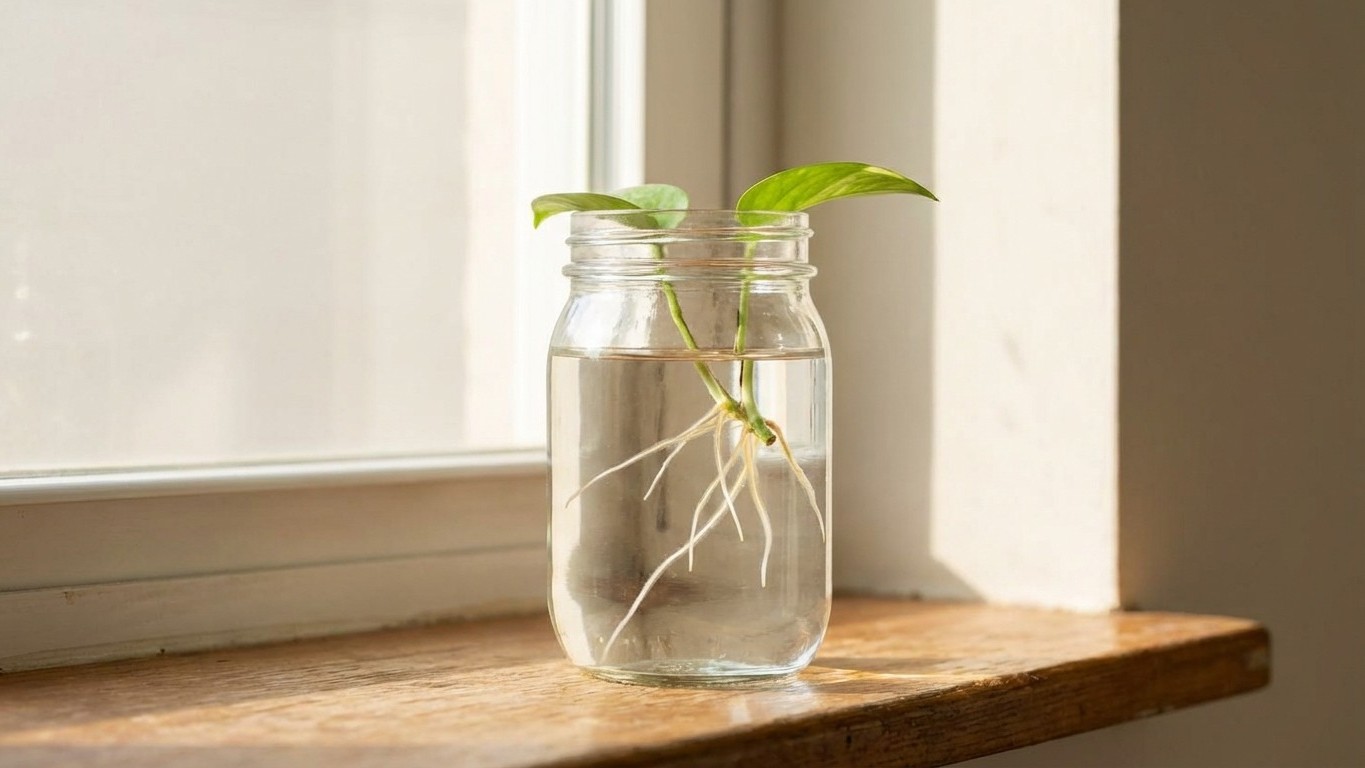
Some houseplants don’t need soil at all. No bags of potting mix, no drainage holes, no repotting every spring, just water, a clean container, and a little patience. The day I figured this out was the day a forgotten cutting of pothos, left sitting in a glass on my windowsill for three weeks, had grown more roots than anything I’d carefully tended in a pot for months. That was the moment soil lost its monopoly in my home.
Growing plants in water, a practice called hydroponics in its more engineered form, or simply “water propagation” in its casual, kitchen-counter version — has existed for centuries. The Aztecs built floating gardens on water long before anyone thought to bag and sell peat moss. But for most modern gardeners, the idea that a plant can not only survive but genuinely thrive in a jar of water still feels like a trick. It isn’t.
Key takeaways
- A pothos cutting outgrew everything in soil after sitting in water for three weeks
- Tradescantia, basil, mint, and even green onions root faster in water than anyone expects
- Water-grown roots are visibly different, revealing your plant’s secrets at a glance
The plants that genuinely love living in water
Not every plant will cooperate. Succulents, for instance, will rot long before they flourish. But a surprisingly wide range of common houseplants adapt beautifully to a water-only setup, and some seem almost to prefer it once they’ve settled in.
Pothos is the obvious starting point, cuttings root within a week or two, and the trailing vines will continue growing indefinitely in a glass jar with occasional water changes. Philodendrons behave almost identically. What’s less expected is how well Tradescantia (that purple-and-green spiderwort you see everywhere) handles full water culture. Cut a stem, drop it in a glass near a bright window, and it practically roots overnight.
Lucky bamboo has been living in decorative vases of water in American homes for decades, most buyers don’t realize that’s not just a display arrangement, that’s its permanent home. Chinese evergreen, coleus, impatiens, and even certain varieties of begonia all root and grow in water with minimal fuss. Sweet potato vine is almost aggressively enthusiastic about it: drop a section of stem in water and watch it take off within days, no coaxing required.
Herbs deserve their own mention here. Basil cuttings root in water in under two weeks. Green onions regrow from their trimmed ends just sitting in a shallow dish of water on the kitchen counter, an endlessly satisfying trick that feels more like science fiction than gardening. Mint, lemon balm, and oregano all follow suit. For anyone who’s ever killed a pot of herbs by forgetting to water it, this approach removes the main failure point entirely.
What water propagation actually requires (less than you think)
The setup is almost embarrassingly simple. A clean glass or jar, tap water that’s been left out for a few hours to off-gas the chlorine (though most cuttings tolerate it fine regardless), and indirect light. That’s the foundation.
A few details make a real difference, though. Darker or opaque containers help discourage algae growth, which can cloud the water and compete with your plant’s roots. If you love the look of clear glass, just plan to change the water every week or so and rinse the container while you’re at it. The neck of the jar matters too: it should hold the cutting upright and above the waterline while the stem stays submerged. Wide-mouth mason jars, old wine bottles, even repurposed olive jars all work beautifully, which makes this one of the few gardening projects that costs essentially Nothing to start.
Roots that grow in water are structurally different from soil roots, they’re longer, more translucent, more fragile. This means that if you eventually want to transplant a water-grown plant into soil, it needs a slow transition period, acclimating gradually to a very moist medium before moving to a standard potting mix. Some gardeners skip that step entirely and just keep their plants in water permanently, adding a diluted liquid fertilizer every few weeks to compensate for the absence of soil nutrients. Either path works.
The case for making water your permanent growing medium
Soil comes with a hidden cost that most gardeners absorb without thinking about it: pests. Fungus gnats are practically a rite of passage for anyone with houseplants in potting mix. The larvae live in the top layer of soil, the adults hover around your face every time you walk past your collection, and no matter how many yellow sticky traps you deploy, they return. Water propagation eliminates this entirely. No soil, no gnats. The trade-off feels almost too good.
There’s also something quietly satisfying about being able to see exactly what your plant is doing. Roots visible through glass are genuinely beautiful, dense, white, reaching, and you get immediate feedback about a plant’s health in a way that’s impossible when roots are buried in a pot. A plant struggling in soil can hide its problems for weeks. A plant in a glass jar tells you Everything.
The aesthetic case is strong too. A collection of cuttings in mismatched vintage glasses arranged on a windowsill, each at a different stage of rooting, has a quality that no commercial plant arrangement quite replicates. It looks intentional without requiring intention, more like a science experiment than a decoration, which, honestly, is what makes it interesting.
The deeper question, once you’ve pulled a few plants out of their pots and watched them settle contentedly into jars, is why the default assumption was ever that soil was non-negotiable. Habits in gardening, like habits everywhere, tend to persist past their usefulness. A jar, some water, a cutting snipped from a healthy stem, and you’re already growing something. What else were you making unnecessarily complicated?