
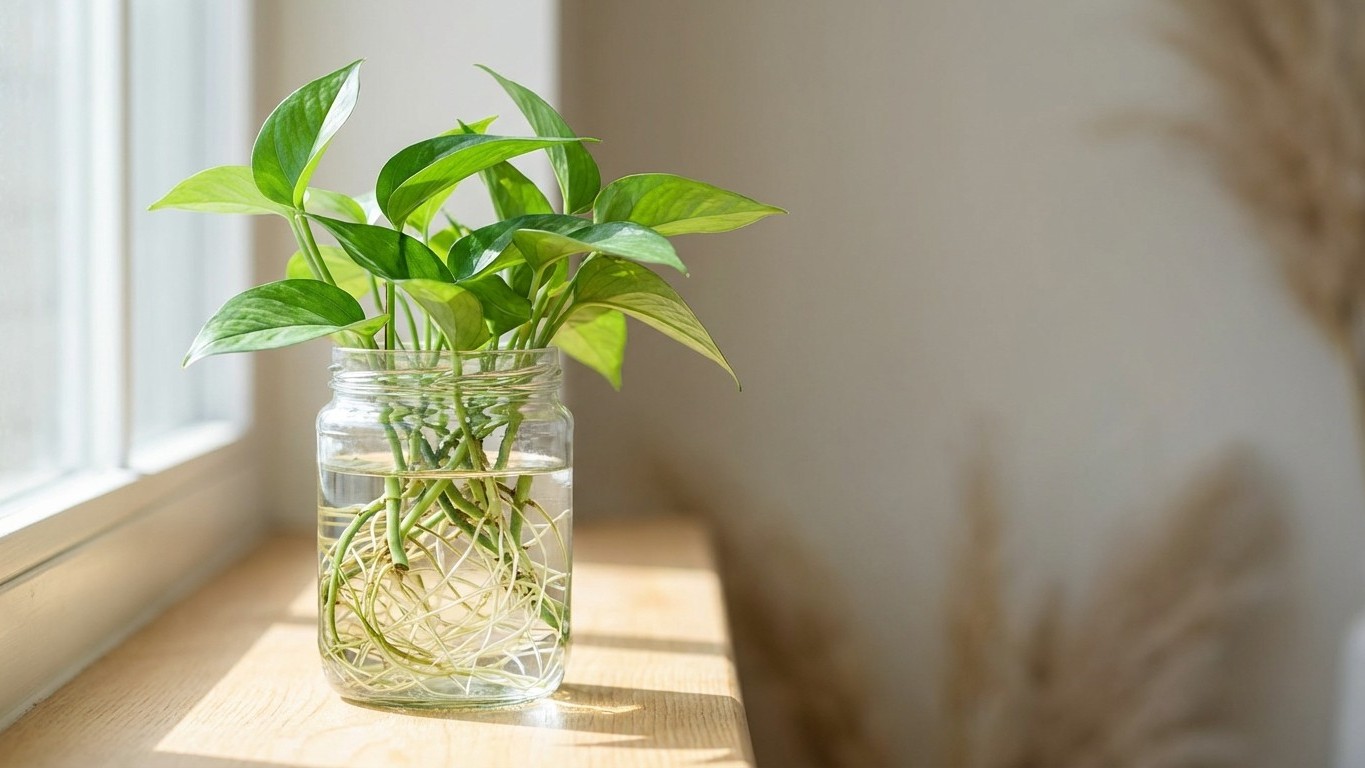
Three years ago, I tossed an overgrown pothos into a glass jar with some tap water, fully expecting it to die within a week. It didn’t. In fact, it started putting out roots so vigorous and white they looked almost artificial. That jar is still sitting on my windowsill today, and it’s never seen a single grain of potting mix. That experience sent me down a rabbit hole: hydroponics for houseplants, or more specifically, growing plants in water permanently, a method called hydroculture.
The premise sounds counterintuitive. We’ve been told plants need soil, that soil is the foundation of plant life. But soil is really just a medium, something to anchor roots and deliver nutrients dissolved in water. Cut out the middleman, keep the water, and many plants do just fine. Some do considerably better.
Key takeaways
- One plant in a jar of tap water has thrived for three years without a single grain of soil
- Soil actually creates the conditions that kill most houseplants—but water culture solves that problem entirely
- Certain tropical plants develop completely different root systems in water, making them essentially maintenance-free
Why some plants actually prefer water to soil
Soil comes with complications. Overwatering is the number one killer of houseplants in American homes, because soggy soil creates an anaerobic environment where roots suffocate and rot-causing bacteria multiply. Water culture sidesteps that problem almost entirely. The roots sit in oxygenated water, often with the top portion exposed to air, which prevents the stagnant conditions that lead to rot. You get the hydration without the humidity trap.
There’s also the pest angle. Fungus gnats, those tiny hovering nuisances that seem to appear from nowhere, breed exclusively in moist soil. No soil, no gnats. If you’ve ever waged a three-month war against an infestation using sticky traps and hydrogen peroxide drenches, you understand exactly how appealing that sounds.
The plants that adapt best to permanent water culture tend to share a few traits: they naturally grow near water sources in the wild, they have flexible root systems that can transition from soil-grown to water-grown, and they don’t require the dry-out period that desert species need. Cacti and succulents, for instance, are the wrong candidates. Most tropical foliage plants, though? They take to it surprisingly well.
The plants that genuinely thrive in water long-term
Pothos (Epipremnum aureum) is essentially the poster child of water propagation, and it converts to permanent water culture with almost no pushback. The roots it grows in water are Actually different from soil roots: thicker, more translucent, with a spongy texture that absorbs dissolved oxygen directly. Give it a clear vessel and indirect light, and it will vine, grow new leaves, and ask for almost nothing.
Philodendrons behave similarly. Heartleaf philodendron in particular transitions within weeks, sending out new water-adapted roots while the old soil roots gradually die back and are replaced. The process looks alarming at first, some yellowing, some dieback, but patience pays off. Within a month or two, you have a plant that’s essentially reinvented its root system for its new environment.
Chinese evergreen (Aglaonema) is a less obvious choice, but a rewarding one. These slow growers become almost maintenance-free in water: change the water every two weeks, add a few drops of diluted liquid fertilizer monthly, and they just sit there looking impeccable. Same goes for peace lilies, which actually signal their water needs by drooping dramatically, making them impossible to accidentally underwater.
Lucky bamboo, despite the name, it’s Dracaena sanderiana, not bamboo at all, has been sold in decorative water containers for decades. This is essentially mass-market proof that permanent water culture works at scale. Spider plants, tradescantia, coleus, impatiens, and even some begonia varieties convert reliably. The common thread is soft, fast-growing stems rather than woody or succulent ones.
How to actually make the switch
The transition process matters more than most guides admit. You can’t simply pull a plant from its pot, shake off the dirt, and drop it in a vase. Well, you can, but you’ll likely lose it. The right approach is gradual. Start by taking stem cuttings rather than converting a mature plant, especially if you’re new to this. Cuttings have no old root system to mourn; they’ll grow water-adapted roots from the start.
For converting an established plant, remove it from the soil and rinse the roots thoroughly under lukewarm running water until every trace of potting mix is gone. Residual soil in water will decompose and cloud the water with bacteria. Then let the plant sit in a shallow amount of water initially, just enough to cover the root tips, rather than submerging the entire root system at once. This encourages the plant to develop the right type of roots for the new environment, rather than drowning the soil roots it already has.
Vessel choice makes a real difference. Dark or opaque containers reduce algae growth significantly, though clear glass lets you monitor root health at a glance. A compromise: clear glass, positioned away from direct sun. Change the water every one to two weeks, and use room-temperature water that’s been left out overnight if you’re on a chlorinated municipal supply, chlorine dissipates within a few hours and can stress roots at high concentrations.
Nutrition is the one thing water alone can’t provide. A highly diluted liquid fertilizer, roughly a quarter of the recommended dose, added once a month prevents the slow decline that turns water-grown plants yellow after six months. Without it, the plant is essentially running on empty, and the Results eventually show.
The deeper shift here isn’t really about technique. It’s about rethinking what a plant Actually needs. Soil is a habit, not a requirement. And once you see roots threading through water in a glass jar on your kitchen counter, pale and alive and perfectly content, the whole system starts to feel less like a workaround and more like the obvious approach all along. Which raises a question worth sitting with: how many other “requirements” in the garden are really just conventions we never thought to question?