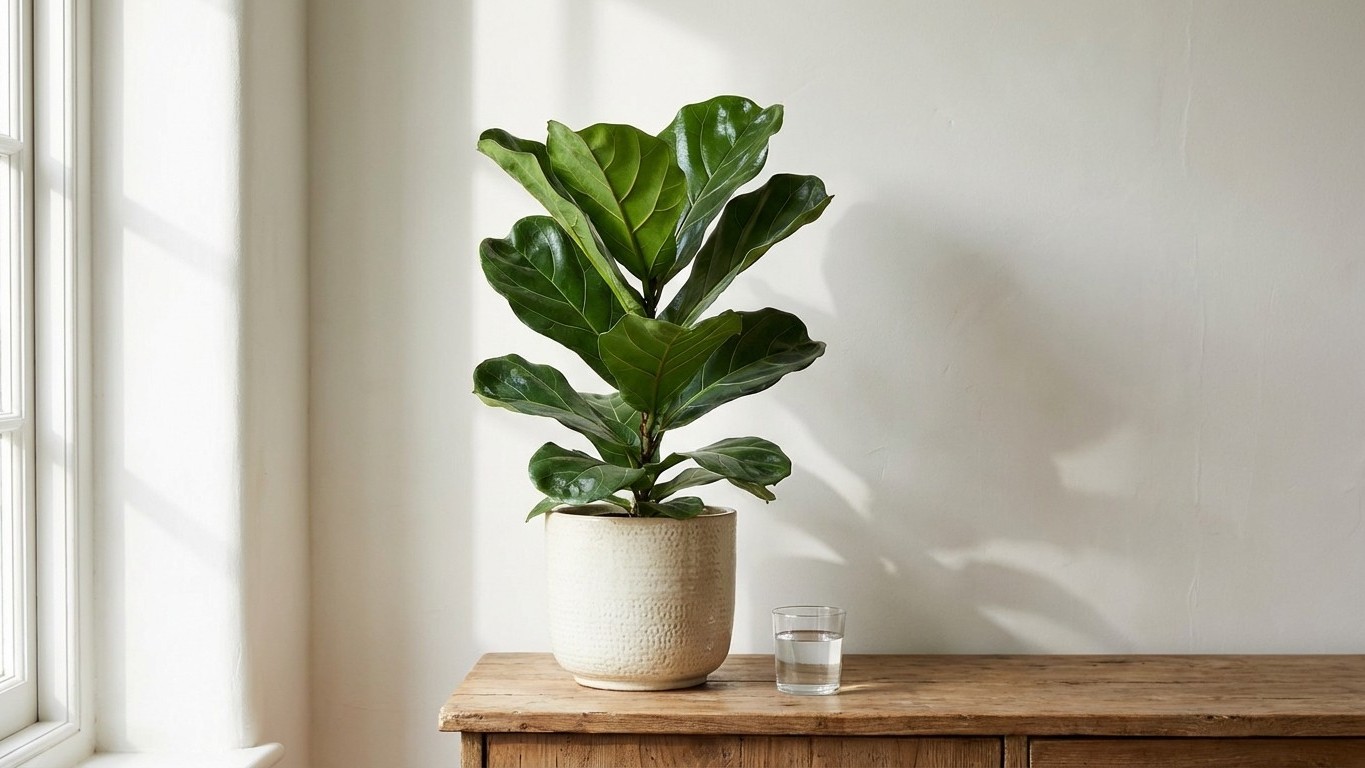
Six months ago, my fiddle-leaf fig was dropping leaves every week. My pothos looked washed out, almost gray. I blamed the light, the soil, the pot size, everything except the one thing I was doing every single day without thinking about it. Then I changed what I water my houseplants with, and within three weeks, the difference was impossible to ignore.
Most of us grab whatever comes out of the tap. It’s convenient, it’s free, and it feels like enough. But municipal tap water in most American cities contains chlorine, chloramine, and fluoride, all added deliberately to make it safe for humans. Plants, unfortunately, didn’t get a vote on that decision. Chloramine in particular is stubborn: unlike chlorine, it doesn’t evaporate if you leave a glass sitting on the counter overnight. It stays in the water, and over months, it can disrupt the beneficial microbial life in your soil.
Key takeaways
- Chloramine and fluoride in municipal tap water degrade the beneficial microbes that help plants absorb nutrients
- Hard water mineral buildup locks nutrients out of reach, creating a frustrating fertilizer cycle that makes things worse
- Three water alternatives transformed struggling plants into thriving ones within a month of switching
Why Tap Water Is Quietly Undermining Your Plants
The soil in a healthy pot isn’t just dirt. It’s a miniature ecosystem, fungi, bacteria, and microorganisms that help roots absorb nutrients. Chloramine and fluoride don’t kill your plant outright. They do something more insidious: they gradually degrade that ecosystem. You end up with a plant that looks like it should be fine, because the light is right and you’re watering on schedule, but it’s subtly starving. Brown leaf tips on peace lilies and spider plants are often the first visible clue, and fluoride toxicity is a well-documented culprit.
Hard water adds another layer of complexity. If you live in Phoenix, Dallas, or Las Vegas, cities where water hardness regularly exceeds 200 parts per million — you’ve probably noticed white crusty deposits on your pots. That’s calcium and magnesium buildup. Over time, those minerals accumulate in the soil, raise the pH, and lock out nutrients the roots need. Your plant looks like it needs fertilizer, so you add more, which makes the salt buildup worse. A frustrating cycle that starts with what’s coming out of your faucet.
The Switch That Actually Made a Difference
The change I made wasn’t dramatic or expensive. I started collecting rainwater in a basic barrel system outside, and I began using filtered water through a simple pitcher filter for my indoor collection. Rainwater is naturally soft, slightly acidic (sitting around a pH of 5.6 to 6.2), and free of the treatment chemicals that plants never evolved to handle. It mimics, reasonably well, what tropical houseplants have been drinking in the wild for millions of years.
Within the first month, the new growth on my fiddle-leaf fig came in larger and a deeper green than anything I’d seen from it before. My calatheas, which had been perpetually crispy at the edges despite regular misting, smoothed out noticeably. The spider plant in my kitchen, long a kind of sad, brown-tipped mascot of my failure to read the fine print on fluoride sensitivity — started pushing out healthy new runners for the first time in a year.
Filtered water from a pitcher (using an activated carbon filter) handles chlorine and chloramine well. It won’t fully soften very hard water, but it removes the chemical treatment. For most houseplant owners dealing with municipal water, that alone is a meaningful upgrade. A reverse osmosis system does more, stripping out heavy metals, fluoride, and most dissolved solids — but it’s a bigger investment and produces wastewater, so it’s not for everyone.
Alternatives Worth Knowing
Rainwater collection is legal in most U.S. states now, after years of restrictions in water-scarce western states. Colorado famously limited it for decades; even there, residents can now collect up to 110 gallons at home. A basic 50-gallon barrel costs around $60 to $100, and a single rainstorm can fill it. For apartment dwellers without outdoor space, that option isn’t available, but letting tap water sit out for 24 to 48 hours in an open container does at least off-gas chlorine (not chloramine, but it’s something).
Aquarium water is another option that experienced plant growers genuinely swear by. When you do a partial water change on a freshwater fish tank, that water is loaded with nitrogen compounds from fish waste, a gentle, natural fertilizer that plants absorb readily. It’s the kind of accidental biohack that sounds strange until you try it and watch your monstera respond like you’ve been holding back on it for years.
Distilled water sits at the opposite end of the spectrum. It’s pure H2O with nothing in it, no minerals, no treatment chemicals, no nutrients. Some growers use it for sensitive carnivorous plants like Venus flytraps that require mineral-free water. For everyday tropical houseplants, it’s technically fine but slightly too stripped down to be ideal; you’d need to compensate with careful fertilization since the water brings nothing to the table.
Getting the Details Right
Water temperature matters more than most guides admit. Cold water straight from the tap can shock tropical roots, which are adapted to warm rainforest soils. Room-temperature water, or even slightly lukewarm, is gentler and promotes better absorption. A small thing, but it compounds over time.
Watering frequency doesn’t change when you switch water sources, but you may find your plants signal their needs more clearly. Healthy root systems in well-maintained soil dry more evenly and predictably than stressed ones. Once the microbial ecosystem in your pots starts recovering, the feedback loop between you and your plants becomes more readable, the soil behaves more consistently, and your instincts about when to water get sharper.
The plants we keep indoors are, almost without exception, wild things we’ve invited into a controlled environment. We adjust their light, their temperature, their humidity. It seems worth asking whether the water we give them should get the same consideration, or whether we’ve just been assuming the tap is good enough because it’s good enough for us.