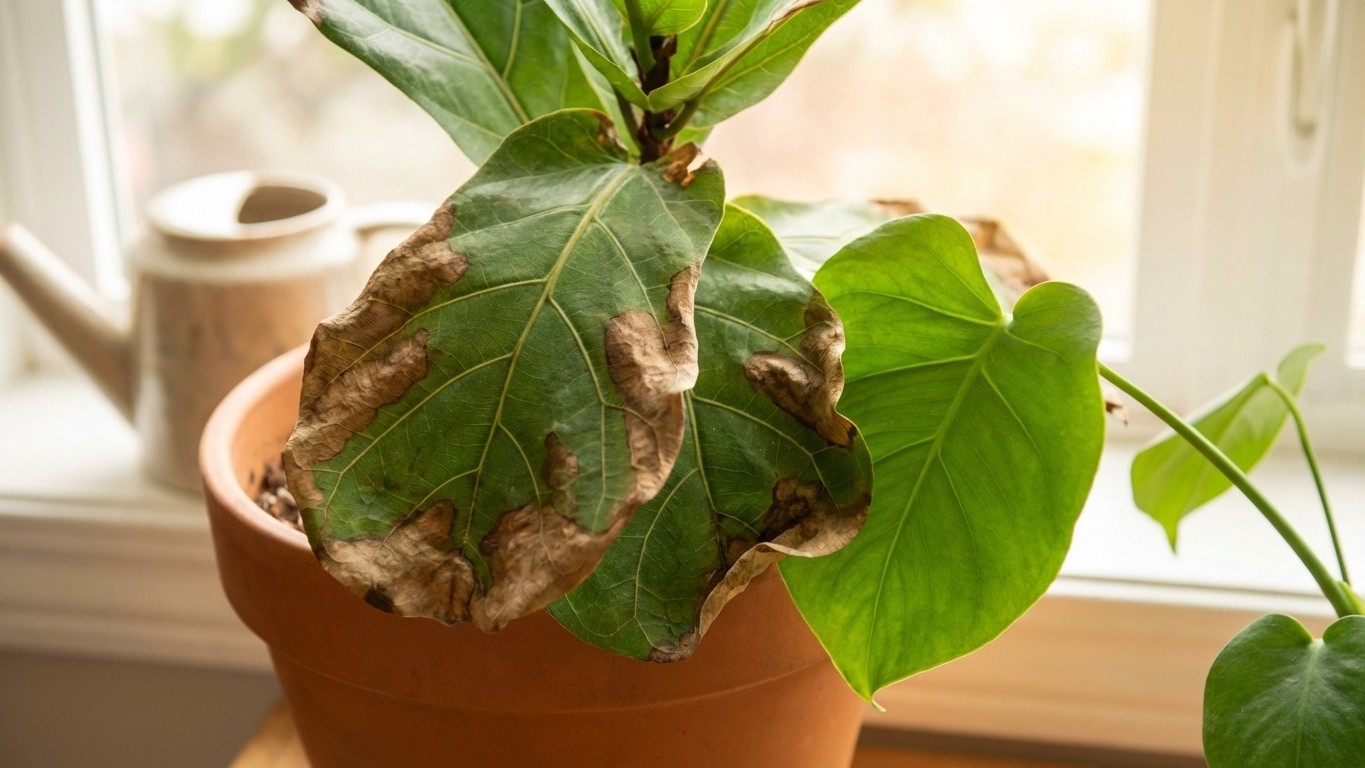
Those mysterious brown spots appearing on your plant leaves aren’t just cosmetic issues—they’re desperate distress signals from your green companions. After years of confidently watering my indoor garden the same way, a series of telltale leaf marks across multiple plants forced me to confront an uncomfortable truth: I had been systematically harming the very plants I thought I was nurturing.
The revelation came gradually, then all at once. First, my beloved pothos developed crispy brown edges on its trailing vines. Then my snake plant’s thick leaves began showing water-soaked spots that eventually turned black. The final straw was watching my fiddle leaf fig—once the crown jewel of my living room—develop those dreaded dark patches that spread like inkblots across its glossy surface.
The telltale signs of overwatering damage
What I had initially dismissed as normal plant aging was actually a clear pattern of overwatering damage. The brown leaf edges, technically called leaf burn or tip burn, occur when plants cannot process excess water fast enough, leading to cellular damage. The water-soaked spots on succulent-type plants like snake plants indicate root rot beginning to manifest in the foliage. Most dramatically, the dark patches on broad-leafed plants like fiddle leaf figs represent fungal infections that thrive in consistently moist conditions.
These symptoms don’t appear overnight. Plants are remarkably resilient and will tolerate suboptimal conditions for weeks or even months before showing visible distress. This delayed response had lulled me into a false sense of gardening competence. I was watering every plant in my collection twice weekly, regardless of species, pot size, or seasonal needs—a one-size-fits-all approach that completely ignored each plant’s individual requirements.
The underlying problem extended beyond frequency to technique. I had been watering from above, letting water pool on leaves and in plant crowns, creating perfect conditions for bacterial and fungal growth. The soil in many pots remained soggy for days between waterings, suffocating root systems that desperately needed oxygen to function properly.
Understanding proper watering fundamentals
Proper plant watering requires understanding that roots need both moisture and air circulation to thrive. Most houseplants prefer a wet-to-dry cycle where soil becomes moderately dry between thorough waterings. This approach encourages roots to grow deeper and stronger while preventing the anaerobic conditions that promote root rot.
The finger test revolutionized my watering approach. Instead of following a rigid schedule, I began checking soil moisture by inserting my finger one to two inches deep into the potting mix. If the soil feels dry at this depth, it’s time to water. If it’s still moist, I wait another few days. This simple technique accounts for variables like humidity, temperature, pot size, and plant growth stage that affect water uptake rates.
Equally important is watering technique. Rather than sprinkling water over leaves and soil surface, proper watering involves slowly saturating the entire root zone until water drains from the pot’s bottom holes. This ensures the entire root system receives moisture while flushing out accumulated salts and fertilizer residue that can damage plant tissues.
Seasonal adjustments and recovery strategies
Plants’ water needs fluctuate dramatically with changing seasons and growth phases. During winter months, most houseplants enter semi-dormancy, requiring significantly less water as their metabolic processes slow down. Spring and summer bring active growth periods when plants can process more moisture and nutrients. Ignoring these natural cycles had contributed to my chronic overwatering problems.
For plants already showing overwatering damage, recovery requires immediate action and patience. I learned to trim away damaged foliage using sterilized pruning shears, focusing on leaves with more than fifty percent damage. Severely affected plants needed repotting with fresh, well-draining potting mix after inspecting and trimming any rotted roots. The recovery process often takes several months, requiring careful monitoring and adjusted care routines.
Environmental factors also play crucial roles in plant water needs. Plants near heating vents or in bright, south-facing windows dry out faster than those in dimmer, cooler locations. Humidity levels affect how quickly moisture evaporates from both soil and leaf surfaces. Understanding these microclimates within your home allows for more targeted watering approaches tailored to each plant’s specific location.
Building sustainable watering habits
The most profound shift in my plant care philosophy was moving from schedule-based to observation-based watering. This means regularly examining plants for subtle signs of water stress—slightly drooping leaves, soil pulling away from pot edges, or reduced growth rates. These early indicators allow for timely intervention before visible damage occurs.
Investing in proper drainage became non-negotiable. Every plant now sits in pots with adequate drainage holes, often elevated on saucers or plant stands that prevent roots from sitting in standing water. For plants requiring higher humidity, I create humid microclimates using pebble trays or room humidifiers rather than frequent misting that can promote fungal issues.
Those leaf marks that initially seemed like plant failures became valuable teachers, highlighting the importance of individualized care over generic approaches. Now, several months later, my plant collection is thriving with lusher foliage and stronger growth than ever before. The key was learning to listen to what each plant was actually telling me rather than imposing my own assumptions about their needs.