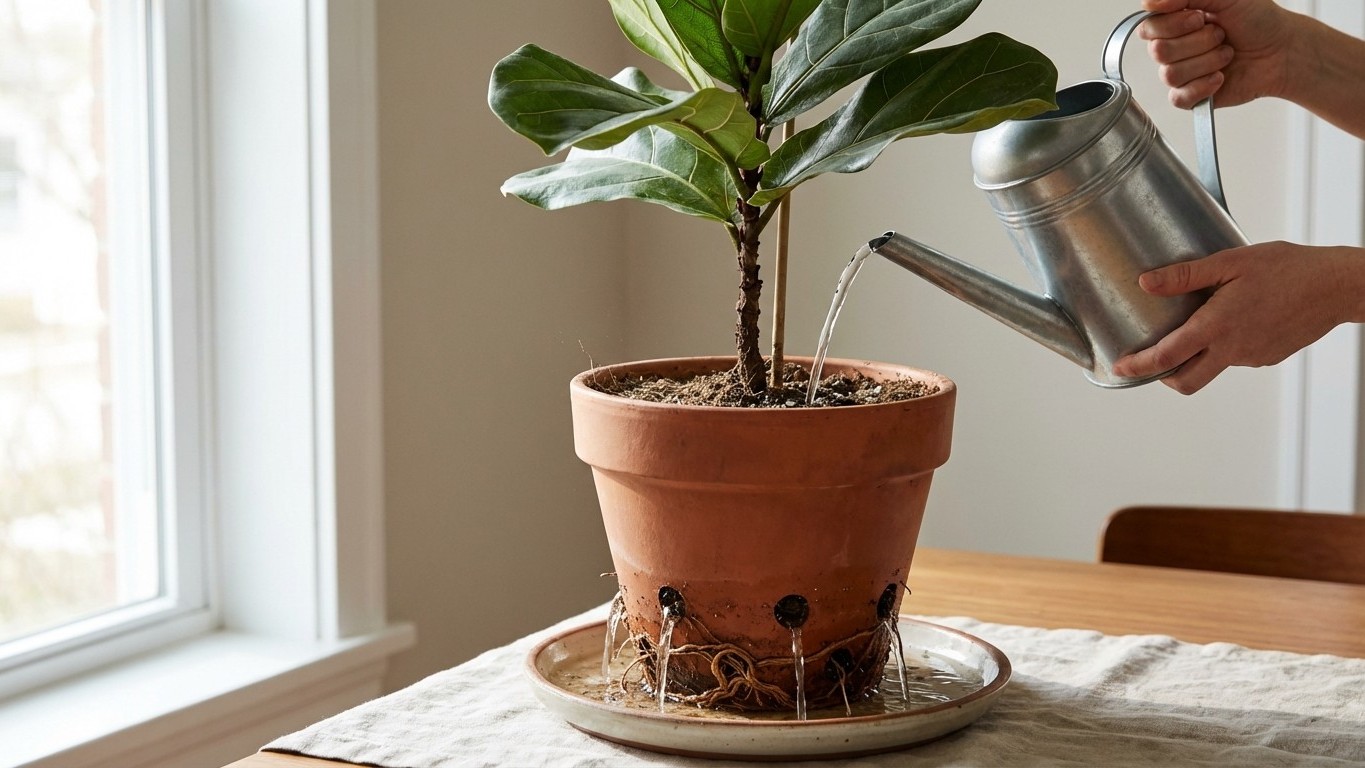
The roots were growing out of the drainage holes. Not just peeking out, genuinely escaping, wrapping around the bottom of the pot like the plant was trying to flee. That’s the moment I finally understood what “root-bound” Actually looks like in practice, and why every Repotting guide I’d ever skimmed had been teaching me the wrong thing to watch for.
For years, I repotted on a schedule. Every spring, like clockwork, I’d pull out the potting mix, size up to the next Container, and congratulate myself on being a responsible plant parent. The problem? Half my plants didn’t need it. The other half had already been silently screaming for a new home for months. Timing based on the calendar is essentially guessing. The plant itself is the only reliable calendar that exists.
Key takeaways
- The most obvious repotting signal isn’t always the most urgent one your plant is sending
- Water behavior during watering reveals something critical that root appearance alone cannot show
- Most repotting advice ignores the plant’s individual timeline in favor of generic schedules
The Sign That Actually Matters
Roots pushing through drainage holes get all the attention, and yes, that’s a clear signal. But the one sign that changed how I approach repotting entirely is subtler: water that rushes straight through the pot and out the bottom within seconds of watering. No absorption. No pause. Just a fast drain that leaves the soil bone dry almost immediately.
What’s happening beneath the surface is that roots have displaced so much of the growing medium that there’s barely any soil left to hold moisture. The root mass has essentially taken over the interior of the pot, compressing the growing medium into a tight, almost impermeable structure. When water can’t linger long enough to be absorbed, the plant is effectively drought-stressed even if you’re watering on schedule. This is the telltale sign most guides gloss over, probably because it requires you to actually observe your plant during watering rather than just glancing at it from across the room.
Once I started paying attention to drainage speed, I realized two of my pothos had been quietly suffering through this for an entire growing season. The yellowing I’d attributed to overwatering was, in a cruel twist of irony, a symptom of under-hydration caused by being too root-bound to absorb water properly.
Why Most Repotting Advice Misses the Point
The conventional wisdom, repot every one to two years, go up one pot size, isn’t wrong, exactly. It’s just incomplete. Plants don’t operate on human schedules, and a fast-growing monstera and a slow-creeping snake plant have nothing in common when it comes to how quickly they outgrow their containers. Treating them identically is like telling a toddler and a retired accountant to eat the same number of calories because they’re both human.
There’s also a persistent myth that bigger pots are always better. They’re not. Oversized containers hold excess moisture around roots that haven’t yet grown to fill the space, which creates ideal conditions for root rot, one of the most common ways to kill an otherwise healthy houseplant. The goal isn’t to give a plant as much room as possible; it’s to give it just enough more room to continue growing comfortably. A pot that’s two inches wider in diameter than the current one is generally the sweet spot for most houseplants.
Soil choice matters just as much as timing, and this is another area where casual advice tends to oversimplify. Generic all-purpose potting mix works for plenty of plants, but if you’re repotting a succulent into the same dense mix you’d use for a fern, you’re setting the plant up for problems regardless of how perfectly you timed the repotting. Matching the growing medium to the plant’s natural habitat, well-draining and gritty for desert plants, moisture-retentive and rich for tropical ones — is what actually determines whether a repotting succeeds long-term.
How to Repot Without Traumatizing Your Plant
Stress during repotting is real. Roots don’t enjoy being disturbed, and transplant shock can set a plant back by weeks if you’re not careful. A few practical habits make a significant difference here.
Water the plant thoroughly one or two days before repotting. Moist roots are more flexible and less likely to snap during handling. Dry roots are brittle, and a repotting session that breaks half the root structure is more damaging than helpful. The day before seems to be the sweet spot: the soil is moist enough to slide out cleanly, but not so wet that it’s a muddy mess.
When you remove the plant from its old container, resist the urge to aggressively shake off all the old soil. Some plants tolerate this fine; others, like fiddle leaf figs, are notoriously sensitive and will punish you with a weeks-long sulk and a dramatic leaf drop. Loosening the outer roots gently and keeping the core root ball relatively intact tends to produce less shock than a full bare-root treatment, unless you’re specifically dealing with root rot that needs to be cut away.
After repotting, skip the fertilizer for at least four to six weeks. The plant’s root system needs time to establish in the new environment before it can efficiently process nutrients. Fertilizing too soon stresses roots that are already in recovery mode, which is counterproductive no matter how good your intentions are.
Reading Your Plants Like a Language
The shift that actually improved my plants’ health wasn’t learning a better repotting technique. It was learning to observe rather than manage. Plants communicate constantly through leaf texture, growth rate, soil behavior, and yes, the way water moves through their containers. The roots pushing out the drainage hole is the plant practically writing a note. The water rushing straight through without absorbing is a quieter signal, easier to miss, and often more urgent.
Once you start watching for that fast-drain behavior, you’ll probably notice it in plants you assumed were fine. Which raises a fair question: how many of your current plants have been trying to tell you something you’ve just never been watching for?