
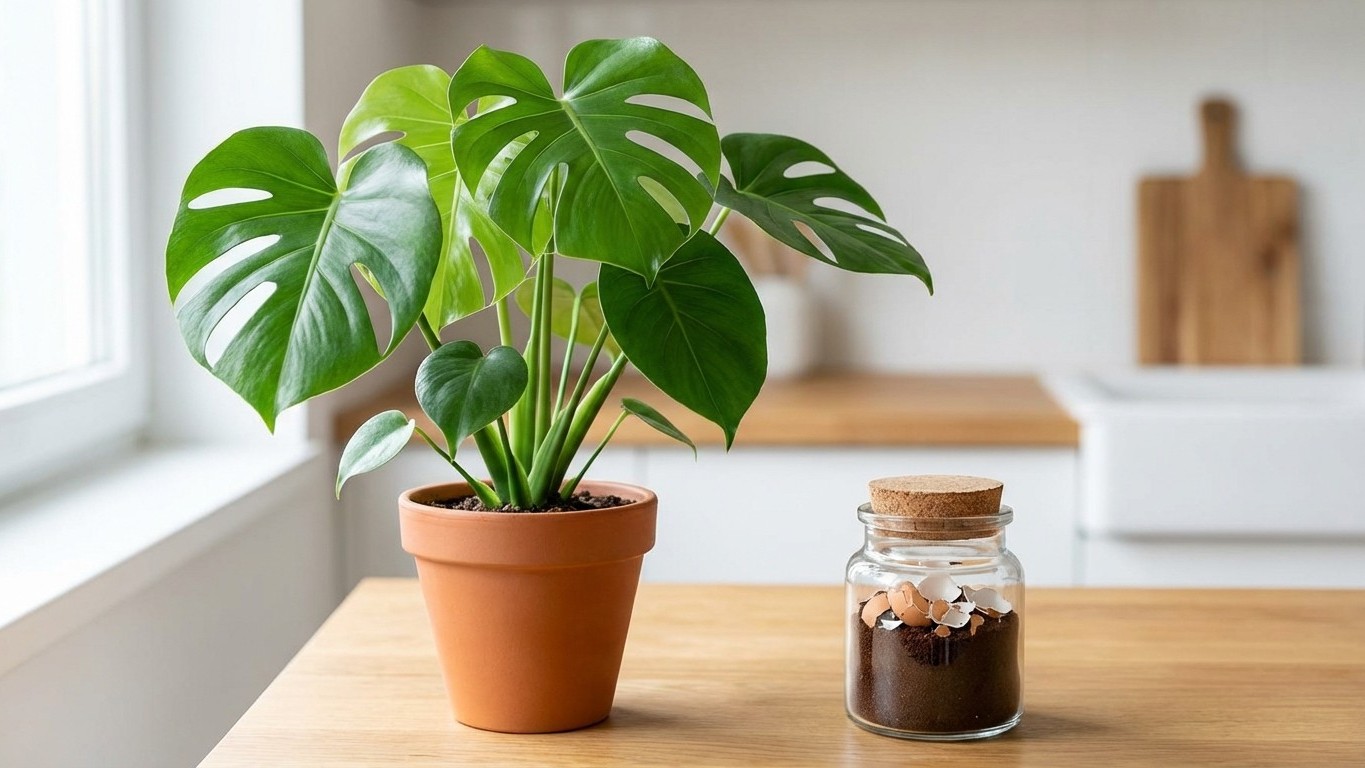
A bag of potting mix typically runs anywhere from $8 to $20 at the garden center, and if you’re repotting houseplants every season, those costs add up fast. What if your kitchen trash was quietly generating everything your plants need? Not as a gimmick, but as a legitimate, research-backed soil enrichment strategy. The answer has been sitting next to your coffee machine and on your breakfast plate the whole time.
Key takeaways
- A common kitchen ingredient contains the exact same macronutrients as premium organic fertilizers—and you’ve been discarding it
- Scientists discovered the surprising ratio that makes kitchen scraps work better than anyone expected
- One simple preparation mistake could kill your plants, but the fix takes less than a minute
The Three Kitchen Stars Your Plants Are Waiting For
Every morning, the average American household produces two waste items that are genuinely useful for plant nutrition: used coffee grounds and eggshells. Together, while we may consider them trash, they provide a healthy snack for plants, offering a one-two punch of nitrogen and calcium. That’s not folk wisdom, those are the same macronutrients you’re paying for in premium organic fertilizers.
Coffee grounds deserve a closer look. They’re a great source of nitrogen and contain some of the other two major plant elements, phosphorus and potassium, and are also a good source of micronutrients like magnesium, copper, calcium, zinc, manganese, and iron. For houseplants, potted plants and hanging baskets benefit greatly from a few tablespoons of coffee grounds every few weeks, just sprinkle the grounds on the surface of the soil, and they will leach in with each watering. Think of it as a slow-drip fertilizer that activates every time you water.
One caveat worth knowing: when adding coffee grounds, make sure they comprise no more than 20% of the total soil materials, as adding a higher percentage can result in stunted plant growth or other problems. Also, since coffee grounds retain moisture, avoid using them on plants that prefer drier soil such as cacti and succulents, and avoid using grounds on plants that prefer alkaline soil such as asparagus, lavender, and rosemary. Best fits? Houseplants that prefer acid soil will be more receptive to coffee ground use, including African violet, croton, gloxinia, monstera, peperomia, and philodendron.
Eggshells bring calcium to the party. They are a rather fantastic source of calcium, as well as a host of other trace elements such as magnesium. The trick is preparation: before you use eggshells, sterilize them, on low heat in the oven for a few minutes or in a microwave on high power for at least 10 seconds. Then grind them fine. Eggshells generally decompose too slowly to be effective in large chunks; the smaller the pieces, the faster they’ll decompose. A coffee grinder turns a week’s worth of shells into powder in under a minute.
Banana Peels, Vegetable Scraps, and the Art of Peel Tea
Banana peels are the underdog of kitchen garden amendments. Banana peels contain potassium, an essential nutrient that helps plants produce Flowers and fruits, and they also contain phosphorus and some nitrogen, making them a well-rounded fertilizer. Roses and tomatoes particularly love this potassium boost. The easiest application: bury chopped peels beneath the soil near plants, make a “tea” by soaking them in water for a few days, or dry and grind them into a powder. Bonus, the banana smell naturally repels aphids, making this a dual-purpose treatment.
Don’t stop at peels. Vegetable peels such as green leftovers, citrus rind, broccoli stalks, and potato peels have nutrients that, when added to the soil, can provide vitamin A and C to your plants. And that water you drain after boiling pasta or steaming broccoli? When you boil or steam vegetables on the stovetop, don’t pour the water down the drain, once cooled, pour it into your plants to fertilize them instead, as this water is rich in micronutrients. Just make sure it’s unsalted. Salt is a plant killer, full stop.
Tea drinkers have their own secret weapon. Used tea leaves or tea bags can be used in multiple ways in the garden, as they contain 4.4% nitrogen, 0.25% potassium, and 0.24% phosphorus, these leaves act as excellent organic Fertilizer and soil amendment. Sprinkle dried leaves around the base of potted plants, or open a used tea bag and work the contents directly into your potting mix.
What Science Says: The Blend Is the Secret
Here’s where honest reporting matters. These kitchen ingredients are powerful soil amendments, but don’t expect them to fully replace a structured growing medium on their own. A 2025 study from the University of Arkansas found that while food waste compost might not be viable as a standalone alternative to commercial potting mix, it could be suitable as part of a substrate mix, specifically, mixtures with less than 50% food waste compost produced better seedling emergence and growth. The sweet spot is blending, not replacing.
The University of Minnesota Extension echoes a similar note of caution on coffee grounds: coffee grounds can be beneficial to your soil, but they have not been shown to consistently lower soil pH. The internet is full of claims about coffee grounds “acidifying” soil for blueberries, that effect is largely overstated. What they reliably do is feed soil microbes, improve structure, and add nitrogen over time. Cultivating a robust and diverse population of soil microbes is the foundation for healthy soil and healthy plants — soil organisms then transform these nutrients into chemicals that plants use for growth.
When used correctly, these simple leftovers can improve soil structure, support beneficial microbes, and provide slow-release fertilizer all season long. The operative word is “correctly.” A thick, dry crust of coffee grounds on top of a pot is a drainage disaster. A light, mixed-in application every few weeks? That’s free plant food doing exactly what it’s supposed to do.
Building Your Kitchen Scrap Soil Amendment System
The practical setup is simpler than you’d think. Keep a lidded glass jar (a pasta sauce jar works perfectly) near your coffee maker. Each morning, the grounds go in. Eggshells get rinsed, dried, and crushed before joining them. Combine the two, crush the eggshells even further once fully dry, and sprinkle the mixture across the soil bed, the University of Arizona’s cooperative extension recommends not using more than a half-inch layer, then covering it with a thicker layer of organic mulch like wood chips.
For potted houseplants specifically, the rhythm is straightforward: repeat the process every several months or at the start of a fresh growing season, and the important thing is not to overdo it, too much fertilizer can overwhelm and distress the plants. Once a month is a reasonable cadence for most indoor plants during the growing season.
The bigger picture here has nothing to do with saving a few dollars on potting mix (though that’s real). An estimated 30 to 40% of the United States’ food supply ends up as waste, according to the U.S. Food and Drug Administration. Every banana peel buried near a root, every coffee ground worked into a pot of monstera soil, every pinch of eggshell powder, it all chips away at that number. Your kitchen isn’t just where food gets consumed. With a little attention, it might also be where your garden gets fed. The question worth sitting with: how much of what you’re currently throwing away could quietly be doing something useful instead?