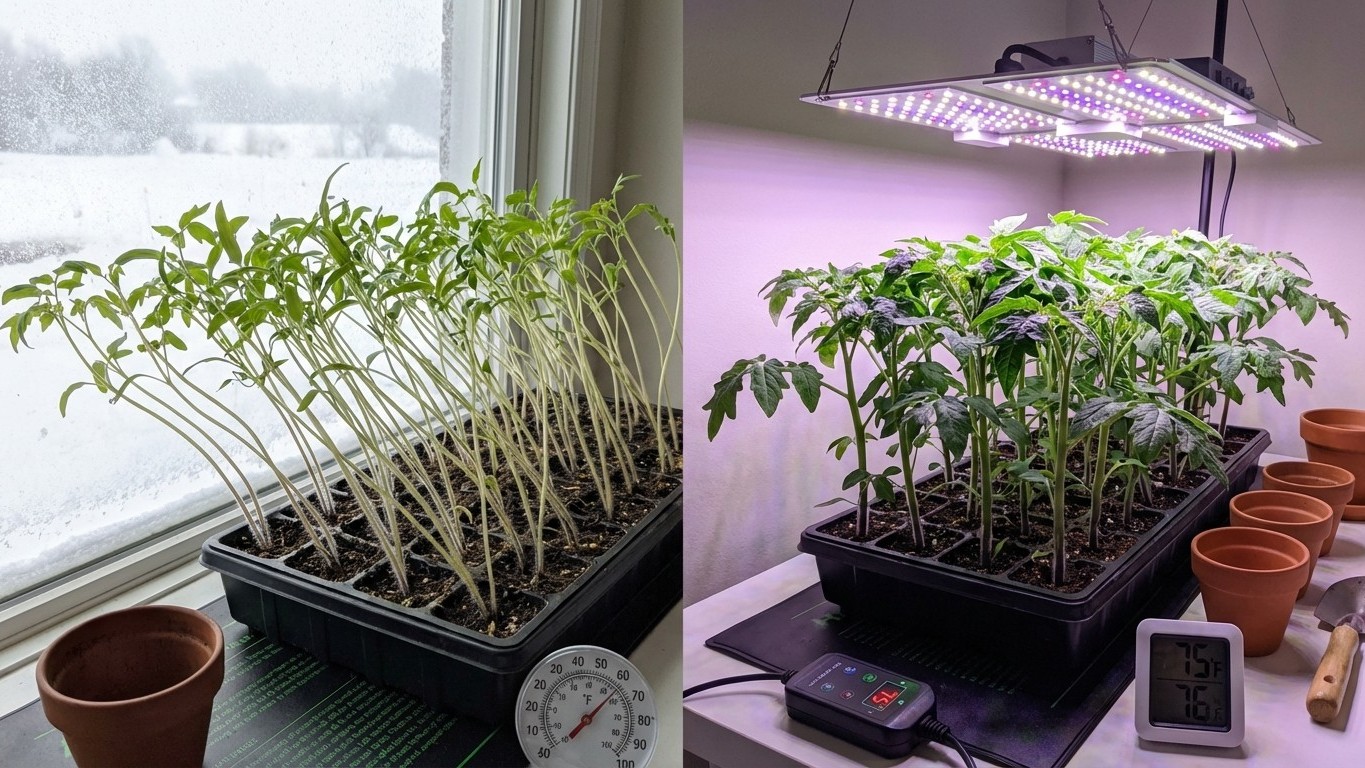
February might seem like an odd time to think about tomatoes, but seasoned gardeners know better. While snow still blankets much of the country, this quiet month holds the secret to preventing those disappointing, stretched-out seedlings that plague amateur growers — and the key to doubling your summer harvest.
The game-changing task? Starting your tomato seeds indoors with proper timing and light management. Skip this step or botch the execution, and you’ll spend the growing season nursing weak, leggy plants that produce half the fruit they should.
Key takeaways
- Why the majority of home gardeners miss the perfect February window for tomato seed starting
- The one lighting mistake that creates those disappointing stretched seedlings everyone complains about
- How a simple second transplant can multiply your yield and create root systems that commercial growers rely on
Why February Timing Changes Everything
Most gardeners start too late or too early, missing the sweet spot that creates robust transplants. February offers the perfect window for most regions — enough time for strong development without the seedlings outgrowing their containers before outdoor planting season arrives.
Think of it like training for a marathon. Start too close to race day, and you’re unprepared. Begin too early, and you peak before the event matters. Tomato seedlings need exactly 6-8 weeks of controlled indoor growth to develop the thick stems and extensive root systems that translate to heavy fruit production.
The math works beautifully. Seeds started in mid-February become transplant-ready by early May in most zones — perfect timing for after the last frost when soil temperatures hit that crucial 60-degree threshold.
The Light Secret That Prevents Leggy Disasters
Here’s where most home gardeners fail: they rely on windowsills. Big mistake.
Even south-facing windows provide only a fraction of the light intensity tomato seedlings crave. Deprived of adequate illumination, young plants stretch desperately toward any available light source, creating those telltale thin, weak stems that never fully recover.
Professional growers use grow lights positioned 2-4 inches above emerging seedlings, running them 14-16 hours daily. The investment — roughly the cost of a nice dinner out — pays for itself in the first season’s increased harvest.
Fluorescent shop lights work fine, though LED grow lights have become surprisingly affordable. The key metric isn’t the type of bulb but the intensity and duration. Seedlings should receive light equivalent to a bright spring day, consistently, every single day.
The Temperature Trick That Doubles Germination
Seeds are picky about temperature, more so than most realize. Tomato seeds germinate best in soil temperatures between 70-80 degrees Fahrenheit. Room temperature isn’t enough — it’s typically 10 degrees too cool.
Heat mats designed for seed starting solve this problem elegantly. Place seed trays on the mat, and germination rates jump from spotty to nearly 100 percent. Seeds that might take two weeks to sprout in cooler conditions emerge in 5-7 days with consistent bottom heat.
Once seedlings break the surface, remove the heat mat. The goal shifts from rapid germination to controlled growth — slightly cooler conditions actually strengthen stems and promote root development.
Temperature swings matter too. Night temperatures 5-10 degrees cooler than day temperatures mimic natural conditions and create more resilient plants. A simple timer can turn off heat sources at night, recreating this beneficial cycle.
The Transplanting Strategy That Multiplies Yield
Most gardeners transplant once — from seed tray to garden. Smart growers transplant twice, and the second move makes all the difference.
When seedlings develop their first true leaves (not the initial seed leaves), transplant them into individual 4-inch pots. Bury the stem deeply, leaving only the top leaves above soil level. Tomatoes possess a remarkable ability — they’ll grow new roots along any buried stem portion.
This deep planting creates a massive root system that supports vigorous growth and heavy fruit production. A plant with roots extending 6 inches in all directions from a buried stem dramatically outperforms one with roots confined to the original seed depth.
The practice mimics commercial operations where the strongest plants receive individual attention during their critical development phase. Home gardeners who skip this step leave pounds of potential harvest on the table.
Choose determinate varieties for containers and small spaces, indeterminate types for maximum production in larger gardens. Either way, the February start combined with proper light and double transplanting transforms mediocre plants into productive powerhouses.
Your neighbors will wonder how you managed such abundant harvests while they’re still waiting for their first ripe tomato. The answer lies not in summer care, but in those crucial February decisions that set the stage for everything that follows.