
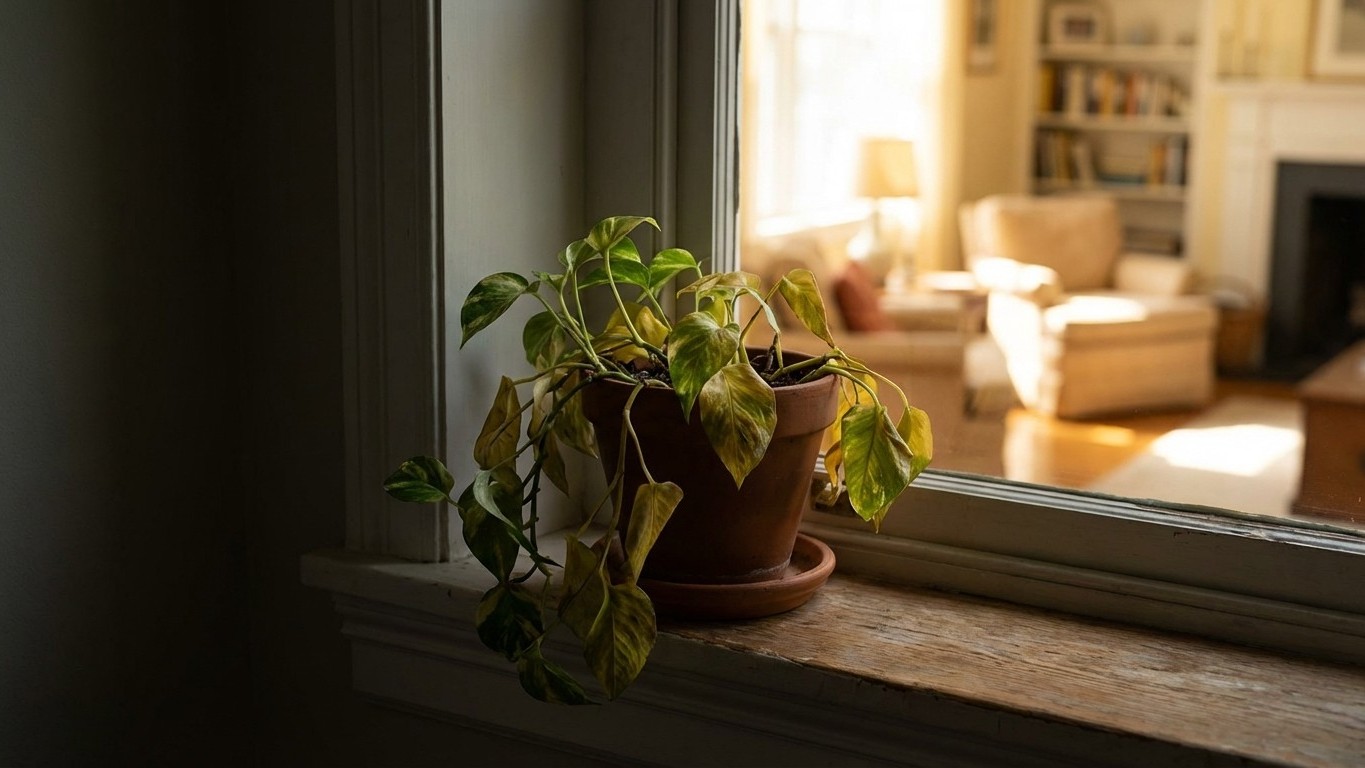
The leaves were yellowing. Two had dropped overnight. The stem looked limp, almost defeated. Every instinct said: overwatering, root rot, game over. But the plant wasn’t sick. It was reacting, loudly, visibly, to the spot on the windowsill where it had been sitting for exactly eleven days.
This is one of the most common misdiagnoses in indoor gardening. We rush to examine soil moisture, check for pests, adjust our watering schedules, when the real variable is something far simpler: location. Where a plant lives inside your home shapes almost every aspect of its behavior, and when we move it Without thinking, the plant tells us immediately. We just don’t always speak the language.
Key takeaways
- The yellowing leaves and drooping stem you’re treating as disease might just be a location mismatch
- Light direction and intensity vary wildly across a single room—a 10x difference can exist just feet apart
- Even moving a plant to a ‘better’ spot can trigger weeks of stress symptoms before improvement appears
Light Is the Variable Nobody Takes Seriously Enough
Ask most plant owners how much light their living room gets, and they’ll say “pretty good” or “decent.” Those aren’t measurements. A spot three feet from a south-facing window can receive ten times more light than a corner six feet away, a difference that, to a plant, is the difference between thriving and slowly suffocating. Photosynthesis isn’t forgiving of vague estimates.
What makes this tricky is that symptoms of too little light and symptoms of overwatering look almost identical: yellowing leaves, drooping stems, stunted growth. A monstera sitting in a dim corner will stop processing the water you give it efficiently, so the soil stays wet longer, which then stresses the roots. You see soggy soil and blame yourself for watering too much. The real culprit is the dark corner three feet to the left of where the plant should be.
There’s also the direction of light to consider. East-facing windows deliver soft morning sun, good for ferns, pothos, peace lilies. West-facing windows hit plants with intense afternoon heat that can scorch the same species. A plant moved from one side of a room to another isn’t experiencing a small tweak. It’s essentially relocating from Seattle to Phoenix.
Temperature and Airflow: The Invisible Stressors
Most of us heat and cool our homes without thinking about where the vents are. Plants, unfortunately, think about little else. A heating vent blowing dry, hot air directly onto a humidity-loving plant like a calathea or a fern will cause leaf curl and browning edges within days. This looks exactly like underwatering. You water more. The plant gets worse. The vent keeps blowing.
Cold drafts from windows and exterior doors are equally disruptive. Tropical plants, which account for the vast majority of popular houseplants, evolved in environments with stable temperatures. A fiddle leaf fig sitting near a door that opens to a cold hallway in winter can drop leaves in a dramatic panic, the kind that convinces you something is terminally wrong. Move it six feet away from that draft, and the same plant steadies itself within two to three weeks.
Airflow matters in a subtler way too. Stagnant air encourages fungal issues and weakens stems over time. A spot with gentle, indirect airflow (near a window that’s occasionally cracked, for instance) often produces sturdier, healthier growth than a tucked-away corner that never sees air movement. Plants in nature deal with wind constantly, their tissue literally develops in response to it.
The Acclimatization Window Nobody Mentions
Here’s what plant shops and care guides rarely explain clearly: even a move to a better spot can look like a crisis before it looks like an improvement. Plants need time to acclimate, and during that transition, they will often shed leaves, pause growth, or show stress marks. This process can last anywhere from two weeks to two months depending on the species and how dramatic the change was.
A snake plant moved from a bright spot to a lower-light area will yellow a leaf or two as it adjusts its internal chemistry, essentially recalibrating how many chloroplasts it needs to produce. That’s not failure. That’s biology. The mistake is interpreting those transition symptoms as confirmation that the new spot is wrong, then moving the plant again, triggering another stress response, and entering a cycle that genuinely does damage the plant over time.
The rule of thumb worth memorizing: if you’ve moved a plant, give it at least three to four weeks before concluding the location is wrong. Watch for new growth as the real signal, that’s the plant voting with its energy.
Reading What Your Plant Is Actually Telling You
Plants communicate through a fairly consistent vocabulary once you know what to look for. Leaves reaching or leaning dramatically toward a light source means it wants more of it, rotate the pot, or move it closer. Pale, washed-out color on a plant that used to be deep green suggests too much direct sun, particularly if the soil dries out unusually fast. Crispy edges with brown tips, combined with a location near a vent or radiator, almost always points to dry heat damage rather than underwatering.
Sudden leaf drop (especially in figs and tropicals) right after a move is almost always shock, not disease. A plant that has been sitting in the same spot for six months has built its entire internal routine around that microclimate. Disrupting it abruptly is a genuine physiological shock, equivalent in plant terms to someone transplanting you from Houston to Reykjavik in January.
The practical fix is often unglamorous: pick a spot, stop second-guessing it for a month, and observe consistently rather than reactively. Keep a simple note on your phone, date of placement, starting condition, weekly observations. You’ll start noticing patterns that no care guide can give you, because they’re specific to your home’s light, your air quality, your Heating habits.
What’s striking, once you start paying attention this way, is how much a single room can vary as a habitat. Two spots separated by four feet and a curtain can support completely different plants. Your home isn’t one environment, it’s dozens of microclimates stacked together, and figuring out which ones suit which plants is less about following rules and more about learning to read a room the way your plants already do.