
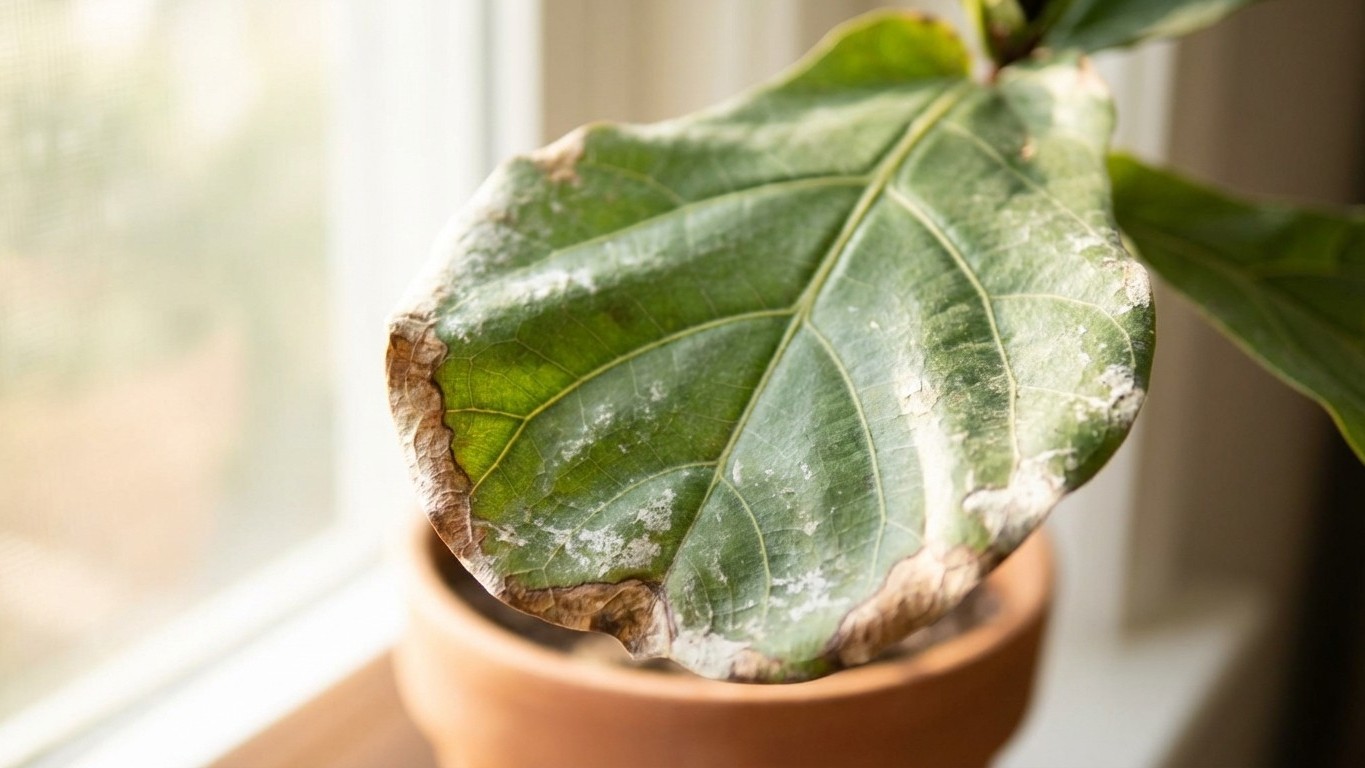
White blotches on the leaves. Crusty Residue around the soil line. A general look of “doing fine but never thriving.” For years, I dismissed those signs as bad luck or the wrong fertilizer. Then I looked closer at the culprit, and it turned out to be sitting in my kitchen the whole time, the tap water I’d been pouring over my plants every single week without a second thought.
Tap water in most American cities is treated with chlorine, chloramine, and fluoride, and it carries varying levels of dissolved minerals, calcium, magnesium, and sodium chief among them. That combination is mostly harmless for humans. For plants, especially the sensitive ones, it’s another story entirely. The white film that builds up on leaves, the brown leaf tips on your peace lily, the yellowing edges on your calathea — these are often symptoms of mineral accumulation, not a mysterious disease.
Key takeaways
- A hidden problem has been poisoning your plants every single watering—and the signs were always there in the leaves
- Those white crusty stains and brown tips aren’t bad luck or a mystery disease, they’re a direct message from your water
- One simple change restored growth in three months that years of fertilizing never could
What’s actually in your tap water
The hardness of tap water varies wildly depending on where you live. In Phoenix, Arizona, water hardness can exceed 200 parts per million of dissolved calcium carbonate. In Seattle, it hovers closer to 20. That’s a tenfold difference, and your plants feel every bit of it. When you water repeatedly with hard water, those minerals don’t evaporate, they stay in the soil, building up salts that eventually interfere with the plant’s ability to absorb water and nutrients through its roots.
There’s also the fluoride issue, which is separate from hardness entirely. Fluoride, added to most municipal water supplies at around 0.7 parts per million, accumulates in leaf tips. Spider plants, dracaenas, and peace lilies are notoriously sensitive to it. That browning at the very tip of an otherwise healthy leaf? Fluoride toxicity is a common cause, and once you know what to look for, you start seeing it everywhere.
Chlorine, to be fair, is less of a villain than it used to be. It dissipates relatively quickly when water sits out overnight in an open container. Chloramine, the compound now used in place of chlorine in many cities because it’s more stable, doesn’t dissipate on its own. Letting tap water sit out won’t fix a chloramine problem. That’s a distinction most online guides still get wrong.
Reading the leaf stains like a map
The stains themselves are informative if you know how to read them. A white chalky crust on top of the soil or around the drainage holes of a pot is the most obvious sign of mineral buildup. But the leaf marks are more nuanced. A white film on leaf surfaces, especially on low-growing plants whose leaves catch the splash from watering — is almost always mineral deposit, left behind when the water evaporates. Wiping the leaf with a damp cloth removes it temporarily, but it comes back as long as the water source stays the same.
Brown, crispy tips are different. Those point more to sodium or fluoride accumulation in the tissue itself, meaning the damage is already done at the cellular level. The plant absorbed the mineral through its roots, transported it to the leaf margins, and there it stayed. No amount of leaf-wiping fixes that. The tip stays brown. New growth may come in clean, but only if you change the water.
Yellowing between the veins, called chlorosis, can look like a nutrient deficiency, and often gets treated with fertilizer. But if your soil pH has been pushed up by calcium buildup from hard water, iron and manganese become less available to the roots even when they’re present. Fertilizing without addressing the water is like adding oil to a clogged engine.
What actually works instead
Rainwater is the gold standard, and collecting it is easier than most people assume. A simple barrel under a downspout fills up quickly during any decent rainstorm, and a single collection session can supply a modest indoor plant collection for weeks. Rainwater is naturally soft, slightly acidic, and free of municipal treatment chemicals. Plants watered with it consistently often show visibly greener growth and fewer tip problems within a few months.
Distilled water is the other reliable option, especially for highly sensitive tropicals. The downside is cost and convenience, buying gallons of distilled water weekly gets old fast. A countertop distiller is an investment that pays off over time if you have a lot of plants, but it’s overkill for a few pots on a windowsill.
Filtered water, specifically from a reverse osmosis system, removes most of the problematic minerals and fluoride. Many households already have RO filters installed under the sink for drinking water, and that same tap works perfectly for plants. The water that’s rejected during the RO process (the “wastewater”) is actually fine for outdoor plants and garden beds that are less sensitive.
For people who genuinely only have tap water available, there are a few mitigation strategies. Letting water sit for 24 hours in an open pitcher reduces chlorine (though not chloramine). Watering less frequently but more thoroughly, letting water drain completely through the pot, helps flush accumulated salts from the soil rather than letting them concentrate. Repotting annually with fresh mix resets the salt load entirely.
The houseplant that finally taught me this
My calathea was the one that broke me. Three years of inconsistent leaf patterns, persistent brown edges, and that maddening habit calatheas have of looking just barely alive. I switched to collected rainwater in the summer of 2024, and within six weeks, the new leaves that unfurled were larger, with cleaner margins and deeper color than anything it had produced before. I hadn’t changed the pot, the soil, the light, or the fertilizer. Just the water.
Which raises an uncomfortable question for anyone who’s lost plants they loved: how many of them were perfectly healthy plants, slowly poisoned by something they got every week without fail?