
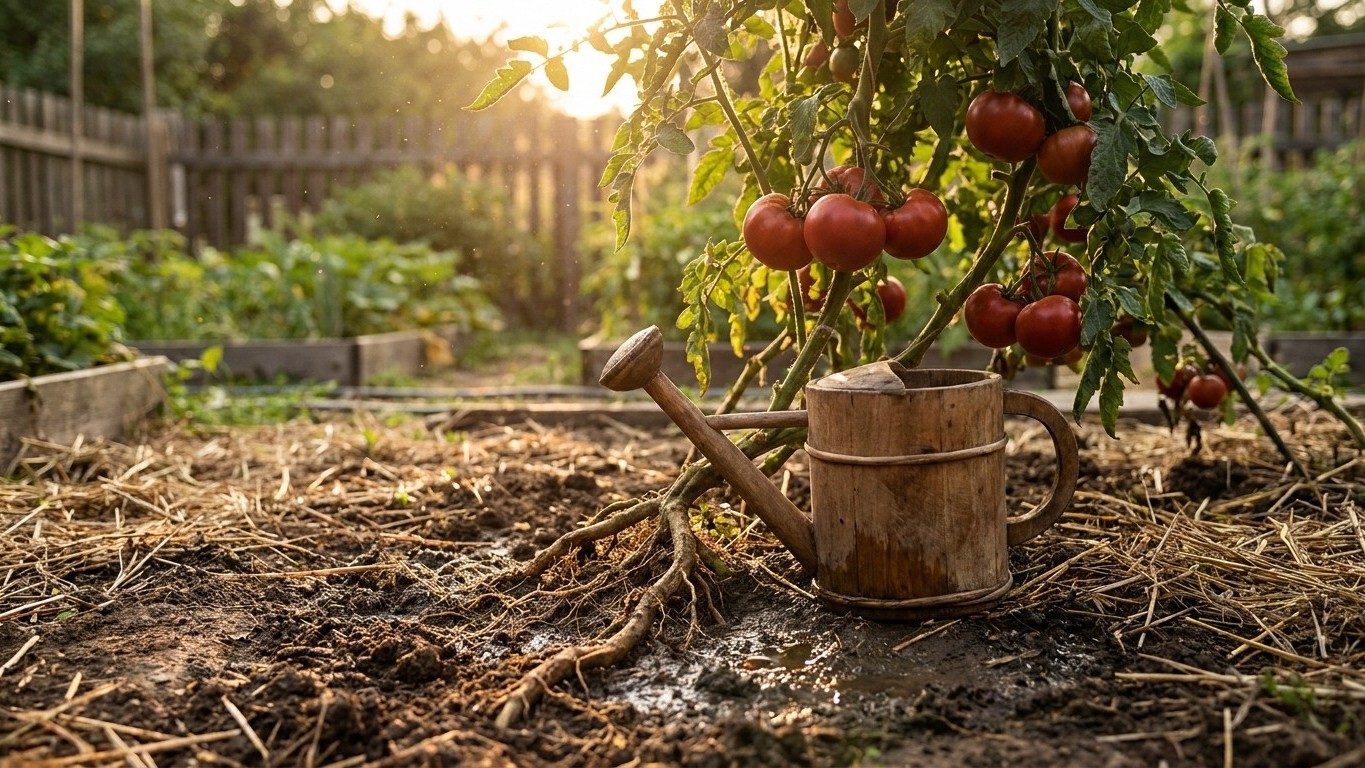
Two waterings a week. That was the entire routine, no matter how brutal the July sun got. As a kid, I thought my grandfather was just being stubborn, maybe even a little cheap with the hose. Meanwhile my own container tomatoes wilted daily like clockwork, and I watered them every single evening trying to save them. His plants never drooped. Mine always did. It took me years of gardening mistakes to figure out that his “neglect” was actually the smartest irrigation strategy in the book.
Key takeaways
- Shallow, frequent watering trains plant roots to stay near the surface where they dry out instantly
- Deep, infrequent watering forces roots downward, tapping into moisture reserves deeper in the soil
- Daily watering can actually drown roots by preventing oxygen flow—and it’s completely unnecessary
The Root of the Problem (Literally)
What I mistook for laziness was actually deep watering, a technique that trains roots to grow downward instead of hugging the surface. Water a plant lightly every day and its roots have no reason to travel far. When water always sits near the surface, roots have very little reason to grow deeper, so they stay shallow, and a shallow-rooted plant wilts the moment the top inch of soil dries out. That’s exactly what was happening to my container tomatoes. I was training them to be needy.
My grandfather did the opposite without ever reading a single gardening manual. Water deeply and less often, and the roots will normally follow the moisture down instead, building a deeper network that draws from a much greater reservoir of soil. Instead of a light sprinkle keeping the top two inches damp, he’d let the hose run at the base of each plant long enough to really soak the ground. One key strategy is to water plants deeply and infrequently, rather than using shallow, frequent watering, which allows water to penetrate deeper into the soil, encouraging roots to grow deeper as they follow the water.
There’s a second layer to this that I didn’t appreciate as a teenager rolling my eyes at his watering can. Plants grown just a touch on the dry side can often adjust how they manage water, developing a slightly thicker and waxier coating on their leaves, tightening control over stomata, those pores that release water vapor, which helps them hold moisture for longer. His tomatoes weren’t just physically better anchored. They were biochemically better prepared for heat.
Why Daily Watering Backfires
Here’s the part that stung most when I finally understood it: my daily watering wasn’t just useless, it was actively working against me. One of the biggest mistakes gardeners make is watering lightly and frequently, which keeps the top layer of soil damp while the deeper soil stays dry, resulting in shallow-rooted plants that struggle during heat and drought. I was, without realizing it, punishing my plants with the very ritual I thought was saving them.
There’s also an oxygen problem nobody warns you about. Frequent, light applications of water often result in a shallow layer of continually wet soil, which prevents oxygen movement into the soil, and plant roots use oxygen in the soil pore spaces for the normal growth process, so without it, they will eventually begin to die. Waterlogged roots drown slowly, which explains why some of my plants looked sickly even though I was, by my own logic, being an attentive gardener.
My grandfather’s garden also had one advantage I completely overlooked as a kid: soil that had been building organic matter for decades. Healthy soil acts like a sponge, and every 1% increase in organic matter helps soil hold significantly more water, so rich soil with plenty of compost can dramatically reduce how often you need to irrigate. His compost pile, which I also thought was a weird eccentricity, was doing half the work before the hose ever came out.
Copying the Technique Without Guessing
The good news is you don’t need thirty years of trial and error to replicate this. A few concrete checks tell you exactly when to water and how deep it’s actually going. Push a screwdriver or a wooden dowel into the soil after watering. If it slides in about 6 inches with little resistance, the water has reached the root zone. If it stops short, you haven’t watered deeply enough, no matter how long the hose was running.
The oft-repeated “1 inch of water per week” rule is a starting point, not gospel. If your plants are in the ground, the general rule is that plants need 1 inch of water per week, but this does NOT mean watering one time per week since that doesn’t usually do the job; plants do best when watered deeply about three times a week, factoring in rain. Soil type changes the math considerably. On sandy, well-drained soil, you may need to water twice a week, while for soils that hold moisture, such as heavier clay soils or loamy soils rich in organic matter, watering once a week is fine, and soil covered by mulch will retain water better.
Mulch is the piece that ties everything together, and it’s the cheapest upgrade in the entire garden. Mulching is perhaps the number one water-conserving technique for areas that receive less than 40 inches of rainfall annually, and organic mulches reduce evaporative moisture losses from the soil surface while also reducing transpiration water losses because the soil stays cooler. A few inches of straw or shredded leaves around the base of each plant does more for drought resistance than any amount of extra watering ever could.
One Important Caveat
Before you swear off your daily watering can entirely, know that this trick doesn’t apply to every crop in the same way. Vegetables with shallow roots, like cucumbers, spinach, onions, leeks, carrots, radishes, broccoli, celery, cabbage, and Brussels sprouts, are less resilient to drought and must be watered more often, especially during summer droughts and periods of high heat. Deep, infrequent soaking is the right call for tomatoes, squash, peppers, and corn. It’s the wrong call for lettuce and radishes, which want their moisture close to the surface where their roots actually live.
Seedlings get their own exception too. A newly planted seedling hasn’t established its root system yet, so it’s not as able to search for water in the soil, and needs the soil kept moist to establish and grow quickly. My grandfather never watered his seed trays twice a week. That schedule was reserved for plants old enough to have earned it, roots deep enough in the ground to go looking for their own water. Turns out patience wasn’t his weakness in the garden. It was his entire strategy.
Sources : gardeningknowhow.com | veggiesgrow.com