
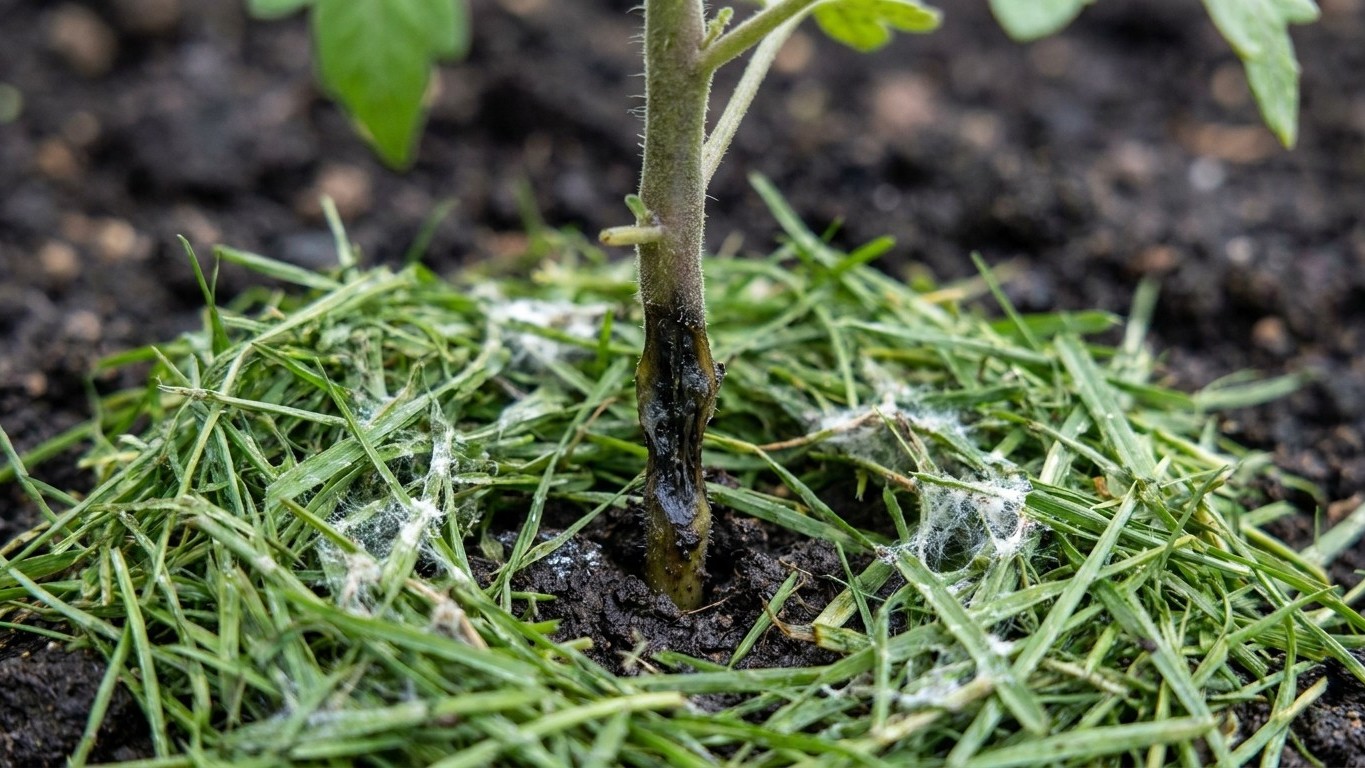
Fresh Grass Clippings looked like free fertilizer. A layer straight from the mower, still green and warm, spread generously around the tomato plants to feed them through the summer. Seven days later, lifting that mat revealed something else entirely: stems gone soft and blackened right where the clippings had piled highest, a sour smell rising from underneath, and a fuzzy white coating clinging to the underside of the grass. The mulch hadn’t fed the plants. It had started rotting them.
Key takeaways
- Fresh clippings trap moisture and create an anaerobic environment that breeds rot-causing fungi
- The heat from decomposing grass can simultaneously cook and rot tender tomato stems at the soil line
- A thick layer of fresh clippings can actually lock up nitrogen in the soil, starving your plants
What Actually Happens Under a Thick Mat of Fresh Clippings
Grass is mostly water. Fresh clippings run roughly 80-85% water and 4% nitrogen, which sounds like a nutrient bonus but behaves more like a wet sponge once it’s piled on soil. Stack that material more than an inch or so deep and it compresses under its own weight, sealing off the surface. Fresh clippings compress and create a dense layer, trapping moisture and air, and this anaerobic environment produces unpleasant odors and may promote mold growth. That’s exactly the fuzzy white growth and the sour smell showing up under a week-old pile.
The heat is the part most gardeners underestimate. Grass has a low carbon-to-nitrogen ratio, and grass clippings have a relatively low C:N ratio (12-25:1) and decompose relatively quickly. That rapid microbial breakdown generates real heat, fast. One longtime vegetable grower who mulches with clippings straight from the mower bag describes the effect bluntly: a couple of days after I spread that fresh grass, it’s so hot I can’t hold my hand under it. Useful for cooking weed seeds. Brutal for a tender tomato stem sitting right at the base of that pile.
The Real Culprit Behind the Black Stems
Blackened, mushy tissue at the soil line is the textbook sign of stem rot, and the mechanism here is almost mechanical rather than mysterious. Piling wet, decomposing organic matter directly against a stem keeps that tissue constantly damp and starved of oxygen, which is precisely the environment rot-causing fungi need. As one grass-mulch guide puts it, avoid piling grass clippings directly against your tomato stems, as this can promote stem rot and attract pests, and leave a small gap of a few inches between mulch and the base of each plant to keep the stem dry and prevent diseases. Add the heat spike from active decomposition on top of that moisture, and you’ve got a stem simultaneously cooking and rotting.
There’s a second, quieter problem happening below the surface even where the stems look fine: nitrogen theft. It seems backwards for a nitrogen-rich material to steal nitrogen from the soil, but that’s what fresh, undried clippings can do during the early, most active phase of decomposition. Fresh grass clippings contain high nitrogen, but as they decompose, they use soil nitrogen to break down, and if you apply too many fresh clippings in a thick layer, this microbial activity can temporarily lock up nitrogen in the soil, depriving your tomatoes. So a plant can end up dealing with rotted lower tissue and nitrogen deficiency at the same time, a rough combination for something that’s supposed to be setting fruit through the summer.
Mold growth compounds the picture. Gardeners who’ve spent years working with clippings distinguish two distinct types: the black slimy mold in mucky, wet clippings that were let to sit while overly wet, and a white mold that shows up fast in fresh piles even before they get soggy. Neither is automatically catastrophic for the soil, but both are a red flag that the layer is too thick, too wet, or both, which are exactly the conditions that let stem rot take hold.
Mulching With Grass Without Cooking the Plants
None of this means grass clippings are a bad mulch. The problem is timing and thickness, not the material itself. University extension guidance is consistent on the fix: most mulches should be only 2 to 4 inches deep, since air and water exchange are dramatically reduced and the soil becomes an inhospitable environment for roots if the mulch is applied too deeply, and for fresh grass specifically, the safe number is even smaller. One extension office recommends a layer of only ¼ inch thick when using fresh clippings as mulch, which allows the grass to start to break down before it begins to smell or rot. Skip that step and thicker layers “have a tendency to remain too wet and can invite mold and create smelly decay issues,” according to the same source.
The simplest fix is patience. Spread fresh clippings out on a driveway or tarp for a day or two so they lose moisture and stop generating heat before they ever touch the garden, then apply them in that thin skim rather than a thick blanket. Keep a few inches of bare soil around each stem so the mulch never touches the plant directly, and top up with additional thin layers as the previous one breaks down rather than dumping several inches at once. If nitrogen lock-up is a concern, mixing in some dried leaves or straw balances things out considerably.
One detail worth remembering before the next mow: clippings from a lawn treated with broadleaf weed killer shouldn’t go anywhere near a vegetable bed, since those chemicals can persist through the decomposition process and stunt or kill tomatoes outright. Wait until the lawn has been cut two or three times after any herbicide application before that grass touches the garden.
Sources : backyardboss.net | gardeningknowhow.com