
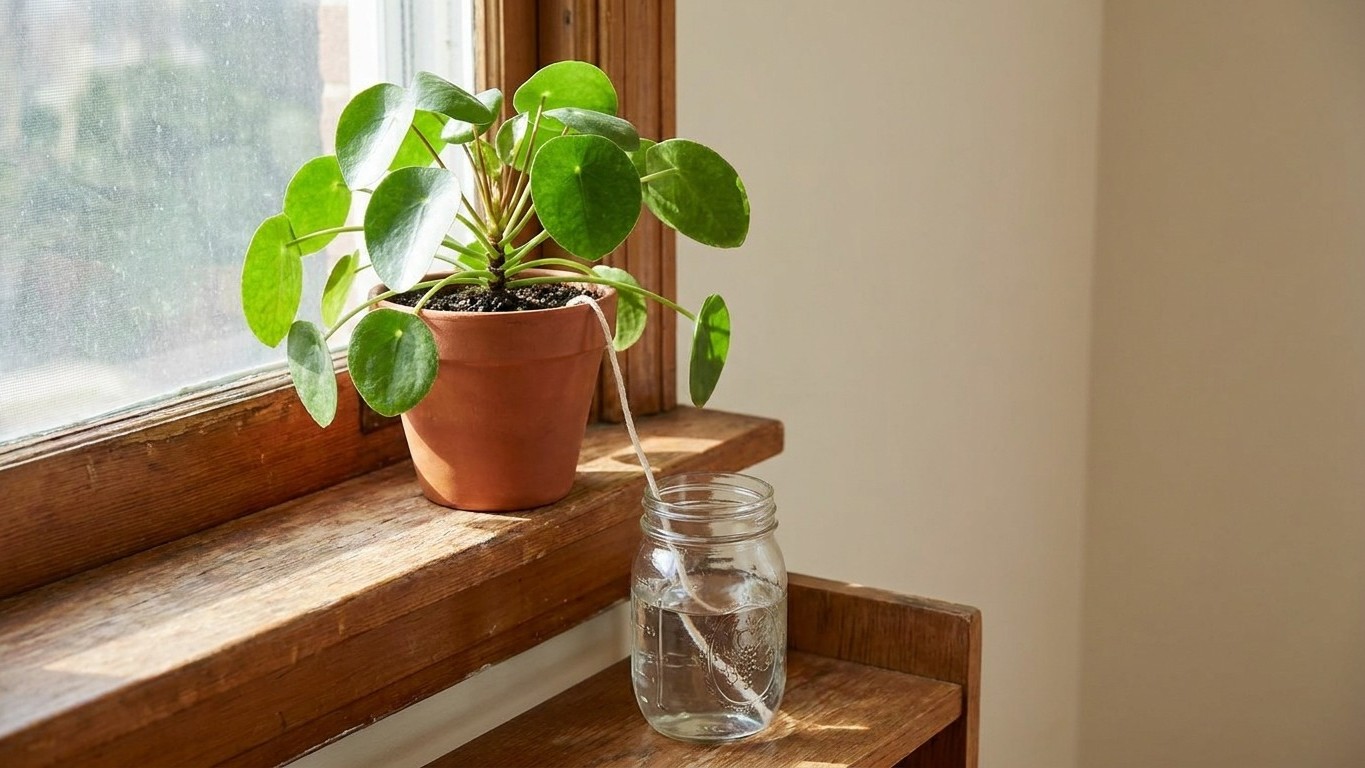
Two weeks. A 28°C heatwave. And a single cotton string running from a jar of water into the soil. That’s all it took to keep a shelf of houseplants alive while the rest of the apartment baked. No timer, no fancy irrigation kit, no neighbor coming in to water on a schedule. Just capillary action doing exactly what it’s been doing in candles and oil lamps for centuries, except this time it was keeping a pothos from turning into a crispy museum piece.
Key takeaways
- A forgotten watering method from India outperformed every high-tech irrigation system during an extreme heat event
- The setup is so simple it seems impossible—until you discover the single detail that most people get wrong
- Professional landscapers have been quietly using this exact method for decades, and houseplants kept thriving long after the owner returned
How a Piece of String Outsmarts a Heatwave
The science behind this trick is almost embarrassingly simple. Wick irrigation uses a wettable fabric or rope to carry water from a reservoir to the roots of a plant. Depending on how you set it up, wick watering can work by capillary flow that goes up and over a rise, resulting in a slow flow, or by gravity flow, where water runs down the wick, which produces a fast flow, or by a hybrid of both. In a heatwave, that slow, steady drip is exactly what a stressed plant needs, rather than one violent soaking that floods the pot and then leaves it bone-dry for the rest of the trip.
What makes cotton the material of choice isn’t tradition alone. Cotton strips buried in the soil slowly wick water, keeping the root zone moist without leaving them soaked, because setting a plant directly into a tray of water can drown the roots and cause rot, mold, and infection. Synthetic fibers just don’t have the same absorbency. One horticulture source was blunt about it: it is essential that the material be pure or highly absorbent cotton, since synthetic thread like polyester or nylon doesn’t absorb water as well. That said, not everyone agrees cotton is the gold standard for every application. A veteran market gardener who has run wick trials for three decades found cotton wicks were traditionally used in India, but nylon and polyester braided ropes are less likely to get moldy and clog when used for wick watering. For a two-week vacation fix, though, mold isn’t the issue you’re solving for. Speed and simplicity are.
Setting It Up So It Actually Works
The mechanics matter more than people expect. Cut a length of cotton string or rope, long enough to run from a water-filled jar or bowl down into the pot. Push one end several inches under the plant’s soil and cover it, using a pencil to stuff the rope in if needed, then place the other end in the water with extra slack so it stays submerged. Skip this and the whole system stalls before it starts.
Slope is the detail that trips up most first-timers. The line of string from the water reservoir to the plant needs a fully downward slope, because if the string dips below the planter, water won’t travel back up into the soil. Gravity does a lot of the heavy lifting here, and a sagging wick simply breaks the chain.
Reservoir size decides how long the system lasts. One gardener who tested this over a two-week trip reported that when she returned home after two weeks, there was still one quart of water left in the bucket, and the soil was damp with the plants healthy. Others have been less lucky with undersized containers: one couple running the setup for three weeks found their reservoir was dry when they returned, and it looked like their plants hadn’t had water in about a week. The lesson is obvious once you see it stated plainly. Err toward the biggest jar or bucket you can find, not the cute little vase that matches your decor.
Thickness of the wick controls the flow rate, and this is where a lot of people either flood their pots or starve them. The thickness of the string determines how much water is transported, with thinner string moving less water, so anyone dealing with overflow should switch to a significantly thinner string, even down to 1mm. If you’ve got a small succulent versus a thirsty fern, don’t use identical wicks for both. Larger, moisture-hungry plants can also benefit from more than one string. A horticulture educator with the University of Georgia’s College of Agricultural and Environmental Sciences has recommended a nearly identical wicking method for houseplants left unattended over a trip, noting that larger pots may need two or three wicks instead of one.
Why This Isn’t Just a Vacation Hack
What surprised me most is that this trick isn’t some viral TikTok invention dressed up as ancient wisdom. It’s genuinely old. Wick-based irrigation traces back to a paper from India, in which wicks were used in conjunction with buried clay-pot irrigation. Commercial growers use a version of the same principle at scale. Professional interior landscapers often use various sub-irrigation systems so that they can minimize the number of maintenance visits required at their client accounts, and they are used in decorative planters and are very effective for all sized plants. If office lobbies full of ficus trees can survive on this method between visits, a windowsill full of houseplants during a two-week heatwave stands a decent chance too.
There’s a practical side benefit that goes beyond vacations. Some plant owners have simply kept their wicks running after coming home because the results were better than manual watering. The system worked so well that one gardener continued using it even after returning. That tracks with how the mechanism behaves day to day: the roots only absorb as much water as the plant needs, the wick never puddles or overwaters the soil, and it regulates a constant moisture level for the roots. For anyone who tends to either drown their plants out of anxiety or forget them for a week straight, that kind of built-in restraint is more valuable than the vacation-proofing itself.
One caveat worth knowing before you trust this method for anything longer than a few weeks: pests don’t take a vacation just because you did. Even a perfectly hydrated plant sitting alone in a warm room for too long can attract trouble, so most experts still draw a line around the month mark and recommend a real check-in after that, no matter how well the jar and string are holding up.
Sources : en.jardineriaon.com | youtube.com