
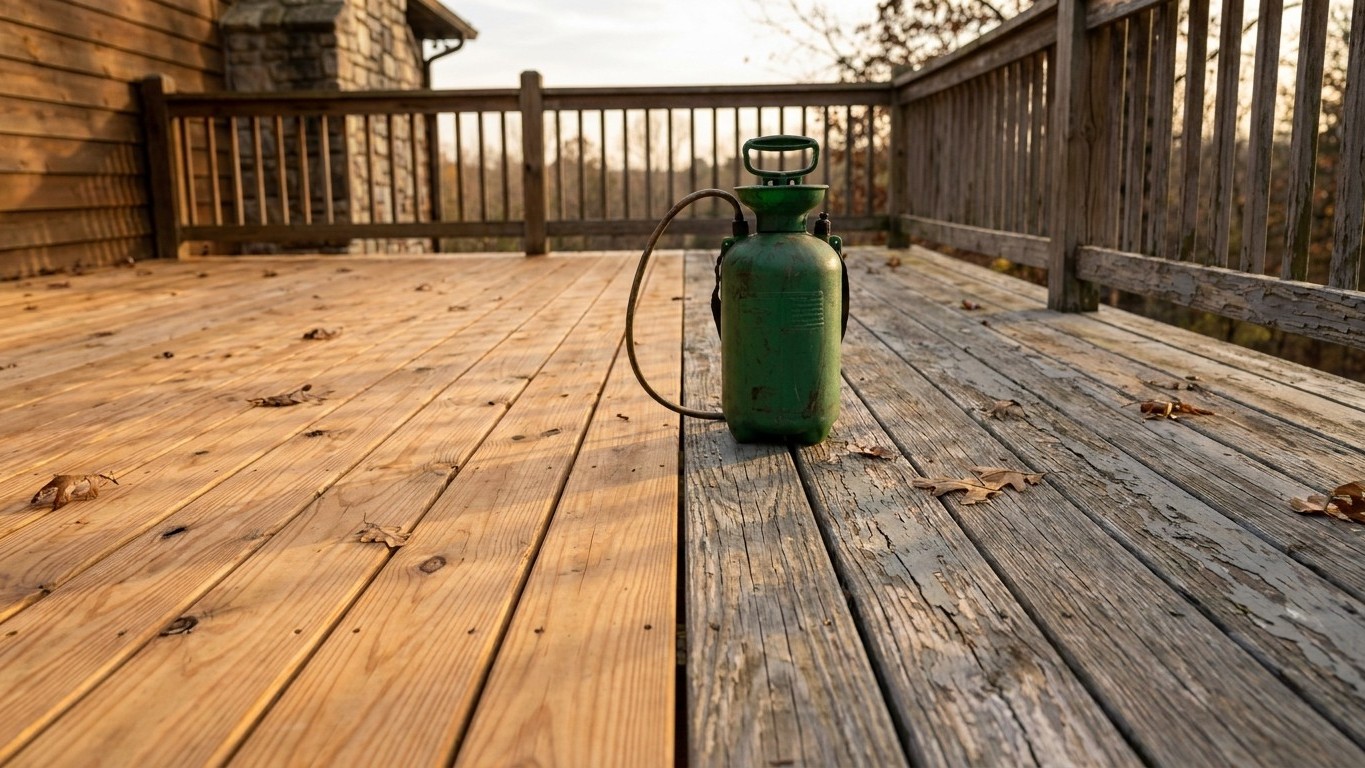
A deck that looks patchy and gray by late August didn’t get that way overnight. UV rays break down wood fibers, rain seeps into every unsealed crack, and the finish that looked fine in June starts flaking by Labor Day. Stripping that old coating and applying a fresh stain before fall isn’t just cosmetic maintenance. It’s the difference between a deck that survives another Northeast winter and one that starts rotting from the inside by spring.
Timing Matters More Than most homeowners realize. Wood needs daytime temperatures between 50 and 90 degrees Fahrenheit to accept stain properly, and humidity below 50 percent helps the finish cure instead of clouding. Early fall, before the first hard frost but after the worst summer heat, hits that sweet spot in most of the country. Wait too long and you’re fighting morning dew that never fully burns off before noon.
Key takeaways
- One common mistake leads to peeling patches by spring—and most homeowners make it without realizing
- There’s a narrow window of perfect weather for staining, and missing it could mean waiting until next year
- The sanding step everyone dreads is actually the invisible difference between a deck that lasts and one that fails
Why the old finish has to go first
Skipping the stripping step is the single most common mistake among weekend DIYers. New stain doesn’t bond to old, degraded finish. It sits on top, looks fine for a few weeks, then peels in sheets the following spring because there was never a real connection between the wood and the coating. A deck that’s been stained three or four times over the years often has a buildup so thick it’s basically a plastic layer sitting on top of the boards, trapping moisture underneath.
Chemical strippers designed for exterior wood do most of the heavy lifting. They break down the old finish’s molecular bonds, turning it into a gel that can be scraped or pressure-washed away. Sodium hydroxide-based strippers work fast but can darken certain wood species, while oxalic acid formulas are gentler and double as brighteners for wood that’s gone gray. According to the U.S. Environmental Protection Agency’s guidance on lead paint, any deck built before 1978 should be tested before stripping, since older finishes sometimes contain lead that becomes hazardous dust when sanded or pressure-washed (epa.gov/lead).
A pump sprayer applies the stripper evenly, and letting it sit for the full time listed on the product label (usually 15 to 30 minutes) makes the difference between a clean strip job and a frustrating half-measure. Scrubbing with a stiff synthetic brush, working with the wood grain, lifts the softened finish without gouging the boards. Pressure washing afterward at 500 to 1200 PSI clears the residue, though anything higher risks etching soft grain and leaving fuzzy, splintered wood that stains unevenly later.
The sanding step nobody wants to do
Stripping removes the finish. Sanding removes what the stripper left behind and opens the wood’s pores so new stain can actually penetrate. Skip this and the deck absorbs stain unevenly, leaving dark blotches next to pale streaks. An 80-grit sanding pad on a pole sander handles most of the deck’s flat surface, while a random orbital sander gets into stair treads and rail caps. Dust matters here too. A shop vac pass before staining prevents grit from getting trapped under the new finish.
Drying time between the wash and the stain trips up more people than any other step. Wood needs 24 to 48 hours of dry weather minimum, longer if the deck sits in shade or the region’s been humid. A simple test: sprinkle a few drops of water on the boards. If they bead up, the wood’s still too wet or sealed. If they soak in within a minute or two, it’s ready.
Applying stain without lap marks or streaks
The biggest visual failure on a fresh staining job isn’t the color choice. It’s lap marks, those darker overlapping bands that show up where one application dried before the next started. Working in small sections, roughly three or four boards at a time across their full length, keeps a wet edge going and avoids that stop-and-start blotching. Staining with the grain rather than across it also helps the color settle evenly into the wood’s natural texture.
Oil-based stains penetrate deeper and tend to forgive minor application inconsistencies better than water-based products, which sit more on the surface and show brush strokes if applied too thick. Semi-transparent stains let the wood grain show through while still blocking significant UV damage, and they’re generally easier to touch up in future years since there’s no solid film to strip later. Solid color stains, essentially thinned paint, hide imperfections and old repairs but require full stripping again when they eventually fail.
A natural bristle brush works oil-based stain into the grain better than a roller, though a roller covers flat expanses faster if a brush follows behind to work the stain in before it starts setting. Two thin coats beat one thick one almost every time. A heavy single coat pools in low spots, dries glossy and uneven, and often peels within a year because the wood absorbed what it could and the excess just sat on top like a skin.
What actually happens if you skip a step
Here’s a real pattern seen on decks across the country every spring: homeowners who stain over old finish without stripping first get a great-looking deck for one season, then discover peeling patches by the following April. The National Association of Home Builders’ remodeling data consistently shows deck refinishing costs multiply when a full strip-and-restart becomes necessary after a rushed re-coat job, compared to doing the prep work correctly the first time.
Rail caps and stair treads deserve extra attention since they take the most direct sun and foot traffic, meaning they’ll need refreshing before the rest of the deck does. A good rule most contractors follow: check high-wear areas every year, even if the full deck only gets restained every two to three years. Catching wear early on a single stair tread costs a few dollars in touch-up stain. Ignoring it until the whole deck needs stripping again costs a weekend and considerably more product.