
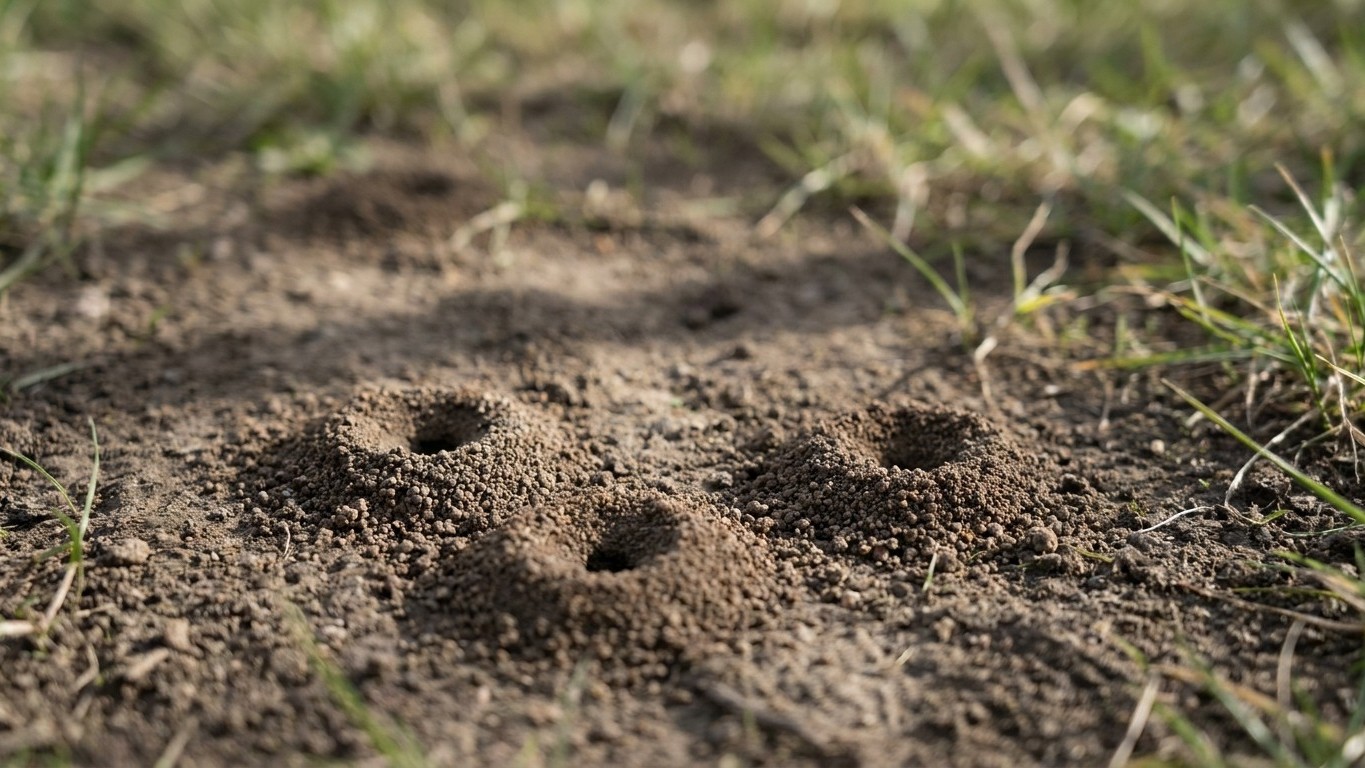
Three weeks after smoothing over every tiny volcano-shaped mound dotting the backyard, the silence was what gave it away. No more soft buzzing over the clover. No small, metallic-looking insects patrolling low across the bare patches near the fence. What had looked like an afternoon of tidy lawn maintenance turned out to be something closer to an eviction notice served to some of the hardest-working pollinators in North America.
Key takeaways
- Pencil-width holes with dirt cones are active nurseries for solitary mining bees, not lawn pests
- These bees visit 15 times more flowers daily than honeybees and pollinate spring crops like apples and blueberries
- Filling holes during nesting season buries developing larvae—but the bees naturally disappear after a few weeks
Those Cone-Shaped Holes Weren’t Damage. They Were Nurseries.
The holes in question, small, pencil-width openings often topped with a neat little cone of loose soil, are the calling card of ground-nesting bees, sometimes called mining bees. Homeowners can examine their yards and look for pointed piles of dirt that resemble cones, and if a pile has a pencil-size hole at the top, it’s likely a bee nest, specifically of the ground bee variety. These aren’t the honeybees most people picture. Mining bees belong to the Andrena genus, one of the largest groups of bees in the world, and are known as ground-nesting bees because they dig tunnels in soil instead of living in hives, with each female building and managing her own nest without the help of a colony.
What makes them easy to miss, or mistake for a lawn problem, is the scale. They burrow into holes that are about 1/4 inch in diameter, and occasionally build a mound of dirt surrounding the opening. A single nest looks unremarkable. Dozens of them clustered together, though, can look alarming, like the lawn is suddenly infested. It isn’t. Even though the holes are all grouped together the bees themselves are solitary, meaning each hole is home to one insect. They just happen to like the same real estate, for reasons researchers haven’t fully pinned down. Why they group together is not totally understood, but is hypothesized to be for protection and taking advantage of ideal habitat.
Why They Show Up Where the Grass Looks Thin
There’s a reason these holes tend to cluster in the same sad, patchy corner of the yard every spring, the one place fertilizer and reseeding never seem to fix. The holes and accompanying bees are concentrated in warm, sunny, dry areas of the landscape with well-drained soils that are low in organic matter, and these are likely ground-nesting bees, some of the first bees to emerge as the weather warms up. the bare spot didn’t get worse because of the bees. The bees moved in because the spot was already bare. In addition, they don’t degrade turf; they simply take advantage of sites where the turf is already thin or weak for other reasons, such as heavy compaction, poor fertility, or other problems. Blaming the insects for the lawn’s bald patches is a bit like blaming a “for rent” sign for an empty apartment.
Underground, each female is running a surprisingly organized operation. According to NC State Extension, during the day, females collect pollen and nectar to carry back to the nest and form a small pollen ball placed within a cell created in the side of the burrow, and females lay a single egg on the pollen ball, which the larva then feeds on as it develops throughout the year. That’s the part that makes filling in the holes so consequential. It isn’t just cosmetic tidying. It’s sealing a nursery mid-construction.
The Cost of Filling Them In
Here’s the piece most people don’t realize until it’s already done: those holes aren’t empty tunnels waiting to trip someone. They’re active for weeks, packed with pollen provisions and, soon enough, a developing bee larva. Filling in the holes can destroy developing larvae underground. Dump a shovelful of topsoil or a squirt of quick-fix lawn patch mix over a cone-shaped hole in April, and there’s a real chance you’ve just buried next year’s pollinators before they ever got wings.
The timing is what makes the mistake so easy to make and so quick to fix, in either direction. Their activity is short-lived and seasonal, usually lasting only a few weeks each year before they disappear naturally. Wait it out, and the lawn goes back to looking exactly the way it did before, holes and all, gone on their own schedule. Fill them in during that narrow window, and the intervention lands right on top of the one stretch of the year when it actually matters.
What Disappeared Along With the Holes
The quiet that followed wasn’t imagined. Mining bees punch well above their weight as pollinators, precisely because they’re not juggling hive duties. These solitary bees are prolific pollinators and reach 15 times more flowers in a day than honeybees because they’re not managing a hive. They’re also often first to the job each year, working flowers that bloom before most other insects have even woken up. These bees are among the first pollinators to emerge in spring, making them essential for early-blooming plants and flowers. That includes plenty of edible favorites. Mining bees are important polylectic plant pollinators meaning they gather pollen from many different plants, and they are particularly important for pollinating spring-blooming food crops including apples, cherries, and blueberries.
Extension offices field the same panicked call every spring, and the advice is consistently the same. These bees are valuable pollinators, are not aggressive, and don’t pose a threat to people, so the mounds should be enjoyed as a healthy sign of nature at work, avoiding any insecticide applications where they’re present. If a bare patch really bothers you, the fix isn’t soil and a shovel in the middle of nesting season. It’s thickening the turf itself. To discourage adult nesting, you can ensure more surface coverage by encouraging turf growth through irrigating and fertilizing throughout the growing season. A denser lawn quietly nudges the bees toward a different patch next spring, no burial required, and next April, before reaching for anything to smooth over a fresh cone of dirt, it’s worth remembering exactly what’s underneath it.
Sources : homesandgardens.com | shopping.yahoo.com