
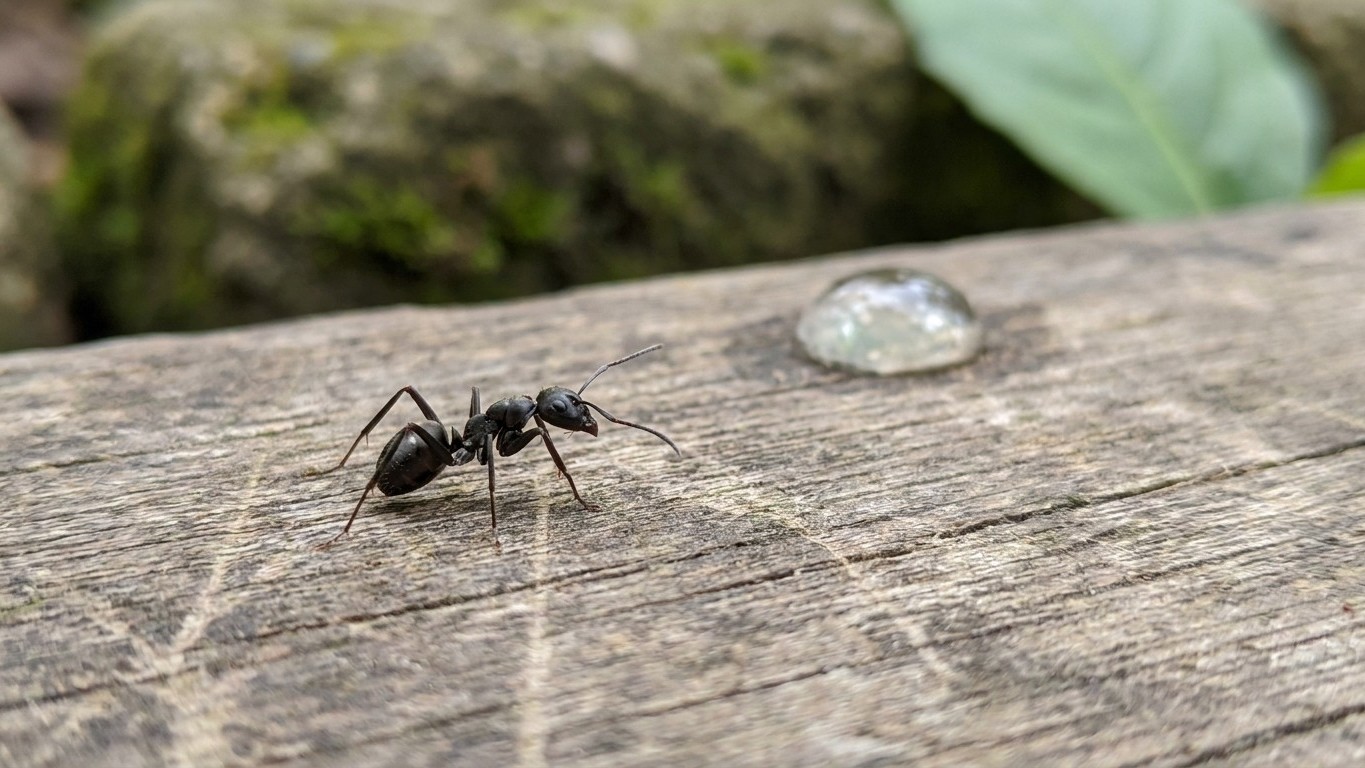
Late August rolls around, the gel bait sits untouched on the kitchen counter, and the ants keep marching past it like it’s not even there. If you’ve muttered “my bait must have gone bad” while scrubbing dried sugar syrup off a bait station, you’re not alone, and you’re also not entirely wrong to be confused. The gel probably works fine. The problem is timing.
Black garden ants (Lasius niger), the common dark ants that build volcano-shaped mounds between patio slabs, don’t eat the same way all year. Their food priorities swing hard between spring and late summer, and that swing is exactly why sweet bait that worked beautifully in June can get completely ignored by September.
Key takeaways
- Black garden ant colonies dramatically shift their nutritional demands between spring and late summer, sometimes within days
- Late summer gardens overflow with natural sugar sources that outcompete any bait station you can set
- Temperature drops and breeding cycles create mysterious foraging lulls that make ants seem to vanish entirely
A Colony That Keeps Rewriting Its Shopping List
Ant colonies don’t crave sugar or protein out of habit. They forage for whatever the nest needs at that specific moment, and that need shifts with the colony’s biological calendar. In spring and early summer, developing larvae in the colony require large amounts of protein, so ants scavenge and prey upon arthropods. Later in the summer, the colony seeks carbohydrates to optimize energy levels. That pattern explains a lot, but black garden ants complicate the picture further because late summer is also when they’re raising something else entirely: next year’s queens.
Alates typically appear in the nest from late June and conduct nuptial flights from July through August, and producing winged reproductive males and females is metabolically expensive. For a few weeks, a mature colony can be running two competing projects at once, fueling flight-ready alates while also trying to build fat reserves for winter. Depending on exactly where your local colony sits in that cycle, workers might be hunting protein one week and carbohydrates the next, with your sweet gel catching them squarely in an off week.
Nature’s Own Sugar Bowl Is Wide Open
Here’s the part most homeowners never consider: your gel bait isn’t just competing with your ants’ internal chemistry, it’s competing with the entire late-summer garden. Ripe windfall apples, overripe plums, split tomatoes, spilled soda at a barbecue, aphid colonies pumping out honeydew on rose bushes. Black garden ants protect aphid colonies in exchange for honeydew, a sugary substance secreted by the aphids, and collect nectar from flowers and consume fallen fruit, which provides them with the sugars necessary for energy. By late August, that natural buffet is at its yearly peak.
Pest control researchers see this constantly. Environmental changes, heavy rain, temperature swings, or a sudden abundance of natural food, can alter ant foraging patterns. A single fallen pear under a tree can outcompete a bait station a few feet away, simply because it’s fresher, closer to the trail, and doesn’t require detouring past a human dwelling. Ants aren’t loyal. They’re efficient. If the free sugar is better and closer, the gel loses every time.
The Chill Factor Nobody Talks About
Temperature plays a quieter but equally important role. Ants are cold-blooded, meaning their activity level is tied directly to the thermometer. As nights get cooler at the tail end of summer, overall foraging intensity can dip even before the calendar says autumn. Ants are ectothermic creatures whose biological processes are heavily influenced by external environmental conditions, and temperature changes can alter the ants’ metabolic rates, foraging patterns, and even the type of food they are attracted to.
At the same time, colonies aren’t slowing down out of laziness, they’re preparing. Ant colonies intensify their foraging activities during the autumn months, diligently collecting food resources to build up energy reserves for the winter ahead, an accumulation that is crucial for sustaining the colony through periods of reduced foraging activity. So paradoxically, right before that big pre-winter push for stored carbohydrates, there can be a short lull where activity looks patchy and inconsistent, sometimes concentrated to a narrow window of warmer midday hours instead of spread across the whole day.
What Actually Works When Ants Snub the Gel
Don’t throw out the bait, switch its partner. Pest control specialists routinely recommend running two attractants side by side rather than betting Everything on sugar. There are three main reasons ants ignore bait: the colony needs protein instead of sugar, or the ratio of active ingredient is too strong and they can smell it. A dab of peanut butter, a scrap of tuna, or a protein-based gel placed right next to the sweet one gives foragers a choice and tells you, by which one disappears first, exactly what the colony is after this week.
Placement matters just as much as formula. Move stations closer to the actual trail rather than where you think ants “should” be, and refresh them regularly since dried-out or contaminated bait gets ignored regardless of season. It’s also worth remembering that nearly all ants that touch a drop of sucrose solution with their antenna feed on it, based on hundreds of ants tested across multiple trials, which suggests that when ants truly walk past a fresh, uncontaminated sweet bait, it’s genuinely a matter of preference, not aversion.
One habit worth dropping: reflexively spraying the visible trail out of frustration. Doing so can scatter the colony onto a new path within days and erase the very information, where they’re actually feeding, that would tell you which bait to switch to next.
The real giveaway is often sitting in plain view in the yard. Check the base of a fruit tree or a rosebush thick with aphids before assuming your bait has failed. Chances are the ants haven’t lost interest in sugar at all, they’ve just found a supplier who delivers straight to the source, free of charge.
Sources : domyown.com | pestrol.co.nz