
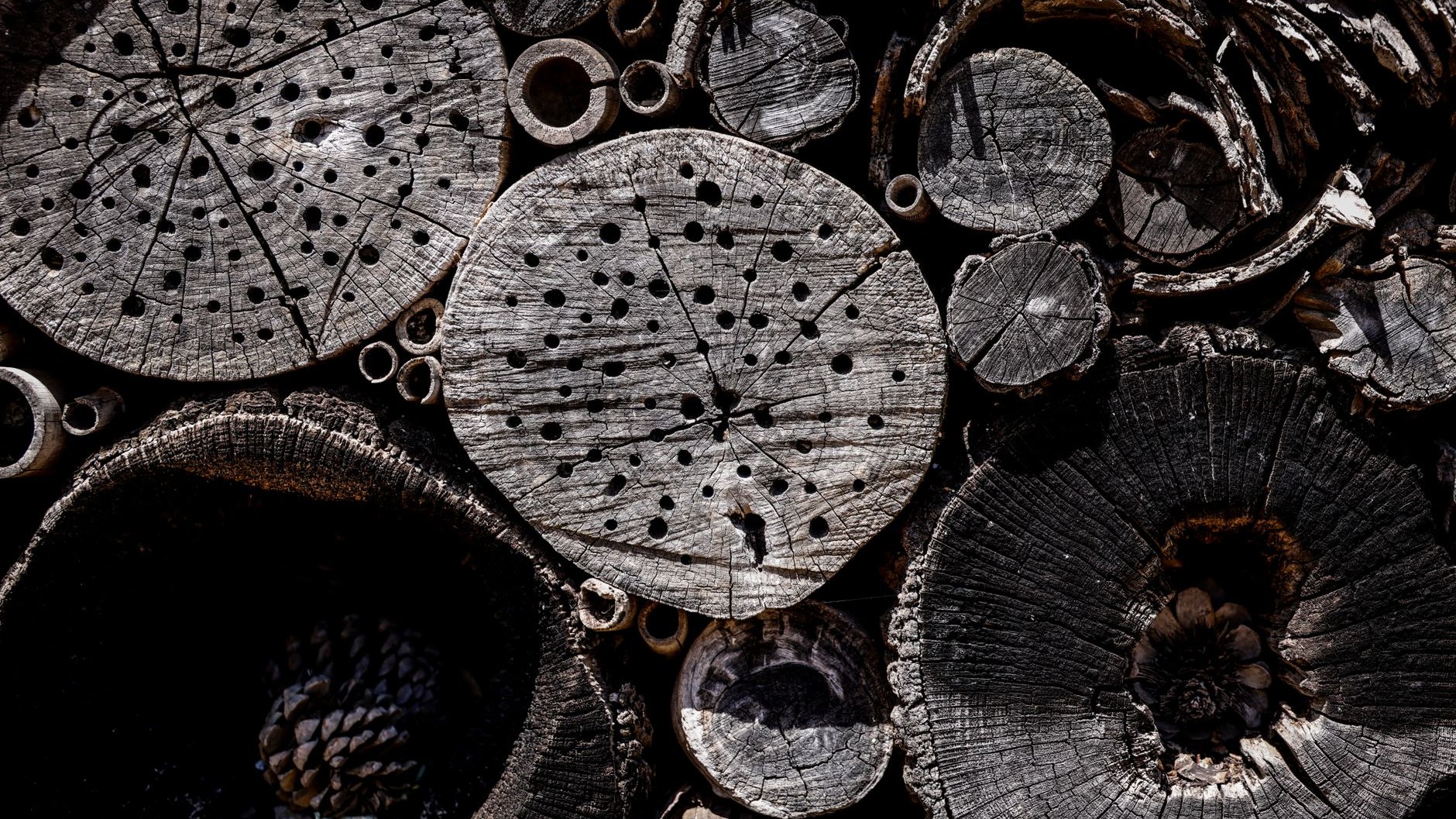
Walk into any garden center this summer and you’ll find the same product on every shelf: a wooden or ceramic “insect hotel” packed with thick bamboo canes, often 10, 12, even 15 millimeters wide. They look rustic and generous. The problem is that mason bees, the docile early-spring pollinators everyone claims to want in their yard, almost never move in.
The mismatch comes down to a single number that beekeeping researchers and hobbyists keep circling back to. For O. lignaria, the ideal cavity for a nest is about 8mm in diameter and 15 cm (6in) deep. That’s roughly 5/16 of an inch, about the width of a pencil. Not the 3/8-inch or bigger canes that dominate most commercial bee hotels, which were clearly sized for looks rather than biology.
Key takeaways
- What if the bee hotel you spent $50 on is actually repelling the pollinators you wanted?
- Garden centers have been selling the wrong size for years—here’s what the research actually says
- One overlooked measurement determines whether you get next year’s female bees or just males
Why Bigger Isn’t Better
One long-time beekeeping blogger who ran side-by-side comparisons of tube sizes noticed something telling: when I give my Osmia lignaria a variety of tunnel sizes, they pick ones that are smaller than the recommended sizes. They always choose a 5 or 6 mm hole over the much larger 7 or 8 mm holes. Other hosts report the same pattern, with many mason bees preferring holes in that tighter range over the wider 7-8mm openings sold as “standard” in kits.
There’s a wrinkle here worth mentioning, because the research isn’t perfectly tidy. A study on the closely related European red mason bee found that the majority of occupied tubes were in the 4-6mm diameter range, with much lower occupation rates at 8 mm and 10 mm diameter, even though the same research noted that increasing tube diameter positively affected both progeny sex ratio and body size. bees will sometimes use wider tubes if that’s all that’s available, and the resulting bees can even be larger, but given a choice, they gravitate toward the snugger fit. It’s the insect equivalent of picking a well-tailored jacket over one two sizes too big.
Commercial suppliers have caught up to this reality, at least on paper. One nesting-tube retailer states plainly that Mason bees prefer ~8mm cavities, Summer Leaf bees prefer ~6mm cavities, treating the two as genuinely different products rather than interchangeable bamboo. Yet walk the aisles of most big-box garden centers and you’ll still find hotels stuffed with a single, oversized cane diameter marketed as a catch-all solution for “native bees.” It isn’t. It’s a wasp and spider magnet with mason bee branding on the box.
Depth Matters As Much As Width
Diameter gets all the attention, but tunnel depth quietly determines whether your hotel produces future pollinators or just a colony of males with nowhere useful to go. Female mason bees lay their eggs in sequence down a tunnel, and the placement isn’t random. Research on Osmia bicornis, a close mason bee relative, describes nests that consist of a series of cells for the later emerging sex (daughters) at the back of the tunnel and a series of the earlier emerging sex (sons) at the entrance. Cut the tunnel too short, and there’s only room for sons.
That’s why serious mason bee guides insist on real depth, not just the right hole size. One building-advice document for bee hotels is blunt about it: in fact for mason bees, the depth MUST be 18 cm (7 ins). Shallower tunnels aren’t a minor compromise, they skew the whole next generation toward males, which does nothing for your garden’s pollination the following spring since it’s the females who do virtually all the provisioning and egg-laying work.
What Actually Belongs in a Bee Hotel
If you’re building or buying nesting material this year, the smartest move is variety within a narrow, correct band rather than one giant size fits all. A practical mix looks something like this:
- 5/16 inch (8mm) holes, the workhorse size for blue orchard mason bees, should make up the bulk of any hotel
- 1/4 inch (6mm) holes for smaller mason species and some leafcutters
- 3/8 inch (10mm) holes sparingly, for larger leafcutter bees
One detailed hosting guide recommends exactly this kind of ratio, suggesting a productive block uses 5/16 inch holes for 70-80% of the cavities and a mix of 1/4 inch and 3/8 inch for the remainder, and warns that anything wildly outside the 4-10mm window mostly just attracts wasps and other unwanted tenants. That last point deserves emphasis, because it explains why so many store-bought hotels look “occupied” without ever hosting a single mason bee. Wasps happily take over the oversized cavities that bees ignore.
Material matters almost as much as size. Split bamboo, unfinished wood, and paper tube liners all work, provided they’re dry, smooth on the inside, and sealed at the back. The open ends of these holes should face outwards, and must be smooth, and free of splinters, as should the length of the tunnel, as the bees will not enter holes with rough splintered wood around them. A gorgeous hotel with rough-cut, splintery tubes is functionally useless no matter how correct the diameter is.
The next time you’re tempted by a bee hotel with canes fat enough to fit a finger through, remember that the bees judging it aren’t impressed by size, they’re checking for a snug 8-millimeter fit and a tunnel deep enough to raise daughters. Skip the showroom model, grab a 5/16-inch drill bit or the right paper liners, and you’ll likely see more mud-capped tubes by May than any decorative hotel has managed in years.
Sources : amazon.com | bloomingexpert.com