
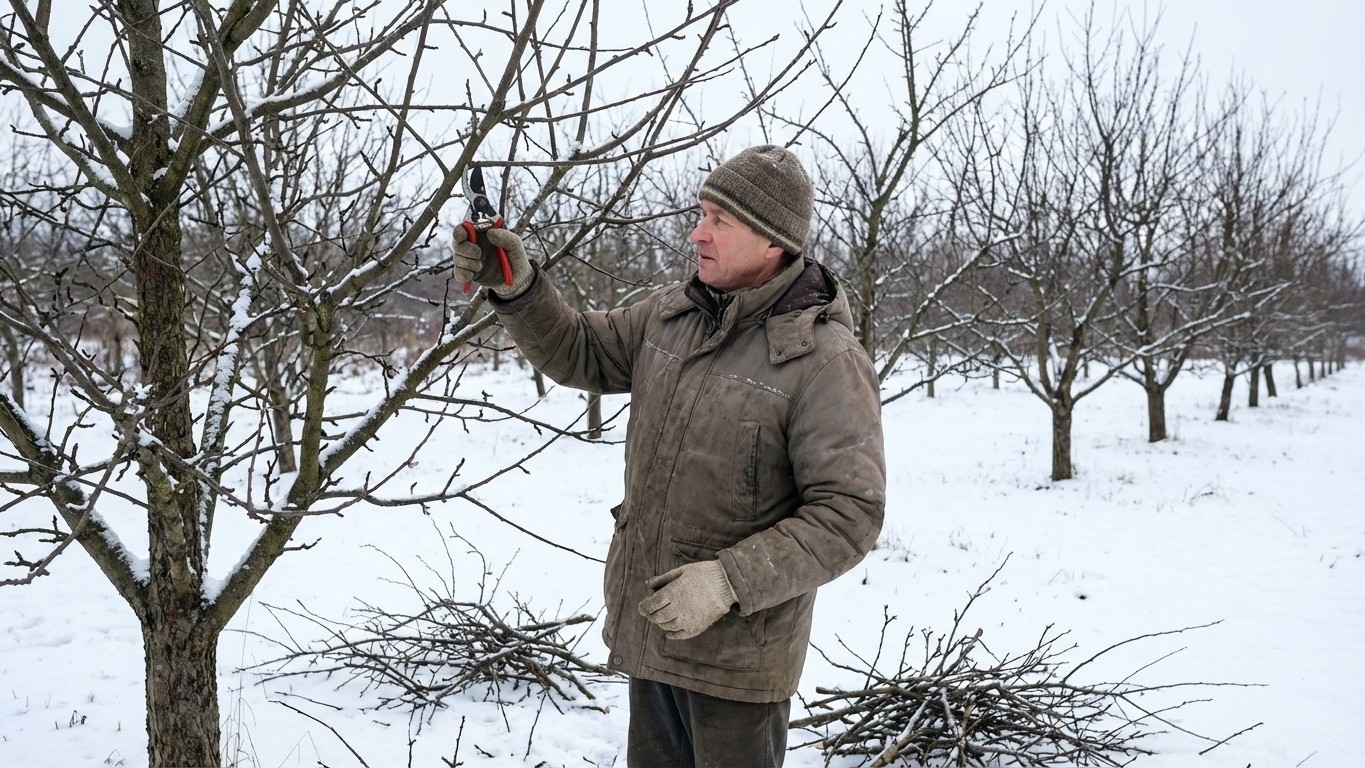
The bare branches of February hold the promise of July’s abundance, but only if you make the right moves now. Late winter pruning isn’t just maintenance—it’s the single most powerful tool for transforming mediocre fruit trees into heavy-producing powerhouses that will reward you with baskets of sweet, juicy fruit come summer.
Most gardeners approach pruning with trepidation, worried about making the wrong cut or damaging their trees. Yet professional orchardists know that late winter, specifically the weeks between mid-February and early March, represents the golden window when dormant trees respond most dramatically to strategic pruning. During this period, trees channel all their stored energy into the branches you choose to keep, setting the stage for exceptional fruit production.
Why February and March Are Your Secret Weapons
The magic of late winter pruning lies in timing. While trees sleep, their root systems continue working, accumulating energy reserves that will fuel spring growth. When you prune during dormancy, you’re essentially redirecting this concentrated energy into fewer, more productive branches. Each cut becomes an investment in summer’s harvest.
Temperature plays a crucial role in this timing. You want to prune when daytime temperatures consistently hover above freezing but before buds begin to swell. This sweet spot typically occurs 4-6 weeks before your last expected frost. Pruning too early risks cold damage to fresh cuts, while waiting too long wastes the tree’s energy on growth you’ll only remove.
The physiological benefits extend beyond energy redirection. Late winter cuts heal rapidly once growth resumes, creating strong callus tissue that protects against disease and pest invasion. This natural healing process coincides perfectly with the tree’s awakening metabolism, ensuring your pruning wounds become gateways to health rather than vulnerability.
The Four Strategic Cuts That Transform Production
Professional fruit growers rely on four fundamental pruning strategies that consistently boost harvest quality and quantity. The first involves removing competing central leaders in apple and pear trees. Most fruit trees naturally want to grow multiple main trunks, but this divides their energy. By selecting the strongest, most upright leader and removing competitors, you create a tree that channels maximum resources into fruit-bearing branches.
The second critical technique focuses on branch angle management. Fruit production peaks on branches that grow at 45-60 degree angles from the trunk. Branches growing too vertically put energy into vegetative growth rather than fruit, while those drooping too low often break under fruit weight. Late winter is ideal for removing poorly angled wood and encouraging proper branch development through strategic cuts just above outward-facing buds.
Interior branch thinning represents the third essential strategy. Dense canopies prevent sunlight and air circulation from reaching inner fruiting wood, leading to poor fruit quality and increased disease pressure. Removing crossing, rubbing, or inward-growing branches opens the tree’s center, allowing light penetration that enhances fruit color, sugar content, and overall tree health.
The fourth technique involves renewal pruning on older fruiting wood. Most fruit trees produce their best crops on wood that’s 2-6 years old. Branches older than this often produce smaller, lower-quality fruit. Strategic removal of aging wood encourages new fruiting branch development, maintaining the tree’s productive capacity as it matures.
Species-Specific Secrets for Maximum Results
While general principles apply across fruit species, understanding specific tree behaviors dramatically improves results. Apple trees respond exceptionally well to moderate pruning that removes about 20-25% of the previous year’s growth. Focus on thinning rather than heading cuts, as apples fruit on spurs that develop on older wood. Excessive heading cuts stimulate vegetative growth at the expense of fruit production.
Stone fruits like peaches, plums, and cherries require more aggressive pruning, often removing 40-50% of the previous year’s growth. These trees fruit primarily on one-year-old wood, so annual renewal becomes critical. Sweet cherries need lighter pruning than their stone fruit cousins, as they’re prone to disease entering through pruning wounds.
Citrus trees in warmer climates benefit from minimal late winter pruning focused on removing dead, diseased, or crossing branches. Their evergreen nature means they don’t experience the same dormancy patterns as deciduous fruits, making timing less critical but technique equally important.
Setting the Stage for Summer Success
The cuts you make in February’s chill directly influence July’s harvest abundance. Proper late winter pruning doesn’t just increase fruit quantity—it dramatically improves quality by ensuring adequate light reaches developing fruit, improving air circulation that prevents disease, and concentrating the tree’s energy into fewer, better-supported fruiting sites.
Remember that pruning is both art and science. Start conservatively, especially on young trees, and increase your confidence through experience. Clean, sharp tools prevent bark tearing and disease transmission, while proper cut placement just above outward-facing buds directs new growth in productive directions.
Your February efforts will compound throughout the growing season, creating trees that not only produce more fruit but maintain their productivity year after year. The bare branches you’re shaping today are tomorrow’s fruit-laden limbs, heavy with the sweet rewards of your winter wisdom.