
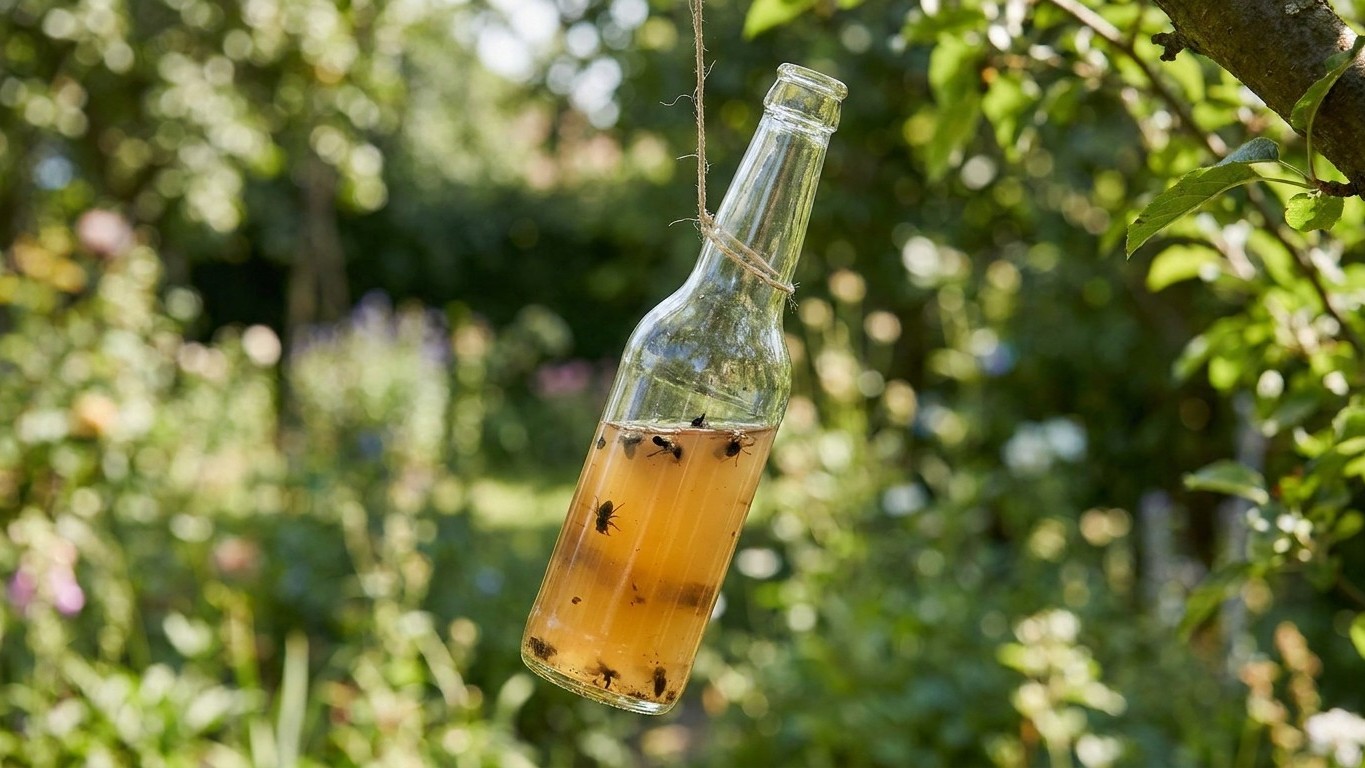
A week of late-summer heat, a bottle of leftover lager hung from a string, and the promise of wasp-free dinners on the patio. That was the plan. But when the trap finally came down, the liquid inside told a different story: dead bees floating alongside the wasps, a few unlucky hoverflies, and even a moth or two that had drowned chasing the same sugary fumes. The beer had done its job, just not the job anyone intended.
Key takeaways
- A week-long beer trap caught far more than just wasps—and not all of it was unwelcome
- The chemistry of why beer attracts every flying insect in your yard, not just the ones you want gone
- Scientists found a way to bait wasps without harming bees—but most backyard trappers have no idea it exists
Why Beer Works So Well (Maybe Too Well)
Beer ferments. It’s sugary, slightly alcoholic, and gives off a scent profile that mimics rotting fruit, exactly the kind of smell that pulls yellowjackets and paper wasps in from yards away. Placing traps using simple beer bait proved to be the most attractive substance during testing on plants surrounding hives. That’s great news if the goal is pure wasp volume. The problem is that beer’s appeal doesn’t stop at wasps.
Wasps are drawn to a variety of foods, but they particularly favor high-sugar substances, which makes sugary soft drinks, fruit juices, and sugar water among the best baits for a trap. Beer checks every one of those boxes at once: sugar, fermentation, a faint fruity note. Unfortunately, so does almost every other flying insect in the yard that’s hungry in August, which is exactly when natural nectar sources start drying up and foragers get desperate for any sweet substitute they can find.
The Real Catch: Who Else Ends Up in the Bottle
This is the part nobody warns you about when they suggest hanging a homemade trap over the picnic table. Traps may inadvertently capture nontarget beneficial insects, like bees, depending on the bait used. And the overlap in diet is closer than most people assume. Bees and wasps share similar dietary habits, and are both attracted to sweet substances. A trap that doesn’t discriminate between “pest” and “pollinator” is going to fill up with both.
Some gardeners insist their beer traps stay bee-free, and to be fair, results vary by region, hive proximity, and even the specific beer used. One beekeeper testing homemade solutions reported using a can of cheap beer with a bit of orange juice, saying it works great for wasp numbers, without mentioning bee bycatch. But plenty of other accounts tell the opposite story. On beekeeping forums, the debate over sugary traps near hives gets heated fast, because certain bait recipes will also catch horse flies, wasps, wax moths, and once the mixture ferments it starts working even better, pulling in an even wider mix of insects than intended.
There’s also a bigger, less visible problem with beer and sugar-water traps: they don’t actually solve the wasp issue long-term. Traps only capture workers that are out actively pursuing food, and as long as the queen remains safely inside the nest reproducing, the population will persevere regardless of how many worker wasps get killed. In practical terms, that means the same trap that’s drowning bees all week is barely making a dent in the colony sending those wasps to your table in the first place.
What Actually Separates Wasp Bait From Bee Bait
Researchers have been trying to solve exactly this problem, chemically. A 2022 study published in Pest Management Science tested whether certain sugar alcohols could lure wasps while leaving bees alone. The results were promising: sorbitol and xylitol acted as nutritive feeding stimulants for the common wasp, while for the honey bee, none of the sugar alcohols acted as a feeding stimulant at all. The researchers went further, concluding that the wasp-specific preference for xylitol suggests its potential as a bee-safe alternative to sugar-containing bait for controlling the common wasp.
Commercial trap manufacturers have picked up on the same principle using different chemistry. Instead of sugar, many rely on synthetic lures. Commercial traps usually contain heptyl butyrate, which appeals to wasps and hornets but not honey bees. That single compound explains why a store-bought yellowjacket trap and a homemade beer bottle can produce wildly different bycatch, even when hung in the exact same spot.
Better Ways to Protect the Table This Summer
None of this means giving up on an outdoor dinner in peace. It just means rethinking the bait. If a trap is the route you want to take, skip anything sugary and lean toward protein instead, at least early in the season. Pet food, fish, meat, or decomposing vegetables and fruit attract foraging wasps looking to feed their colony without pulling in nectar-seeking bees at all. Commercial lures built around heptyl butyrate are worth the few extra dollars if bee safety actually matters in your yard.
Placement matters just as much as bait choice. Hanging the trap well away from the house and patio, somewhere between the garden and any nearby meadow or woodland where wasps might be nesting, keeps the lure from doubling as a dinner invitation for every stinging insect within scent range of your table. And if the goal is simply deterrence rather than a body count, a fake nest decoy works on a completely different principle: wasps avoid the nests of other wasps, so giving the appearance of a real nest keeps nearby wasps at a distance of about 20 feet or more. No drowning required, no bycatch to sort through a week later.
One detail worth remembering before hanging anything new this season: nearly 3% of the population is allergic to stinging insects, which is one more reason a trap that reduces overall activity near a shared table, rather than one that simply piles up casualties, tends to be the safer call for everyone sitting around it.
Sources : ncbi.nlm.nih.gov | biorxiv.org