
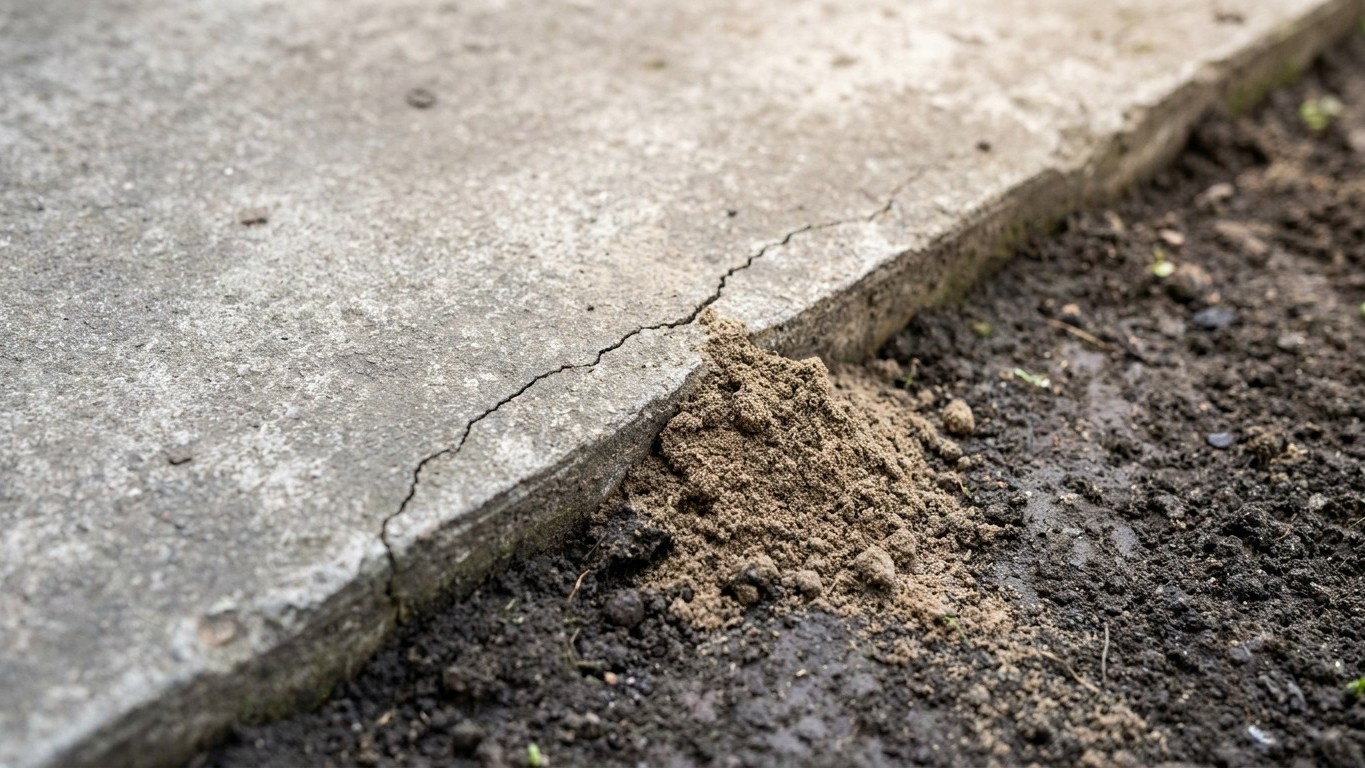
Three weeks of spraying vinegar every morning, and the ants kept coming back by afternoon. That’s not surprising, and it’s not really about the vinegar being weak. White vinegar does not kill ants on contact under normal household use. What it does is destroy the pheromone trails that ants lay down to guide other colony members to food sources. Lift the slab after weeks of that routine, though, and the picture changes completely. The trail disappears in seconds. The colony underneath doesn’t.
Key takeaways
- A morning vinegar routine only erases the visible symptom while the entire colony thrives safely beneath the concrete
- Pavement ants use the soil under your doorstep as premium real estate with stable temperature and direct food access
- The structural damage happening underground might be a bigger concern than the insects themselves
Why Vinegar Never Stood a Chance
Here’s the uncomfortable math nobody mentions on the DIY forums: direct contact with undiluted vinegar can kill individual ants, but you would need to douse each ant directly, and that is neither practical nor effective against a colony that may contain 100,000 or more workers underground. A morning spray bottle, no matter how diligent, was only ever wiping a chalkboard clean while the classroom kept teaching.
Worse, that daily ritual might have made things messier. Some ant species, including odorous house ants, respond to disturbance by “budding,” splitting the colony into multiple smaller nests, and using repellents like vinegar without a follow-up strategy can turn one manageable nest into three scattered ones. One doorstep problem, potentially multiplied into three separate colonies elsewhere in the yard. Extension entomologists have said as much for years: killing the ants you see does not solve the infestation because most ants inside a home are foragers, while the colony, queen, and developing ants are often hidden outdoors, inside walls, under slabs, or in other protected areas, a point Nebraska Extension makes about sprays in general.
What’s Actually Living Under That Slab
Lifting a concrete doorstep after weeks of failed spraying usually reveals one specific culprit: pavement ants. These ants prefer to nest in soil next to and beneath slabs, sidewalks, patios, and driveways. They’re not squatting temporarily. They’re renovating. They may nest under a slab foundation, piling excavated soil in a mound on top of the concrete near stress cracks and expansion joints. That gritty little mound by the door that looked like dirt tracked in on shoes? That was the excavation report.
The slab itself is basically ant real estate with premium amenities. It offers cozy shelter from rain and heat thanks to stable temperatures under concrete, while ants dig easily through the sandy base, stay moist, and get snack access right at their doorstep. Concrete acts as a thermal battery, holding warmth overnight and shade during the day, which makes the soil pocket underneath one of the most stable microclimates an insect colony could ask for in a temperate yard.
What makes this particularly frustrating for a three-week vinegar routine is the colony structure hiding beneath the pavement. Pavement ant colonies include one egg-laying queen, worker ants to maintain the nest and forage, and reproductive ants to help grow the colony. The workers walking across the doorstep every morning, the ones getting sprayed, represent a tiny visible fraction of that structure. The queen never once crossed the vinegar line. She didn’t need to.
The Slab Isn’t Just Housing, It’s Also a Structural Warning
There’s a second reason lifting that slab can be an eye-opener that has nothing to do with insects and Everything to do with the concrete itself. Colonies that tunnel and excavate soil pockets underneath a slab are, over time, quietly removing the material that’s supposed to support it. Tunneling undermines paver stability, causing settling, wobbling, and trip hazards over time. A doorstep that’s started to rock slightly underfoot, or that’s developed a hairline gap at one edge, isn’t just cosmetic wear. It can be a void where soil used to be, hollowed out one grain at a time.
Pavement ants are also opportunists about timing. During the winter, pavement ants may nest inside structures near a heat source, which explains why activity at a doorstep can seem to disappear in the cold months only to surge back the moment temperatures rise. It isn’t a new infestation each spring. It’s the same colony, just relocating a few feet depending on the season, using the slab as one room in a larger underground house.
What Actually Works Once the Slab Is Back Down
None of this means vinegar is worthless around the house. It’s genuinely useful for wiping counters and disrupting the occasional trail crossing a windowsill. It’s just the wrong tool for a colony living in structural soil. Extension research points toward one method that actually reaches the queen: University of Minnesota Cooperative Extension experts recommend baiting for ant colonies under concrete slabs. Bait works precisely because it exploits the same food-sharing behavior that makes the colony resilient in the first place, since worker ants carry the toxicant back to the queen through trophallaxis, mouth-to-mouth feeding, which is the only way to eliminate the colony at its source.
Skip the fast-acting sprays near the slab itself, tempting as they look on the shelf. The use of residual sprays or dusts causes stress in the ant colonies, causing them to split into sub-colonies and scatter, also called budding, which multiplies the ant colonies’ number and thereby multiplies your ant problem. Slow bait, patience measured in days rather than mornings, and a look underneath any slab that’s started to shift are worth far more than another bottle of vinegar. The doorstep was never the problem. It was just the lid.
Sources : fullyhealthy.com | aol.com