
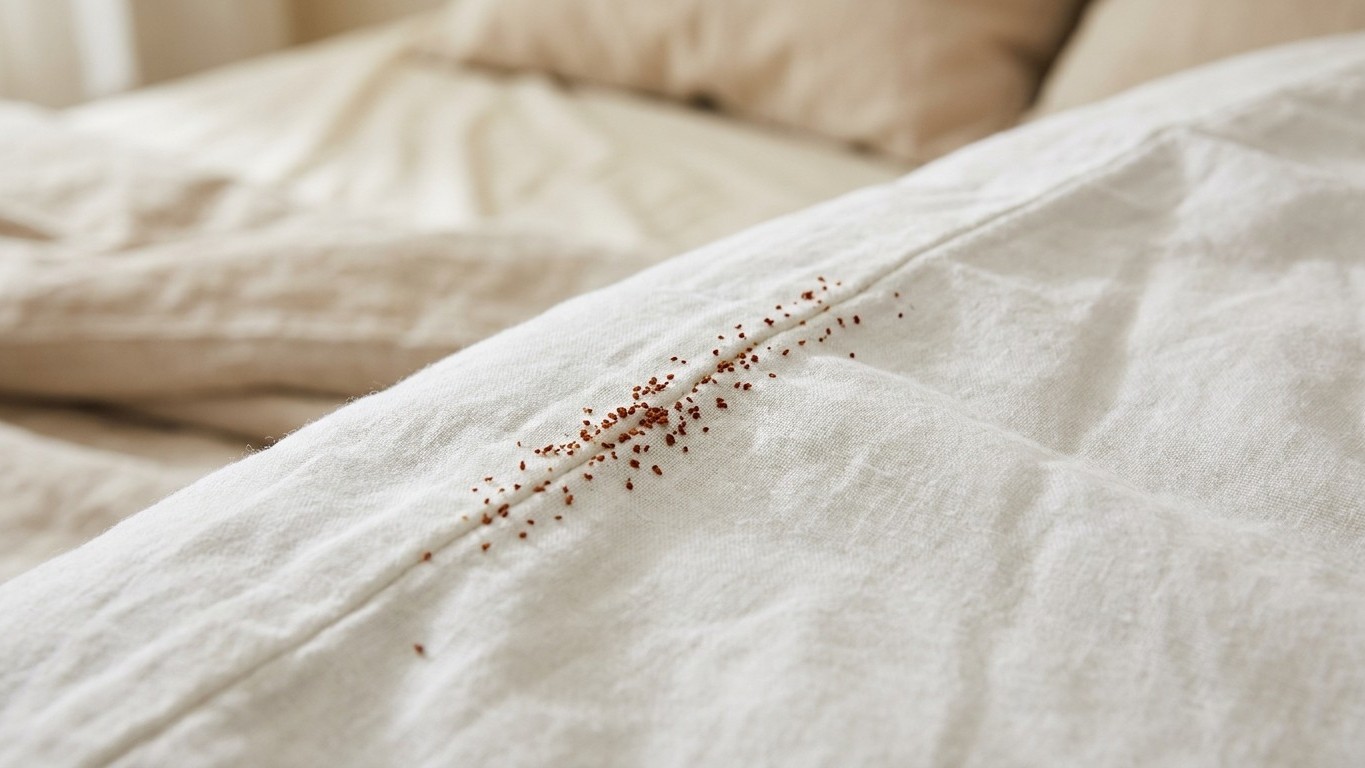
A week is exactly how long it took. One suitcase, dropped onto the bedroom carpet after a red-eye flight and zero energy for unpacking, and seven days later a thin line of rust-colored specks along the mattress seam told the whole story. No drama, no bites at first, just a stain pattern that looked wrong enough to Google at 11 p.m. That search ended in the same place thousands of returning travelers land every summer: bed bugs.
The timing isn’t a coincidence. Bed bugs feed roughly once a week, so a female that hitched a ride in a hotel room can lay her first visible evidence right around the seven-day mark, which lines up with countless traveler accounts of “everything looked fine until day six or seven.” Bed bugs are insects that feed every 5 to 10 days, primarily on the blood of humans, and they don’t need a fresh meal to keep multiplying, they just need somewhere dark, tight, and close to a sleeping body. A suitcase left flat on carpet, inches from a bed, checks every box on that list.
Key takeaways
- Bed bugs feed on a weekly cycle—discover why day seven is when you’ll see the first visible signs
- A suitcase left on bedroom carpet becomes the perfect breeding ground: here’s exactly why
- The mattress seam holds 70% of the evidence, but most people don’t know where else to look
Why the mattress seam is the crime scene
Pest control experts keep repeating the same instruction for a reason: check the seams first. Over 70 percent of bed bugs are located in bed-related areas, and a thorough mattress inspection means looking along the top and bottom seams and along the mattress piping. That’s not random advice, it reflects where the insects actually cluster because the fabric folds offer cover during daylight hours and easy access to a host at night.
What you’re looking for isn’t the bug itself, at least not at first. Bed bug stains are typically small, rust-colored or dark brown spots, roughly the size of a pen tip, caused by crushed bugs or dried excrement, and they often appear in clusters or lines along mattress seams and sheet edges. Pale, poppy-seed-sized eggs and translucent shed skins are the other giveaways, and the EPA notes that bed bug eggs and eggshells are tiny, about 1mm, along with pale-yellow skins that nymphs shed as they grow, and these show up in mattresses, headboards, and underneath furniture. None of that requires a professional eye. A phone flashlight and a few unhurried minutes are enough.
There’s also a smell, though it’s the last sign to notice, not the first. A notable infestation produces a sweet, musty odor often compared to overripe fruit or a damp, old book, and the smell comes from the bugs’ scent glands. Anyone who’s opened a suitcase after a long trip and caught an odd, slightly sweet whiff of stale fabric might have brushed past an early clue without realizing it.
How they get from the hotel to your bedroom
The hitchhiking mechanics are almost embarrassingly simple. Bed bugs spread by getting into the seams and folds of luggage, overnight bags, folded clothes, bedding, furniture, and anywhere else they can hide, and most people do not realize they are transporting bed bugs and infecting areas as they travel. A suitcase doesn’t need to touch an infested mattress directly. Bed bugs from the mattress, headboard, or nightstand detect the warmth and carbon dioxide of a sleeping body and explore the surrounding area, including luggage placed on the floor nearby, and according to the CDC, they travel efficiently along baseboards and up furniture legs, crossing several feet of open floor when motivated by proximity to a host.
This is why a spotless-looking hotel room offers zero guarantee. Even if the place looks immaculate, it could still harbor bedbugs, the EPA notes, since these parasites are attracted to body heat and the carbon dioxide in people’s exhalations, which are present even in spotless conditions. Star ratings don’t matter either. Bed bugs don’t care if you’re staying at a budget motel or a luxury resort, and they hitch rides on suitcases, clothing, and even housekeeping carts, making hotels one of their favorite hangouts. The bug that ends up on a bedroom carpet back home almost never announces itself at check-in. It rides quietly, tucked into a zipper track or a fold of fabric, and waits.
What actually works once you suspect an infestation
Heat is the one weapon that consistently works, and it’s cheap. The use of a dryer is the best insurance against bed bug introduction into a residence, and heat is an excellent bed bug killer, meaning the dryer alone on high for 30 minutes can do the job. Washing helps too, but it’s not the whole answer on its own. While washing in warm, soapy water is effective against most of the bugs, it may not help with the eggs, which is exactly why the dryer step matters even for items that seem clean.
The suitcase itself deserves the same scrutiny as the mattress. Vacuuming the interior, focusing on zippers, seams, and folds, then immediately sealing or discarding the vacuum bag, catches stragglers before they migrate to a closet or a dresser drawer. Storing luggage somewhere other than the bedroom between trips isn’t paranoia, it’s standard guidance. Storing suitcases away from the bedroom, such as in the basement or garage, and never under the bed, is a recommended precaution, precisely because proximity to sleeping areas is what turns a stowaway into an infestation.
The habits that prevent this mess in the first place cost nothing and take no extra time at a hotel. Once at a room, avoid putting luggage, coats, or personal belongings on the bed, and instead use luggage racks, table tops, or the bathtub upon entry. A quick pass with a phone flashlight along the mattress seams before unpacking, and a mental note to keep the suitcase elevated and away from upholstery, turns a five-minute habit into the difference between an uneventful trip and a call to an exterminator.
The stain on that mattress seam turned out to be exactly what it looked like. What’s less obvious is that the suitcase itself, the actual object, still needed to be dealt with, not just the bedroom. Bed bugs that survive a dryer cycle on clothing can still be waiting in the case’s wheel wells or zipper channels for the next trip, ready to start the same seven-day countdown all over again.
Sources : cookspest.com | bargoosebedding.com