
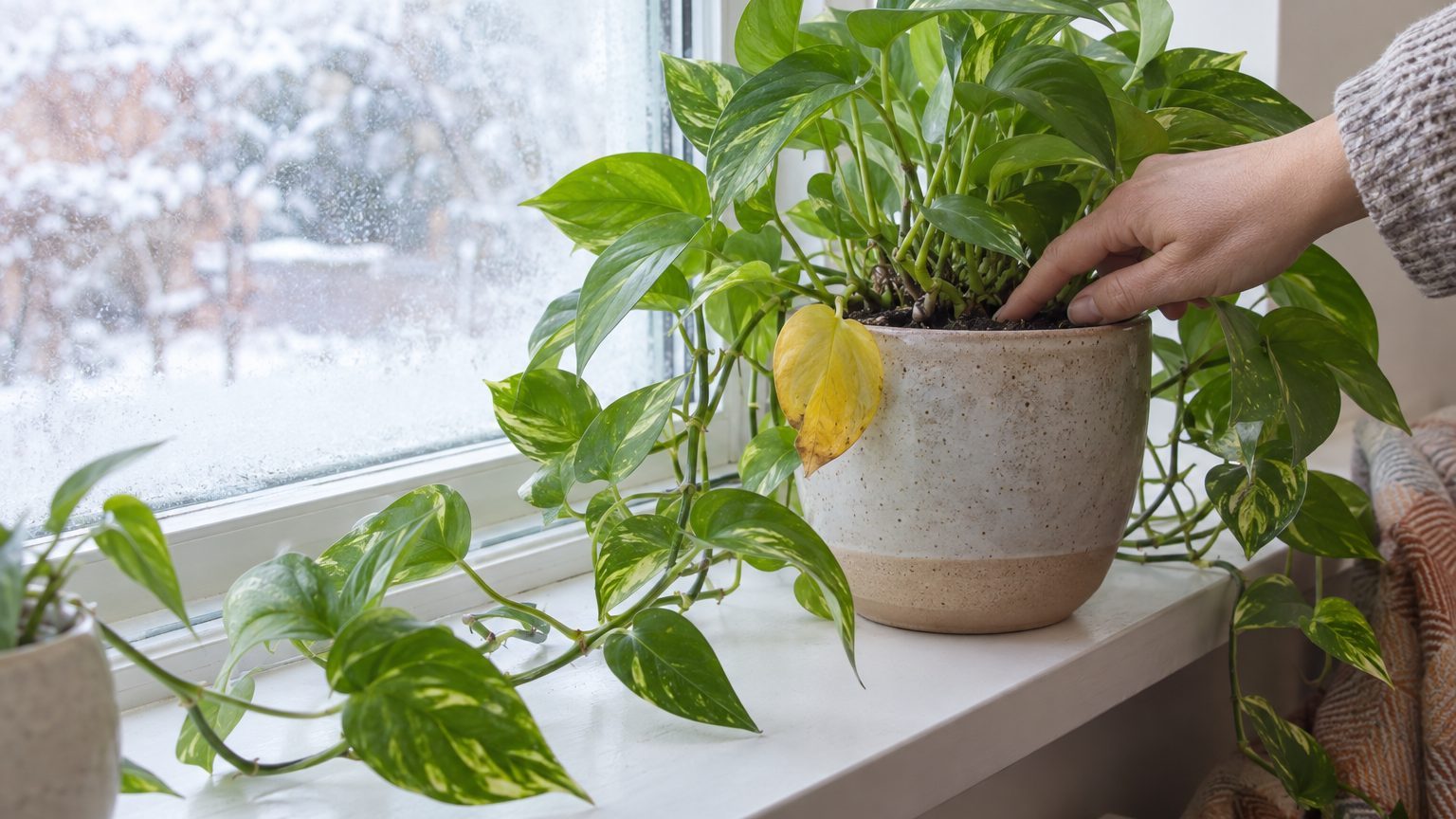
Yellow leaves on a pothos in winter point to overwatering more often than to anything else. Growth slows as the days shorten, yet many owners keep up the same weekly pour they gave the plant in summer. The roots sit in wet soil, and the leaves pay for it.
Pothos drinks far less in January than it did in July.
- Pothos requires significantly less water in winter because reduced light slows growth and moisture uptake.
- Overwatering causes soft, even yellowing starting at the base, while cold damage creates dark, water-soaked patches on leaves.
- Check soil moisture two inches deep and pot weight before watering; adjust frequency by soil conditions, not calendar days.
Why the weekly routine backfires
Pothos (Epipremnum aureum) is a tropical vine, and indoors it reads winter as a season of weak light. With fewer hours of thin sun, it makes fewer new leaves and pulls up much less water. Soil that dried out in five days during summer can stay damp for two weeks. Roots in that soggy mix run short of oxygen, start to rot, and can no longer feed the foliage above them.
The first sign is often a single yellow leaf near the base. Then another.
Decorative pots make the problem worse. A container without drainage holes, or a ceramic sleeve with an inch of water pooled at the bottom, keeps the root ball wet long after the surface looks fine. Tip the plant out and look.
Water when the top two inches of soil are dry, not when Sunday arrives.
Reading the yellow: overwatering, cold, or low light
Overwatering has a recognizable look. Leaves turn a soft, even yellow, usually starting with the oldest ones at the bottom, and they feel limp rather than crisp. Stems near the soil line may darken and turn mushy, and the pot can smell musty. Slide the plant out and check the roots: healthy ones are firm and pale, while rotted ones are brown or black and slimy.
Cold damage looks different. Pothos is comfortable between roughly 65 and 85°F and sulks below about 50°F. Instead of even yellowing, you get dark, water-soaked or blackened patches, often on leaves pressed against a cold windowpane or sitting in the path of a drafty door.
Low light is slower and subtler. Leaves fade gradually, the vine stretches with long gaps between them, new growth comes in smaller, and the marbling on variegated types drifts toward plain green.
The two often team up, since a dim plant uses even less water. A pothos in a north-facing room can hold moisture for weeks, so wet soil on a leggy plant usually means both problems at once. Treat the watering first, because that is the one that kills.
Thirst yellows leaves too, but it comes with crisp, brown edges.
It is rare in winter, though not unheard of. A pot parked above a radiator or beside a heating vent can dry out fast, and you will notice the soil shrinking away from the pot walls and the whole container feeling featherlight. Heated air can also brown leaf tips on a plant whose soil is perfectly fine, so check the soil before blaming the pot.
What to do this week
Push a finger two inches into the soil and lift the pot to feel its weight. If the mix is damp or the pot is heavy, wait. Move the plant a few inches off cold glass, out of any draft, and into the brightest spot you have. Yellow leaves will not turn green again, so snip them at the stem and let the plant spend its energy on healthy growth.
If the roots are mushy, act quickly. Unpot the plant, trim away anything brown or black with clean scissors, and repot in fresh, airy mix in a container with drainage holes. If the damage is severe, cut a few healthy vines just below a node (the small bump where a leaf meets the stem) and root them in a glass of water, which usually takes a few weeks.
Numbers vary more than care guides admit. In a warm, bright room a pothos may want water every 7 to 10 days all winter, while in a cool, dim one it can go three weeks. The soil, not the calendar, sets the rhythm.