
Yellow stems that feel soft at the base are a verdict, not a mood swing. ZZ plants store water in thick underground rhizomes, and when those rot, the stems above collapse within days or weeks. The good news is that rhizome rot is rarely all-or-nothing.
Firm tissue can regrow an entire plant.
- ZZ plants store water in rhizomes that rot in constantly damp soil, especially during winter when growth stops but weekly watering continues.
- Healthy rhizomes are plump and pale cream; rotten ones turn brown or black, dent easily, and smell sour, though rot often affects only one side.
- Firm rhizome pieces dried for 24-72 hours and repotted into gritty, well-draining mix can push new growth in spring, sometimes two to three months later.
Why the stems turn to mush
The ZZ plant (Zamioculcas zamiifolia) comes from the dry woodlands and rocky ground of eastern Africa, where rain is seasonal and the plant lives off stored reserves. Its potato-like rhizomes hold enough water to carry it through months of drought. Packed into dense, constantly damp potting soil, that same water-rich tissue becomes an easy meal for rot organisms such as Pythium and Fusarium. A decorative pot with no drainage hole speeds the process along.
Winter is the usual trigger. Light levels drop and growth stalls, but the weekly watering habit carries on, so the soil stays wet for weeks.
Not every yellow stem means disaster.
A single stalk that yellows and shrivels, with a dry, wrinkled base, usually points to age or thirst. Mushy, translucent tissue at the soil line is the red flag, especially if the stem pulls loose with almost no resistance. If you see that, stop watering and unpot the plant the same day.
Checking the rhizomes, step by step
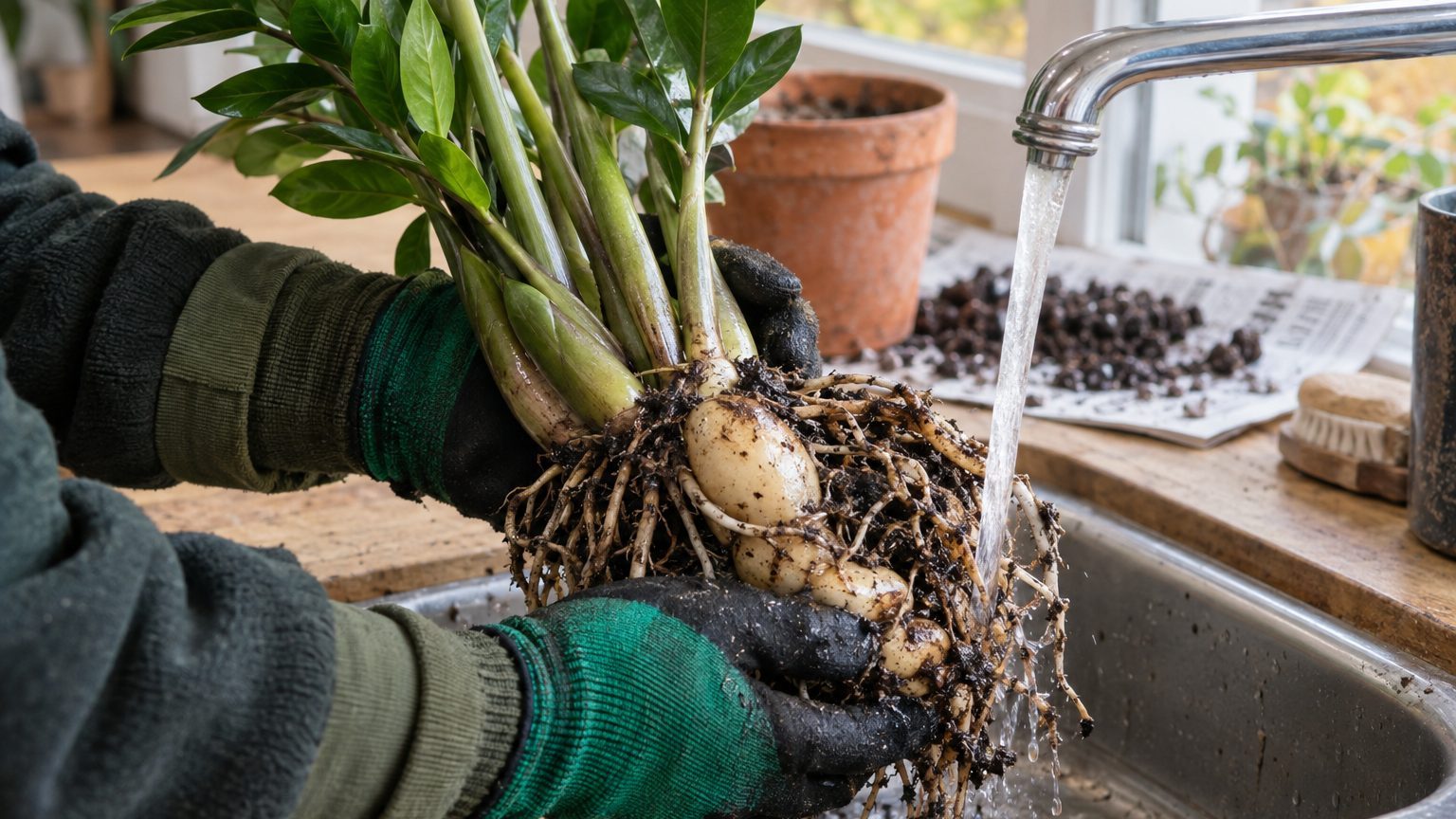
Slide the plant out of its pot, shake off the loose soil, and rinse the rhizomes under lukewarm water. Wear gloves, because the sap contains calcium oxalate crystals that irritate skin and mouths. Then lay everything out on newspaper in decent light.
Healthy rhizomes are plump, heavy for their size, and pale cream to light tan on the outside. Rotten ones turn brown or black, dent under a thumb like an overripe pear, and often smell sour or swampy. Roots tell the same story: good ones are firm and tan to white, while rotted ones are slimy and hollow, and the outer layer slips off like a wet noodle. Many people expect the whole mass to look uniformly bad, but rot often takes one side of a rhizome and leaves the other untouched.
When in doubt, slice it open.
Use a knife or razor blade wiped with isopropyl alcohol. Crisp, white flesh means keep. Brown streaks, a wet gray cast, or a soft center mean you keep cutting back until the cross-section is clean, wiping the blade between cuts so you don’t drag the problem into healthy tissue.
Saving what’s still firm
Remove every soft or discolored part, then trim a thin margin of healthy-looking tissue beyond it as insurance. Stems that are fully yellow and mushy go in the trash. A green stem with a firm base attached to a firm rhizome can stay, though it may drop leaves while the plant sorts itself out.
Let the pieces dry on a rack in shade for 24 to 72 hours, until the cut faces look dry and slightly sealed. Some growers dust the cuts with ground cinnamon or a copper-based fungicide. The evidence for cinnamon is modest, and the drying period does more of the work.
Repot into fresh mix, never the old soil, and use a new pot or a scrubbed one with drainage holes. A gritty blend of roughly half cactus mix and half perlite or pumice drains fast enough to keep rhizomes from sitting wet. Plant them shallowly, with the tops barely covered, in a pot that fits snugly rather than a roomy one that holds extra moisture. Wait about a week before the first watering, then give just a light drink.
What recovery really looks like
Bright, indirect light and temperatures between 65 and 80°F give the rhizomes the best conditions. Water only when the soil is dry all the way down, which can mean every three to four weeks in winter. A wooden skewer pushed to the bottom of the pot is a cheap moisture meter: if it comes out with damp soil clinging to it, wait.
Patience is the hard part. A rescued rhizome often sits there for weeks looking like nothing, then pushes up a pale shoot in spring, commonly two to three months after repotting and sometimes later. Check it now and then with a gentle squeeze, since a firm rhizome with no leaves is still very much alive.
Leaf cuttings from the plant are a backup, but they are slow, taking six to nine months just to form a small rhizome of their own.
One last detail: a rhizome fragment needs at least one growth bud, the small pointed bump from which shoots emerge. A chunk without one may produce roots and stay a lump indefinitely, so keep the pieces with visible buds first.