
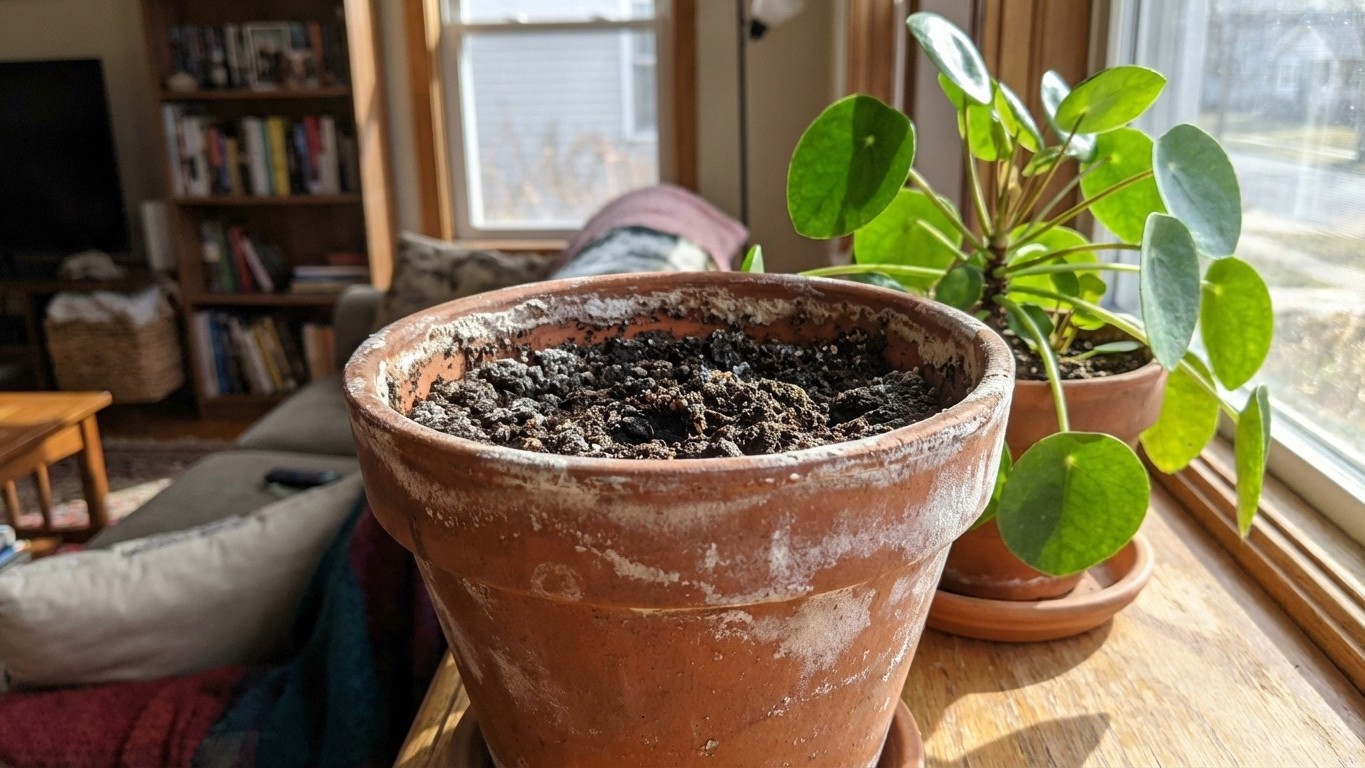
The day you notice a fine chalky ring circling your favorite terra cotta planter, reality bites: those white crusts aren’t abstract artwork, but a signal from your plants—and not a friendly one. It’s easy to ignore, brushing it off as a sign of well-used pots or maybe just hard water. But that dusting is nature’s little memo: something needs fixing. Fast.
Key takeaways
- What causes those stubborn white crusts on your pots?
- How do mineral buildup and fertilizer affect your plant’s health?
- When should you flush the soil or repot your beloved plant?
The Culprit Behind the Crust
For anyone who’s watered a houseplant in a city with mineral-rich tap water, the story writes itself. Those stubborn white deposits edging the pot or dotting the soil? It’s usually a buildup of mineral salts. Calcium, magnesium, and residual fertilizer don’t vanish with the water—they hang back, crystallizing as the moisture evaporates. Over months, sometimes only weeks, this silent accumulation creeps up.
Ever pour a glass of water in Las Vegas? It’s not just the air that’s dry—the water’s loaded with minerals. That same water, consistently funneled through your jade or philodendron’s roots, loads the soil with hidden extras. Think of it as spicy food for a plant—one or two meals might be fine. A nonstop diet? Bad news.
But water isn’t the only culprit. Over-enthusiastic feeding is another. Indoor gardeners, in their zeal, sometimes reach for the fertilizer bag a little too often. What the plant doesn’t absorb, the soil tries to swallow. When it can’t, those nutrients, especially nitrates, phosphates, or potassium, are left behind—a buffet for salt crystals.
Why White Crusts Matter (And When to Worry)
At first, it’s mostly cosmetic—a pale ring, a faint powder, a wink of chalk on terracotta clay. But let that salt party continue, and things get less pretty. Salt in high concentrations is toxic for roots. It messes with the plant’s ability to absorb water, like trying to drink lemonade with a straw full of sugar—it slows everything down, stresses the roots, and eventually stunts the plant’s growth. Wilting leaves, crispy edges, or a stubborn refusal to flower? For many, it all starts with that unassuming white crust.
Here’s the trouble: container plants live in a closed system. No rainstorm comes to flush things clean. In nature, minerals and nutrients ebb and flow; in a pot, every drop that doesn’t run freely out the bottom lingers, compounding the mess.
Sound familiar? If you’ve noticed potting soil getting hard, water pooling on top, or an odd scent drifting from the pot, those are the salt crust’s ugly cousins. They tell the same story: something’s off with the soil. That’s why the smart indoor gardener pays close attention—caring for soil isn’t romantic, but it’s essential.
The First Fix: Flush or Repot?
So the crust has appeared. What’s your move—damage control, or total reset? Sometimes, plants just need a clean start. The simplest first fix is often an aggressive flush. Take your potted plant to the sink or shower, and let water run gently through the soil for several minutes. Aim to see water flowing freely from the bottom—no half measures. This mini-deluge is what nature does in spring: a deep soak that shoves salts toward the drain, not back toward the roots.
Old-school houseplant enthusiasts swear by the “shower cure.” Once a season, every plant gets a thorough rinse, mimicking a natural rainstorm. It works, especially if the deposit is fresh and hasn’t yet hardened into a thick crust. For most plants, repeating this every 3-4 months prevents major buildup.
But sometimes, no amount of flushing will save you—especially if the white crust has formed a stubborn, even gritty, ring on the pot rim or surface of the soil. Here, repotting may be your only ticket out. Gently remove the plant, shake off as much old soil as possible, and rehome it with fresh, well-draining potting mix. If you’re using the same pot, scrub it clean—hot water and a touch of vinegar work wonders—before replanting. That single act can breathe months, even years, of fresh life into your stressed specimen.
Prevention (So You’re Not Doing This Again in 6 Months)
One close look at a pot rim caked in white grit is usually enough to inspire prevention. Solutions? They start at the tap. If your tap water is notoriously hard—think Phoenix, El Paso, parts of rural Midwest—consider switching to filtered, distilled, or rainwater (collected with a simple barrel outside, if you’re lucky enough to have a yard or balcony). Plants are less fussy about the label than the purity.
Go easy on the fertilizer. Label rates are written for lush, fast-growing seasons, not for months when a plant is barely inching along. If you fertilize, cut doses in half, and always water sparingly. In winter, most indoor plants can skip feeding altogether—think of it as a gentle hibernation. Too much love, in this case, can be colder than neglect.
Drainage is non-negotiable. Pots without holes promise misery for most species—water stagnates, salts build, and roots choke. If style wins out over sense—hello, charming ceramic planters—use a plastic nursery pot inside fancy cachepots, so excess water has a way out.
What about scrubbing pots before reuse? That’s the home gardener’s version of washing your coffee cup before tomorrow’s pour. It can feel like overkill—until you’re battling leaf drop for the third time this year, all thanks to salt ghosts lingering from last season’s tenant.
The Anecdote: Mr. Green’s Relentless Fern
One Baltimore plant lover, a retired bus driver named Mr. Green (yes, his real name), once shared his low-tech solution for a bedraggled fern ringed with white salt. “Took it out, dunked the whole mess—roots and all—in a bucket of rainwater. Let it soak, swished it around, patted off the soil on a towel, then repotted.” The result: not only did the fern recover, it pushed out new fronds, doubling in size within a season. Old-fashioned, perhaps, but it worked better than any store-bought cleaner.
This anecdote hides a truth many ignore. Plants, even the fragile ones perched in urban apartments, are hardier than we think—and sometimes, the simplest fix trumps fussy interventions.
White crusts, then, aren’t a death sentence. They’re a warning, but also an opportunity: the push you needed to change a plant’s watering routine, question whether those weekly feedings are doing more harm than good, or finally buy that filtered water system you’ve been eyeing. The mark circles more than the pot—it circles everyday habits, reminding you to watch, question, and intervene. After all, if mere minerals can change the fate of a plant, what else might shift if we changed the small things we ignore?