
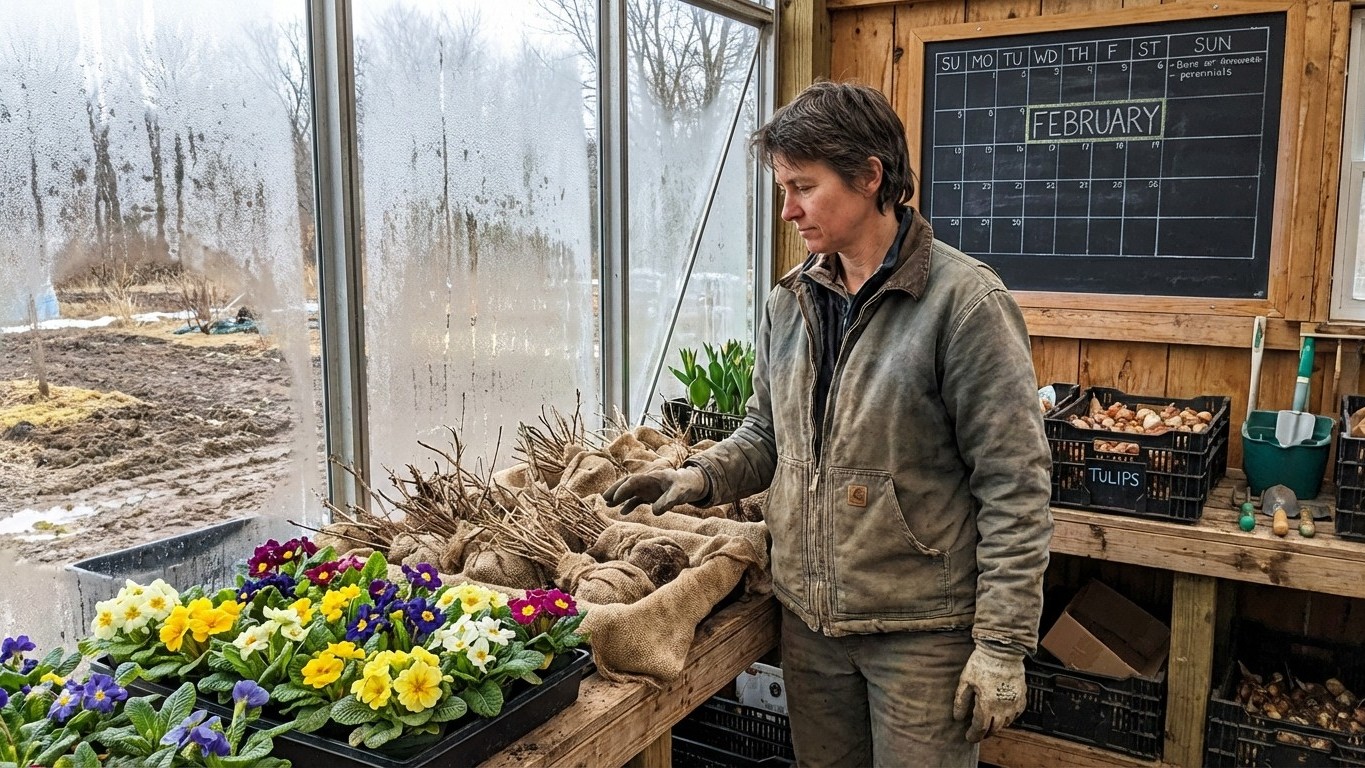
Valentine’s hearts and racks of seed packets. Frost on your windshield and Instagram feeds tempting you with trays of perfect pansies. February at the garden center is like arriving at a dinner party two hours before anyone else does: the table looks ready, but no one’s serving the meal.
The real danger? Buying the wrong plants — or even the right plants at the wrong time — and starting your spring garden on a foundation as shaky as mid-February mud.
Key takeaways
- Why early-bird blooms in February may vanish by March.
- The myth of starting seeds too soon and its hidden costs.
- How winter houseplant buys can lead to unexpected heartbreak.
The Seductive Lure of Early-Bird Blooms
Walk into any garden store in February. You’ll spot primroses blooming in plastic trays, tender herbs stacked next to bags of potting mix. Ready to go, right? Not even close. What looks like a rainbow feast today could be compost fodder by March. Garden centers stock up early to catch the first stirrings of spring mania — and many hopeful gardeners get caught in the trap. Retailers love an early sale, even if your local climate isn’t reading from the same script.
A tulip bulb in full leaf this early? That’s not a gift — it’s a warning. Most of the “spring” plants in stores before the ground has thawed are primed for heated greenhouses, not the slings and arrows of late-winter weather. Take them home, plant them out — a hard freeze could cut their lifecycle to a few silent days. Result? Heartbreak, not harvest.
Why the rush? For big chains, it’s a numbers game: shipments dribble in on a national schedule, not a local one. California’s mild February leads? That’s misery if you’re gardening in Minnesota’s black soil, still frozen like a freezer brick. Your climate matters more than any in-store display.
Seeds: The Early Planting Myth
Seed packets are everywhere in February, promising thickets of tomatoes and banks of zinnias. It’s easy to feel left behind — as if everyone but you is already starting their seedlings. Resist. Most annual flowers and warm-weather vegetables need heat and light that only come in April, sometimes May, depending on where you live.
Start seeds too soon, and you won’t be rewarded with robust starts. Instead, those spindly, pale seedlings — the ones that seem to stretch for just a little more sun — often wither before their moment. Gardeners call them “leggy” for a reason. You may as well toss the money straight into your compost bin. The irony: patience pays, procrastination loses nothing in gardening. Starting seeds early doesn’t mean more flowers or earlier tomatoes. It means sickly plants desperate for real conditions — conditions February just can’t deliver on a kitchen windowsill.
There are rare exceptions: onions, leeks, maybe the earliest pansies or violas if you’re in a balmy zone. But the majority? You’ll have better luck with your vegetable patch if you wait. As counterintuitive as it sounds, the biggest favor you can do for your future garden is to put that seed tray back — for now, at least.
Houseplants: Cabin Fever and the Great Overbuy
Houseplants get caught up in this seasonal fever, too. February’s dark days make even experienced Gardeners crave living green, and garden stores oblige with floods of fresh arrivals. Monstera, pothos, fancy prayer plants — you’ve seen them. But the impulse to buy a houseplant in winter often collides with the plant’s post-shipping needs. Newly arrived specimens have endured a cross-country relay through cold trucks and hot warehouses. Their stress isn’t always visible, but it lingers. Suddenly, leaves brown, roots turn mushy, and your “winter refresh” turns into a TLC case — or a refund request.
The numbers tell the story: a Cornell University study found that houseplants purchased in late winter have a higher rate of post-sale decline than those bought after March 1. No one wants to play the odds with a $30 calathea.
Better to visit garden centers for ideas — make notes, snap pictures, dream big. Just don’t take home that fancy houseplant unless you know you have the time (and daylight) to nurse it through until real spring returns. Buying later in the season, when stores receive hardier stock and the days lengthen, typically leads to better results — and fewer brown leaves on your kitchen counter.
What Garden Stores Get Right — And When to Say Yes
Not everything at the garden center is a trap. Tools, soil amendments, and sturdy perennials in dormancy can be worth snagging in February — especially if you spot a good deal. Bare-root fruit trees (if kept cool and moist) can safely bide their time in your garage or basement until it’s time for planting. But the delicate annuals, hothouse-grown herbs, and pre-forced bulbs stirring in the warmth? File those under wishful thinking, at least for now.
A surprising connection: experienced gardeners use the “February trap” as a reset button. While others get sucked into premature purchases, savvy hands plan their compost piles, map out beds on paper, and order seeds from specialty catalogs — not the garden center racks. It’s like training for a marathon during the off-season: invisible work that pays off when your neighbors are just waking up to spring.
One Chicago gardener likened February shopping to buying ice skates in July: “It feels like you’re getting ahead, but all you get is a lot of storage headaches.”
The garden store in late winter isn’t a threat — it’s a test of patience. Instead of chasing blooms that are destined for heartbreak, imagine what you could do with that energy: design a rain garden, build a compost pile, or even — radical idea — research native species that support local pollinators. No plant purchase can offer the Long-Term payoff of thoughtful spring preparation.
If every February, thousands of us skipped the impulse trays at the store and instead planned our gardens with the rhythm of the real seasons, would our neighborhoods bloom later — but better? Or would garden centers adjust their tactics, forced by a new, more patient wave of plant lovers who refuse to play against nature’s clock? This month, your restraint might just set the stage for a spring that feels less like a gamble — and more like a gift.