
Your houseplants have been feeding you this whole time, you just didn’t know it. While the indoor gardening world spent the last decade obsessing over dramatic monstera leaves and fussy fiddle-leaf figs, a quiet revival has been building around something far more practical: edible houseplants that ask almost Nothing of you and give back far more than oxygen.
The trend isn’t accidental. A combination of rising grocery prices, renewed interest in food sovereignty, and a collective fatigue with high-maintenance greenery has pushed a new generation of home growers toward plants that pull double duty. Decorative and edible. Low-water and prolific. 2026 is the year these forgotten varieties are finally getting their moment.
Key takeaways
- These plants were bred to survive exactly the conditions that kill most houseplants—neglect and irregular watering
- One of them has been linked to longevity in centenarians, while another grows so fast it’s almost alarming
- The strangest entry in this list tastes briny and thrives in the exact apartment conditions that kill normal lettuce
Why “Neglect-Proof” Is the New Selling Point
Here’s something that the plant influencer world rarely admits: most people let their houseplants die. Studies on urban plant ownership consistently show that overwatering and inattention are the two biggest killers, a paradox if there ever was one. The plants making a comeback right now were specifically bred (or simply evolved) to handle both. They’ve been staples of subsistence gardens, traditional medicine cabinets, and grandmother’s windowsills for centuries. Their commercial disappearance was a marketing problem, not a horticultural one.
The return is being driven partly by seed library networks, partly by food bloggers who stumbled onto old homesteading records, and partly by the sheer appeal of harvesting something from your living room. These four plants represent the most accessible entry points, no grow lights, no fertilizer schedules, no anxiety.
The Four Plants Worth Knowing
Okinawan Spinach (Gynura crepioides)
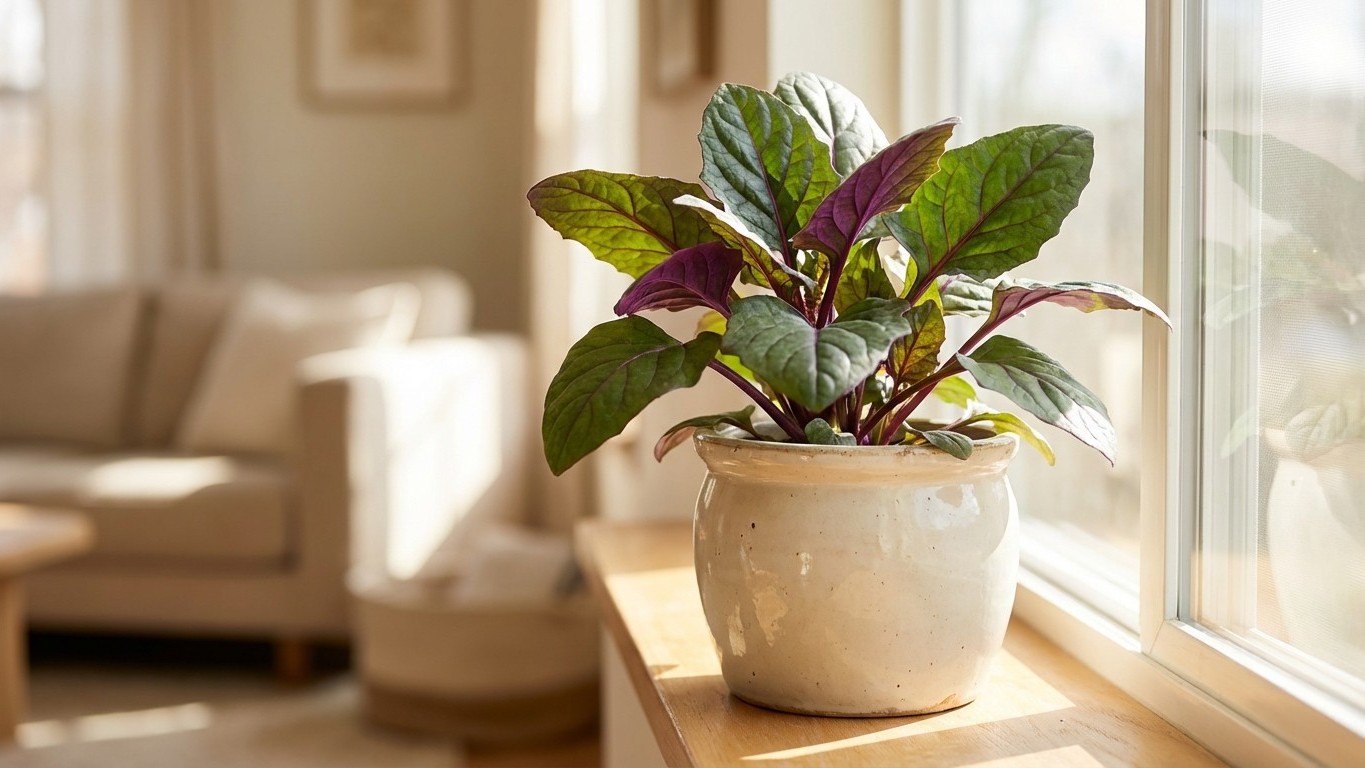
This one is practically unkillable. Okinawan spinach, also called longevity spinach in parts of Southeast Asia, grows aggressively in indirect light, tolerates weeks Without water, and keeps producing edible leaves as long as you keep pinching it back. The leaves have a slightly mucilaginous texture when raw, similar to okra, but wilted briefly in a pan, they’re mild, nutritious, and genuinely pleasant. The plant itself is visually striking: deep green on top, vivid purple underneath. It earns its spot on a shelf whether or not you ever eat a single leaf.
Traditional use in Okinawa, where it’s consumed regularly as part of the local diet, puts this plant in the company of centenarians who swear by it. Whether or not you buy the longevity claims, the nutritional profile is solid, high in antioxidants, iron, and vitamins A and C. Grows in a standard pot. Thrives on neglect. Hard to argue with.
Chaya (Cnidoscolus aconitifolius)
Less known outside of Mesoamerica, chaya is sometimes called “tree spinach,” which undersells it. The plant has been cultivated by Maya communities for thousands of years as one of the most nutritious leafy greens available, with protein, calcium, and iron levels that compare favorably to kale, the Vegetable that has had roughly fifteen years of uninterrupted fame at this point.
One important note: chaya leaves must be cooked before eating, as raw leaves contain a compound that breaks down with heat. Two to three minutes in a pan is all it takes. Indoors, chaya grows well as a woody potted shrub in a sunny window, can be pruned to stay compact, and handles drought far better than most vegetables you’d attempt to grow inside. Its ornamental potential, large, deeply lobed leaves, makes it a conversation piece long before it becomes dinner.
Moringa (Moringa oleifera)
Moringa had a moment in wellness circles around 2019 as a superfood powder, then disappeared into the background noise of supplement trends. What got lost in that conversation is the fact that moringa is a spectacular houseplant when grown from seed indoors, particularly in smaller dwarf varieties suited to containers. The leaves, which can be harvested continuously, are among the most nutrient-dense of any plant on earth, a claim backed by serious nutritional research, not just marketing copy.
It grows fast. Alarmingly fast in the right conditions, though it slows considerably in lower light. The key advantage for neglectful growers is moringa’s drought tolerance, which comes from its evolutionary origins in the dry sub-Himalayan foothills. Let the soil dry completely between waterings. Give it a south-facing window. Then largely forget about it until you want to add fresh leaves to a smoothie or stir-fry. The plant rewards patience and punishes overattention.
Minutina (Plantago coronopus)
This one is the dark horse of the group. Minutina, also called buck’s-horn plantain or erba stella in Italian cooking traditions — looks like something between sea grass and a succulent fern. It was a common salad green in Renaissance-era Europe, fell out of fashion completely, and is now being rediscovered by chefs and home growers who appreciate its crunchy texture and mildly salty, almost briny flavor.
Grow it in a shallow tray on a windowsill, treat it roughly, and it will thrive. It tolerates cold drafts, inconsistent watering, and crowded conditions that would finish off a standard lettuce in days. Harvest by snipping leaves at the base; the plant regrows readily. For apartment dwellers with a single north-facing window and no patience for horticultural drama, minutina might be the most practical edible plant in this entire list.
Making the Shift from Decoration to Sustenance
None of these plants require you to become a serious grower. That’s precisely the point. The mental shift required isn’t technical, it’s conceptual. A trailing pothos on a bookshelf and a pot of Okinawan spinach in the same spot require nearly identical care. One gets composted when it gets leggy. The other gets eaten.
The deeper question these plants raise is why we ever separated “decorative” from “useful” in the first place. Homes in the 1800s routinely included herbs, edible greens, and medicinal plants alongside ornamental ones, the distinction we make now is relatively recent, and possibly a little absurd. As urban apartments shrink and food costs climb, the case for a living room that feeds you, even modestly, gets harder to dismiss. What’s sitting on your windowsill right now, and what could be?