
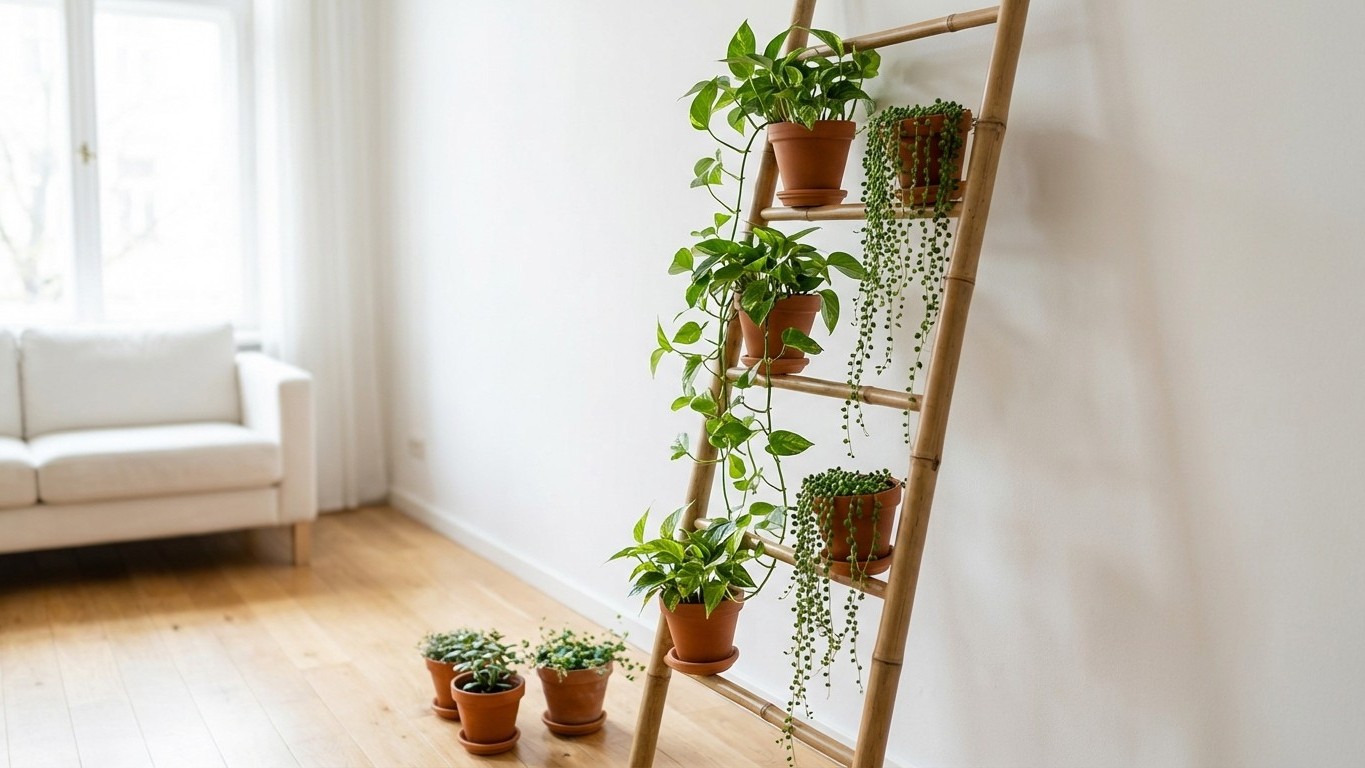
Vertical Gardening has been reshaping Japanese urban apartments for decades, born from a simple constraint: space is expensive, and plants are non-negotiable. The method that’s quietly gaining traction among Houseplant enthusiasts in the U.S. borrows directly from this tradition, and its core principle is almost offensively straightforward, stop thinking about your floor, and start thinking about your walls, your windows, and the dead air above your furniture.
Key takeaways
- A Japanese technique uses three stacked growing zones (floor, waist-height, ceiling) to maximize vertical space without moving a single piece of furniture
- Most setups require zero drilling—tension rods, pressure-mounted bamboo ladders, and a single ceiling hook distribute plants across walls and windows
- The secret to thriving plants isn’t just positioning; it’s matching each zone’s light and humidity conditions to species that naturally belong there
Why Japanese Vertical Growing Works Differently
Most American plant arrangements follow the same logic: a shelf here, a pot on the windowsill there, maybe a tall fiddle-leaf fig in the corner. The floor plan stays the same. The plant count stays modest. Japanese vertical growing, rooted in what urban horticulturalists sometimes call tana-gake (shelf-hanging) culture, treats every vertical surface as a growing opportunity without requiring a single piece of furniture to move. The average American living room uses roughly 15% of its vertical space for plants. Japanese-style vertical layering can push that to 60% or more, often tripling the number of plants in the same footprint.
The technique relies on three distinct growing zones stacked on top of each other: low (floor to waist), mid (waist to eye level), and high (above eye level to ceiling). Each zone serves a different purpose, and different plants are matched to each level based on their light tolerance and watering needs. Trailing plants live high, where they cascade downward and look intentional rather than chaotic. Low-light specimens sit on the floor. Climbers and trained vines occupy the middle zone, moving upward along tension wires or bamboo poles secured to the wall with minimal hardware.
The Practical Setup: No Drilling Required (Mostly)
Here’s where many people hesitate. “Vertical” sounds like an afternoon with a drill and a wall full of holes. The Japanese approach avoids this wherever possible, using a system of tension rods, Curtain tracks, and freestanding bamboo ladders that rely on pressure rather than permanent fixtures. A standard tension rod rated for 20 pounds, the kind you’d use for a shower curtain, can support a row of small hanging planters across a window frame without touching a single stud. Two or three rods, staggered at different heights, create a cascading plant wall in front of a south-facing window.
For heavier setups, the preferred Japanese method uses a single fixed ceiling hook (one hole, minimal commitment) combined with a hanging rail system. Macramé hangers, S-hooks, or purpose-built plant rails then distribute weight across multiple hanging points from that one anchor. The result looks architectural. It reads like a design choice rather than a workaround. And because nothing is touching the floor or the furniture, rearranging takes minutes rather than an afternoon.
Wall-mounted bamboo ladders are worth a separate mention. Leaned against a wall at a slight angle, they provide four to six horizontal rungs that hold lightweight pots using simple wire loops. No screws. The ladder’s own weight keeps it stable, and the angled lean actually improves airflow around the plants, something a flat wall-mounted shelf can’t replicate. Angle matters: 10 to 15 degrees off the wall is the sweet spot between stability and airflow.
Choosing Plants That Actually Thrive Vertically
Not every plant belongs three feet off the ground, and the Japanese approach is disciplined about this. High-mounted plants need to tolerate drier air (hot air rises, remember) and irregular watering, since getting a watering can up to ceiling height is a commitment most people make less often than they intend. Pothos, heartleaf philodendrons, and string-of-pearls are ideal candidates for the top zone. They’re forgiving, they cascade beautifully, and they signal to visitors that the whole thing was deliberate.
The mid-zone is where the technique gets interesting. Climbing plants like monstera adansonii, climbing philodendrons, or even indoor jasmine can be trained along tension wires stretched diagonally across a wall, creating a living tapestry effect. A single diagonal wire, anchored at two points about six feet apart, can support a plant that would otherwise need a large floor pot and significant horizontal space. The plant grows with the architecture rather than competing with it.
Floor-level plants should be your most shade-tolerant specimens. ZZ plants, cast iron plants, and snake plants (positioned away from the foot traffic lane) thrive in the lower light conditions created when the upper zones become dense with foliage. This isn’t accidental, the layered canopy above actually creates a microclimate on the floor that mimics forest understory conditions, slightly more humid and cooler. Your shade plants will thank you for it.
Maintenance Without the Chaos
The honest criticism of vertical growing is that watering becomes complicated. Japanese urban gardeners solve this with a combination of self-watering inserts and a strict top-to-bottom watering sequence. You always start at the highest tier and work your way down. Any water that drips from higher pots contributes to the humidity and moisture of lower pots, not enough to replace watering, but enough to reduce how often you need to do it for the mid and lower zones. It’s a small efficiency that compounds over months.
Group plants by their watering schedule, not just by their aesthetics. Succulents and cacti should never share a tier with tropical humidity-lovers, regardless of how good they look together. The Japanese gardening principle here borrows loosely from companion planting logic: neighboring plants should have compatible needs so that caring for one doesn’t stress its neighbor.
What strikes me about this approach, after watching it applied in spaces ranging from Brooklyn studio apartments to Portland bungalows, is that it reframes the entire relationship between a home and its plants. You stop asking “where can I fit another plant?” and start asking “which surface isn’t working hard enough?” That shift in perspective is small on paper. In practice, it tends to be the thing that changes everything.