
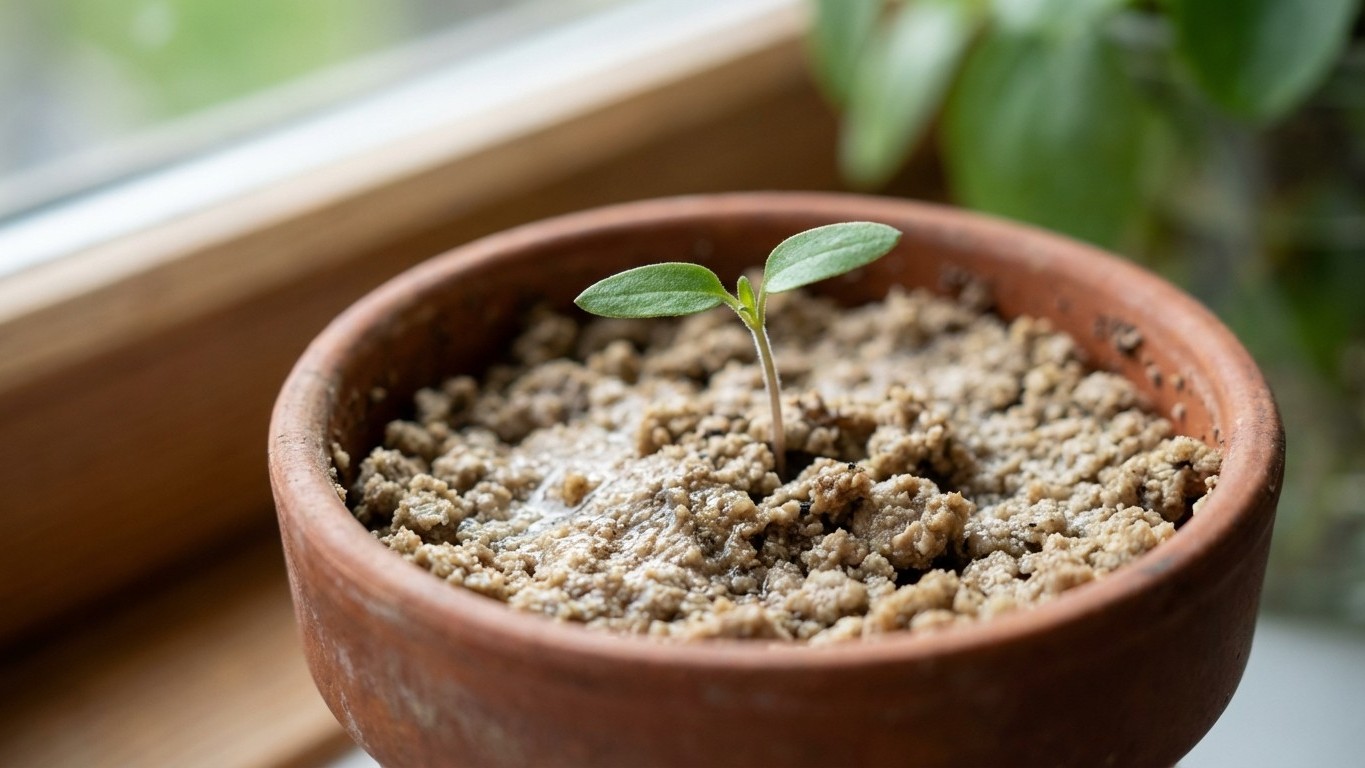
Every spring, millions of home gardeners grab a packet of tomato seeds, poke them into some garden soil, water enthusiastically, and then wait. And wait. And then wonder why nothing happens, or worse, why a few fragile sprouts appeared and then collapsed overnight. The culprit isn’t bad seeds or bad luck. It’s the soil itself, combined with a handful of foundational errors that compound each other before a single leaf ever sees sunlight.
The step most growers skip? Pre-moistening the growing medium and Choosing the Right one to begin with. It sounds minor. It isn’t.
Key takeaways
- Why garden soil kills tomato seedlings before they sprout—and what successful growers use instead
- The universally skipped pre-moistening step that changes everything about germination rates
- How professional growers use a $30 heat mat and paper towel method to guarantee success where direct planting fails
The Soil Problem Nobody Talks About
One of the most common mistakes new Gardeners Make With tomatoes is starting them in soil straight from the garden, or anything they happen to have on hand. Garden soil is simply not the right consistency for seed starting. It sounds like a small distinction, but the consequences are anything but small.
Heavy, dense garden soil compacts easily, drains poorly, and can be full of pathogens that cause “damping-off,” a fungal disease that kills seedlings. Damping-off is the silent serial killer of tomato seedlings, it strikes at soil level, rotting stems before you even realize something is wrong. By the time you see a seedling fall over like a cut tree, it’s already too late.
Using heavy garden soil or even standard potting mix is a common mistake: it’s often too dense, holds too much water, and can make it tough for delicate new roots to emerge. Worse, it can harbor fungi that cause “damping off,” a fatal disease for young seedlings. Your best bet is a sterile, soil-less seed-starting mix. These mixes are engineered with fine particles, perlite, and peat or coco coir, nothing like what you’d shovel from a raised bed.
And here’s the step that’s almost universally skipped: moistening the mix before you add it to your container. Dry seed-starting mix repels water initially, creating uneven hydration pockets. Potting soil can sometimes be fluffy with air, but seeds need to make good contact with the soil in order to germinate. Moisten your potting soil before placing it in the flat or container, then make sure your seed makes direct contact with the soil. Think of it this way, dropping a seed into dry, airy mix is like planting in sand dunes. The seed just sits there, isolated, slowly desiccating.
Depth, Temperature, and the Energy Budget of a Seed
A tomato seed carries a finite amount of stored energy. That’s not a metaphor, it’s biology. Every millimeter the seedling has to push through soil before reaching light burns through that reserve.
The perfect depth for tomato seeds is just 1/4 inch (about 0.6 cm). That’s it. If a seed is buried too deep, the tiny seedling can use up all of its stored energy just trying to fight its way to the surface and may die before it ever sees the light. Most casual growers eyeball the depth, and naturally err deeper, because “more covered” feels more secure. It isn’t.
Temperature is the other hidden variable. Without warmth, the seed just sits there, waiting for a signal that spring has truly arrived. This is exactly why putting a seed tray on a chilly windowsill often leads to disappointment and slow, spotty germination. Your Living Room may feel warm to you, but a north-facing windowsill in March can run 10 to 15 degrees cooler than the ambient air, and that gap matters enormously.
The length of time it takes for your seeds to germinate is heavily related to soil temperature. Tomato seeds should germinate within 5-6 days if you can keep the soil temperature around 80°F. Remember this is soil temperature, not ambient temperature. A cheap heat mat solves this completely. It’s one of those purchases, around $25 to $35, where the value is immediate and obvious.
Once about half of the tomato seeds have sprouted, remove the heat mat right away. Keeping bottom heat on after seedlings emerge can make them grow too quickly, often resulting in tall, thin, weak stems. After sprouting, slightly cooler temperatures along with strong light help seedlings stay compact and develop sturdier growth. The heat mat’s job ends the moment green appears.
The Pre-Sprouting Method Almost No One Uses
Here’s where experienced growers quietly diverge from the crowd. Many skip direct-to-soil sowing entirely for their first germination step, and for good reason.
The paper towel method works like this: place seeds between two layers of damp (not soaking) paper towel, slip it into a partially open zip-lock bag, and set it somewhere warm. Place tomato seeds in between a folded, damp paper towel and place them in a plastic bag. Keep the bag just slightly open to allow air to circulate, and you’ll have tomato sprouts in about a week.
The real advantage isn’t speed, it’s control. You can see exactly which seeds are viable before committing them to containers. By this method, it’s possible to speed up the germination process by days and even weeks compared to planting a seed directly in a pot or the ground. For anyone growing multiple varieties, and the heirloom rabbit hole runs deep, this approach saves both space and heartbreak.
One important warning: a temperature of about 105°F is far beyond the maximum for sprouting tomato seeds, and in that condition you will end up killing nearly all of them. If you’re using a heat mat under a paper towel germination setup, check with a thermometer. Heat mats vary, and what feels warm to the touch can quietly overshoot the ideal range.
Watering: The Fine Line Between Moist and Dead
Overwatering is probably the single fastest way to kill tomato seedlings, even after a perfect germination. The instinct to water generously feels caring. The seedling experiences it differently.
Soggy soil impacts germination and root growth and encourages diseases like damping off that will kill your seedlings before they get started. Watering too little is also damaging, as lack of moisture halts early growth. If those young roots dry out and the leaves start to wilt, your seedlings might die off before they can bounce back.
The target consistency? You’re aiming for the consistency of a well-wrung-out sponge, moist all the way through, but not dripping wet. Bottom watering — placing the tray in a shallow dish of water and letting the mix absorb moisture from below, is the most reliable way to maintain that balance. This involves placing the seedling tray inside a bottom tray filled with fresh water. The soil absorbs the moisture through the drainage holes, and the excess can then be poured out to stop the roots from sitting in soggy soil.
One last piece of timing that most guides bury in fine print: while tomato seeds are perfectly happy to germinate in the dark, they need strong light the instant they sprout. The moment you see that first little green hook breaking the surface, get that humidity dome off and move the Seedlings under a good light source. Miss this window by even a day or two and you’ll have leggy, weak seedlings that never quite recover their structural integrity, the gardening equivalent of a building with a bad foundation.
Which raises the real question: if a single missed step can silently undo weeks of careful preparation, how many other “obvious” practices in the vegetable garden are quietly working against us?