
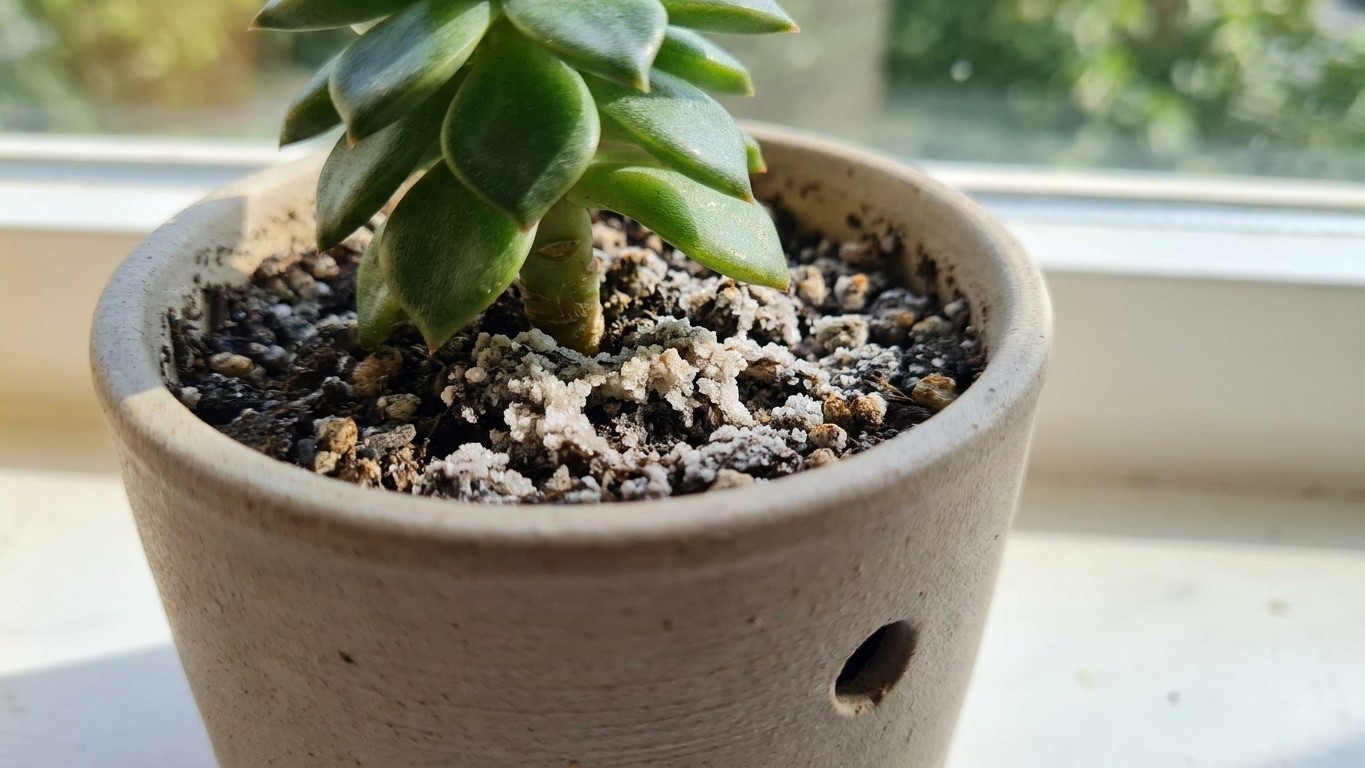
Bottom-watering felt like the responsible choice. No soggy crowns, no fungal splash, no water sitting in leaf axils. For months, the plants sat in their trays, pulling up moisture from below, and everything looked fine, until it didn’t. The browning crown on a prized rosette succulent was the first clue. Scraping away the white, chalky crust that had quietly built up on the soil surface was the second.
Key takeaways
- Why bottom-watering accelerates mineral salt buildup that top-watering naturally flushes away
- How salt crust causes crown browning even on well-hydrated plants (the science behind the mystery)
- A single monthly flushing step that preserves bottom-watering benefits while stopping damage cold
The hidden cost of watering only from below
Bottom-watering works on a simple principle: capillary action pulls water upward through the growing medium as the roots absorb it from the drainage holes. The plant takes what it needs, the topsoil stays dry, and moisture-loving pests like fungus gnats have nowhere to breed. That last part alone converts most indoor gardeners permanently. The method is genuinely effective for root development, roots chase water downward, then reverse and grow deeper to find the reservoir. Strong, established roots result.
The problem is physics, not philosophy. Every tap water source carries dissolved minerals, calcium, magnesium, sodium, and various trace salts. When water moves upward through the soil and then evaporates from the surface, those minerals don’t evaporate with it. They stay behind. Over weeks and months, they accumulate near the top of the pot, forming that familiar white crust — sometimes chalky, sometimes hard enough to chip off in flakes. This process, called salt accumulation or mineral buildup, happens in any watering method, but bottom-watering accelerates it because there’s no downward flush to carry the deposits out through the drainage holes.
With traditional top-watering, excess water flowing out the bottom does double duty: it hydrates the roots and flushes accumulated salts downward and out. Bottom-watering skips that second function entirely. Given enough time, the mineral layer on the surface becomes thick enough to act as a barrier, impeding gas exchange in the soil and, this is where the crown browning begins, creating localized conditions that are hostile to sensitive leaf bases sitting against the soil.
Why the crown browns and what’s actually happening
Salt damage to plant tissue is osmotic. High concentrations of dissolved minerals near the soil surface create a situation where moisture is drawn out of plant cells rather than into them, the same mechanism that makes salted slugs wither. For rosette-forming plants like echeverias, haworthias, or African violets, the lowest leaves and the crown tissue sit directly against or near the soil surface. Those tissues are exposed to concentrated mineral deposits every day.
The browning isn’t rot, and it’s not a fungal issue, which is why antifungal treatments do nothing. The tissue is essentially desiccating from localized osmotic stress, even while the roots deeper in the pot are perfectly hydrated. A well-watered plant with a browning crown is a diagnostic contradiction that stumps a lot of growers, and it stumped me for two months before the scrape test made the cause obvious.
African violet growers have known about this for decades. The community has a term for it: “salt scorch,” and it affects the leaf petioles that rest against the pot rim or soil surface. The same principle applies to any plant with tissue close to an accumulated mineral zone. Cacti with flat bases, low-growing ferns, and compact herbs are all susceptible, though the timeline before visible damage varies considerably by species and tap water hardness.
The fix is simpler than the diagnosis
A periodic top-water flush, once every four to six weeks, clears out the mineral buildup effectively. Run water slowly through the top of the pot, enough to flow freely from the drainage holes for at least a minute — and let the pot drain completely before returning it to its tray. This single step reintroduces the flushing function that bottom-watering eliminates. Between flushes, continue bottom-watering normally. The benefits (dry crowns, deep roots, reduced gnat habitat) remain intact.
Water source matters more than most people realize. Tap water hardness varies dramatically by region: water in Phoenix or Las Vegas carries mineral loads several times higher than water in Seattle or Portland. The EPA’s local drinking water quality reports allow you to check your area’s mineral content, which helps predict how quickly buildup will occur. Switching to filtered, distilled, or rainwater reduces accumulation significantly, distilled water essentially eliminates mineral deposits altogether, though it also lacks the trace minerals some plants benefit from over time.
Scraping the white crust off the surface without flushing is tempting but only cosmetic. The salts don’t disappear when you remove the visible layer; they’ve already migrated into the top inch or two of soil. Topdressing with fresh potting mix on top of contaminated soil just adds a clean veneer over the problem. The only way to address existing buildup in the soil itself is to flush it out or repot entirely with fresh medium.
Repotting is worth considering if the plant has been in the same soil for more than a year of exclusive bottom-watering, especially in a hard-water area. At that point, the mineral concentration throughout the medium can be significant enough that flushing alone won’t return the soil to a neutral state. Fresh, quality potting mix every twelve to eighteen months acts as a reset, and gives the roots a clean, nutrient-balanced environment to work with.
One detail worth knowing: the white crust is not always mineral salt. Fungal mycelium can appear similarly pale and powdery, and certain slow-release fertilizer granules leave white residue as they break down. Before concluding it’s salt buildup, check whether the crust is hard and crystalline (mineral) or soft and threadlike (fungal). The response differs: flushing addresses salts, improved airflow and reduced moisture address surface fungal growth. Getting the diagnosis right before treating saves the plant faster than any well-intentioned guess.