
Fourteen pots. From a single plant. That’s what my neighbor carried through the door one afternoon, grinning the quiet grin of someone who already knows what you don’t. She’d divided one mature spider plant, the kind that’s been sitting on her windowsill for three years, basically ignored — and walked away with enough greenery to fill half an apartment. Meanwhile, I’d been buying houseplants from a garden center every few months for eight years. Do the math on that, and it’s a little painful.
The word for what she did is propagation. Houseplant propagation is the act of growing a new plant from a piece or cutting taken from a fully-grown “mother” plant. Gardeners have been doing it forever, but somehow, between the aesthetic appeal of a freshly-tagged pot and the sheer convenience of just buying the thing — a lot of us skip right past it. That’s a financial decision we keep making without realizing it.
Key takeaways
- One neighbor’s afternoon project produced 14 thriving plants—from a single mother plant that had been sitting on a windowsill for years
- Three propagation methods work for most common houseplants, and the easiest one requires nothing but scissors, water, and patience
- Certain plants are propagation superstars: snake plants multiply from single leaves, spider plants produce spiderettes automatically, and succulents root from fragments
Three Methods, and They’re All Simpler Than You Think
The main propagation methods are cuttings, layering, grafting, tissue culture, and division, and different plants have optimal propagation methods based on factors like physiology, size, and growth habit. For home gardeners, though, the day-to-day reality is much less complicated. Whether you’re working with pothos, snake plants, spider plants, or aloe vera, there are three simple methods: stem cuttings, baby plantlets, and plant division.
Stem cuttings are the gateway method. Vining houseplants like pothos, tradescantia, and heartleaf philodendron are incredibly easy to propagate because of how quickly they grow, just take a pair of sterile scissors and make your cut just underneath a node, the bumpy ridges along a vining plant’s stem where new roots will develop. From there, it’s water or soil, a few weeks of patience, and a new plant. The water route has a specific pleasure to it: watching a brand-new root system develop in a clear glass or vial of water is incredibly gratifying.
Division is the most dramatic method, and it’s exactly what my neighbor used. Division is a method of propagation where the entire plant is separated into smaller, whole pieces that contain all vegetative parts, leaves, stems, roots, and it creates genetic clones of the parent plant. The larger the piece, the more quickly the plant recovers. The smaller the piece, the more propagules you get. That’s the arithmetic behind 14 pots from one spider plant.
Then there are offsets, also called pups, the method that practically runs itself. Some houseplants, such as snake plants and Chinese money plants, do all the propagating heavy lifting for you by producing their own babies; known as pups or plantlets, these tiny, identical versions of the mother plant are found growing at their base. You should only remove offsets that already look like mini plants, not ones that are just developing — and most often they already have roots, making them super easy to propagate.
The Plants That Give the Most Back
Not every plant is equally generous. Choosing the right species from the start changes the whole equation. Succulents, like the string of pearls, burro’s tail, and the jade plant, are by far the easiest houseplants to propagate as their shallow root systems allow them to take root easily. A single echeveria leaf, laid flat on damp soil, will grow an entirely new rosette in a matter of weeks. That’s not a metaphor, it’s just biology.
Snake plants deserve a special mention. A single leaf from a snake plant can become several different plants just by cutting the leaf up into several pieces, putting them in soil, and waiting. One plant, methodically divided, turns into a collection. African violets work Differently but are just as prolific: a miniature violet produces three or four babies every year, keep one and pass the others along.
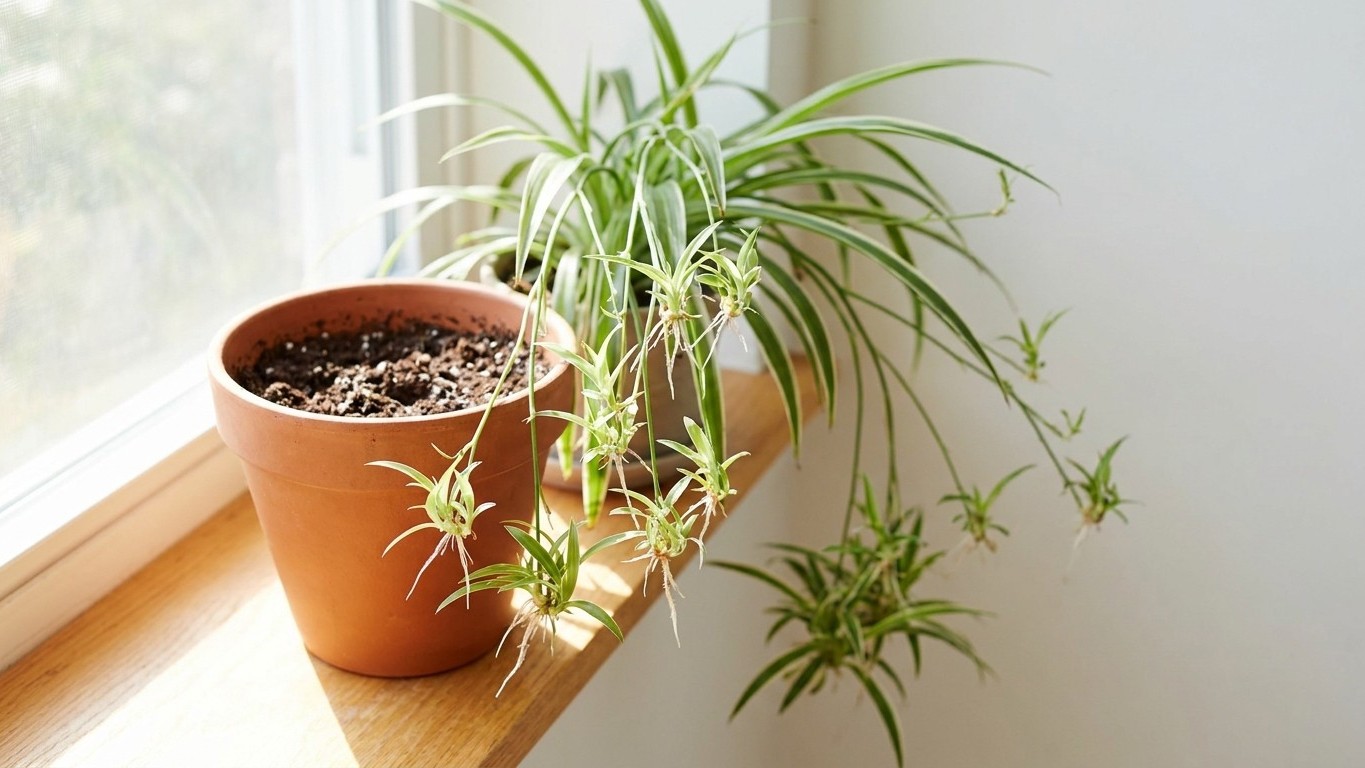
Spider plants, like the one my neighbor divided, operate through runners. For the “spiderettes” that already have roots, you can cut them from the mother plant and pot them straight into their own little pot. A mature, happy spider plant will produce so many of these hanging babies over a growing season that giving them away becomes a recurring social event. There’s a reason these plants have been passed between neighbors and family members for decades.
The Practical Details That Actually Matter
The best time to propagate is in late spring and early summer, when your plant is in full growth mode, and always make sure you’re using a healthy, pest-free plant, with clean secateurs. A cutting taken from a stressed or diseased plant won’t give you a strong new plant; it’ll give you a smaller, weaker version of the same problem.
The rooting medium matters more than most beginners expect. Compost and garden soil are not the best choices for propagating houseplants because they tend to contain pathogens and weed seeds, and have a tendency to be heavy and not well-aerated, which can yield poor propagation results. A light mix, perlite, vermiculite, or a dedicated propagation medium, lets young roots push through without resistance. The rooting media temperature should be between 75° and 80°F for optimum results.
For division specifically, carefully split the root ball into halves or quarters, making sure that each section has a healthy chunk of roots and a healthy bunch of foliage, and if the root ball is too tight to break apart with your hands, you can cut or saw through it without worry. Your new plants may sulk for a few days, but once they’ve found their feet and started to grow new roots into the fresh soil, they will perk up.
Rooting hormones can help with trickier cuttings. They come in powder, liquid, or gel form and help propagules grow roots faster, and when shopping for rooting hormone, look for ones that have indolebutyric acid (IBA) or naphthaleneacetic acid (NAA) on the label. That said, rooting hormones are not necessary for the easiest plants to propagate — pothos, snake plants, spider plants, and most succulents root just fine without any chemical assistance.
The Real Cost of Buying When You Could Be Growing
Propagating expands your collection, creates gifts, and improves plant appearance by taming leggy, abundant, or unruly growth. That last point is underrated: propagation isn’t just about getting more plants, it’s about keeping your existing plants healthier. Dividing an overcrowded pot, snipping back a pothos vine that’s gotten out of hand, separating the pups from an aloe that’s bursting its container, all of these are good for the mother plant too.
Eight years of buying plants, one neighbor with a trowel and 14 pots. The gap between those two stories is really just a gap in habit, not skill. Houseplants naturally want to propagate, you’re not forcing them to do something they don’t want to, so don’t hesitate to give it a try. The one nuance worth keeping in mind: some plants respond very quickly, sending out new roots shortly after propagation, while others may take months — so the variety you choose matters as much as the technique. Start with a pothos or a spider plant, and by the time next spring rolls around, you may be the one showing up at a neighbor’s door with a tray full of pots.
Sources : cityfloralgreenhouse.com | westwoodgardens.com