
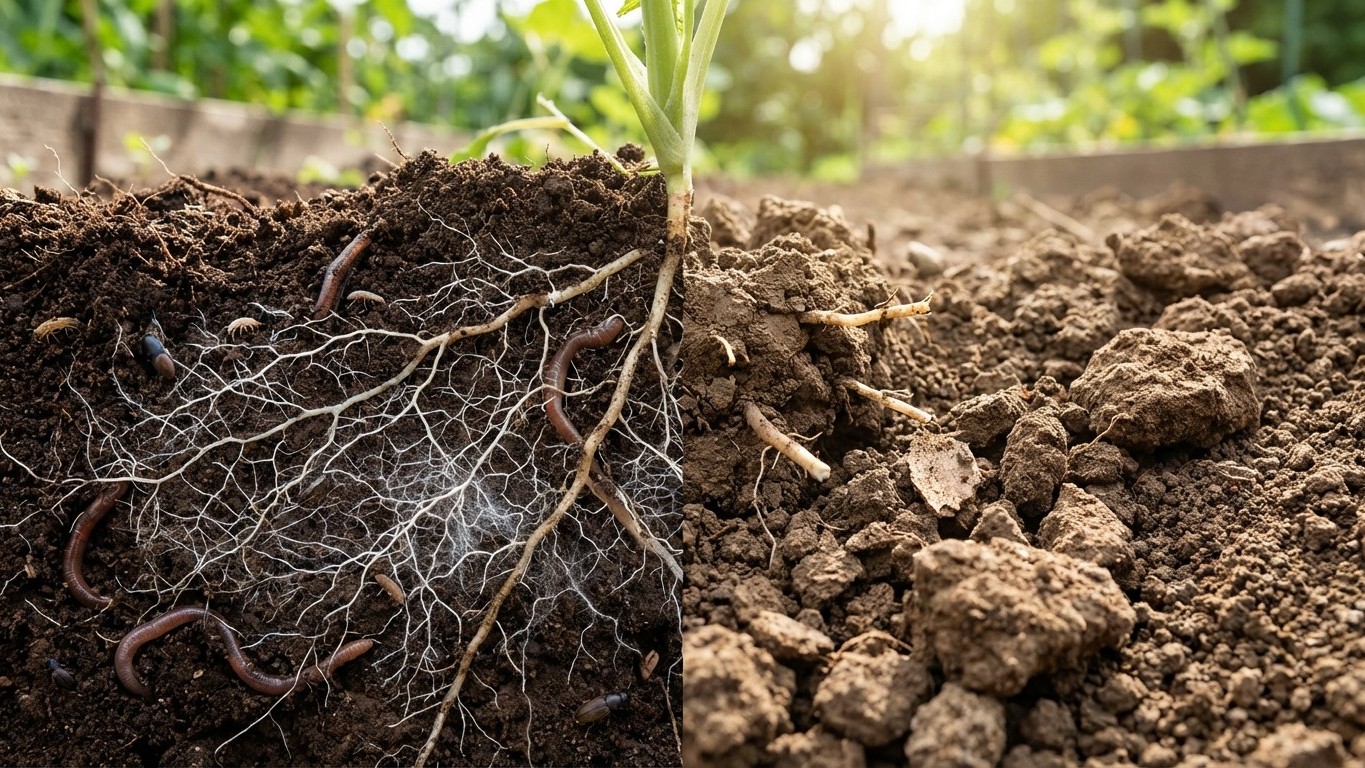
The moment I plunged my shovel into what I thought was perfectly prepared soil and watched countless white threads snap like broken spider webs, everything changed. Those delicate strands weren’t just random organic matter—they were mycorrhizal fungi, the internet of the underground world that I had been systematically destroying every spring for fifteen years.
That revelation came during a particularly frustrating gardening season when my vegetables seemed to struggle despite my meticulous soil preparation. A visiting agricultural extension agent knelt down, examined my freshly tilled beds, and asked a simple question that would revolutionize my approach: “Do you know what you’re breaking when you do this?”
The Hidden Network Beneath Our Feet
What I discovered next fundamentally altered my understanding of soil ecosystems. Every time I fired up that rototiller, I wasn’t just mixing organic matter into the earth—I was severing millions of fungal connections that Plants depend on for survival. These mycorrhizal networks, formed by beneficial fungi, create partnerships with plant roots that are older than most terrestrial ecosystems on Earth.
These fungal threads extend a plant’s root system by up to 1,000 times, reaching into soil spaces that roots could never access alone. They trade nutrients like phosphorus and nitrogen to plants in exchange for sugars, creating a sophisticated underground economy. When I tilled, I was essentially bombing this ancient marketplace back to the stone age, forcing my plants to start from scratch each growing season.
The soil structure itself told an equally compelling story. Healthy, undisturbed soil develops natural aggregation—clusters of particles held together by fungal threads, root secretions, and earthworm castings. This creates perfect air pockets for root expansion and water infiltration. My aggressive tilling was pulverizing this natural architecture, creating a compacted layer just below the surface that actually hindered root development.
The Transformation to No-Till Methods
Abandoning the rototiller felt counterintuitive at first, like showing up to a construction site without tools. Instead of turning over soil each spring, I began layering organic matter directly on top of existing beds. Compost, aged manure, chopped leaves, and grass clippings became my new soil amendments, applied as a thick mulch that earthworms and soil microorganisms would gradually incorporate naturally.
The first year felt like an act of faith. My beds looked rougher, less uniformly prepared than the pristine tilled plots I was accustomed to creating. But plant performance told a different story. Root vegetables that had previously struggled in my compacted subsoil suddenly grew straight and true. Tomato plants developed more extensive root systems and showed greater drought resistance. Even pest pressure seemed reduced, as healthier plants proved more resilient to insect damage and disease.
Water management improved dramatically without my intervention. The intact soil structure and permanent mulch cover meant that rainfall soaked in gradually rather than running off or pooling on the surface. During dry spells, moisture remained available to plants far longer than in previously tilled beds. This natural water retention system eliminated the feast-or-famine watering cycles that had stressed my plants for years.
Unexpected Benefits Beyond Plant Health
The labor reduction proved unexpectedly significant. Spring garden preparation went from a weekend-long marathon of tilling, raking, and soil amendment mixing to a simple matter of pulling back mulch and adding fresh compost where needed. My lower back, which had endured years of rototiller wrestling, celebrated this change perhaps more than my plants did.
Wildlife activity in the garden increased noticeably. Birds began working the mulched beds more intensively, finding insects and grubs that thrived in the rich organic layer. Beneficial insects established populations that helped control pest species naturally. The garden ecosystem began functioning more like a natural system and less like an industrial operation requiring constant intervention.
Soil fertility improved with each growing season rather than remaining static. Traditional tilling tends to oxidize organic matter rapidly, requiring constant additions of compost and fertilizer to maintain productivity. The no-till approach allowed organic matter to accumulate and decompose gradually, building soil carbon and creating the slow-release nutrient availability that vegetables thrive on.
A New Perspective on Garden Management
This experience taught me that effective gardening often involves stepping back and allowing natural processes to function rather than imposing artificial systems on complex ecosystems. The underground world operates on principles of cooperation and gradual development that our industrial agriculture mindset often overlooks.
My vegetable garden now produces more food with less effort, requires less water, and supports a richer diversity of soil life than ever before. The transition required patience and a willingness to trust natural processes, but the results speak for themselves. Sometimes the best action a gardener can take is knowing when not to take action at all.
For anyone considering this transition, start small with one or two beds and observe the differences over a full growing season. The underground networks that support healthy plant growth need time to establish, but once they do, both gardener and garden will wonder why tilling ever seemed necessary in the first place.