
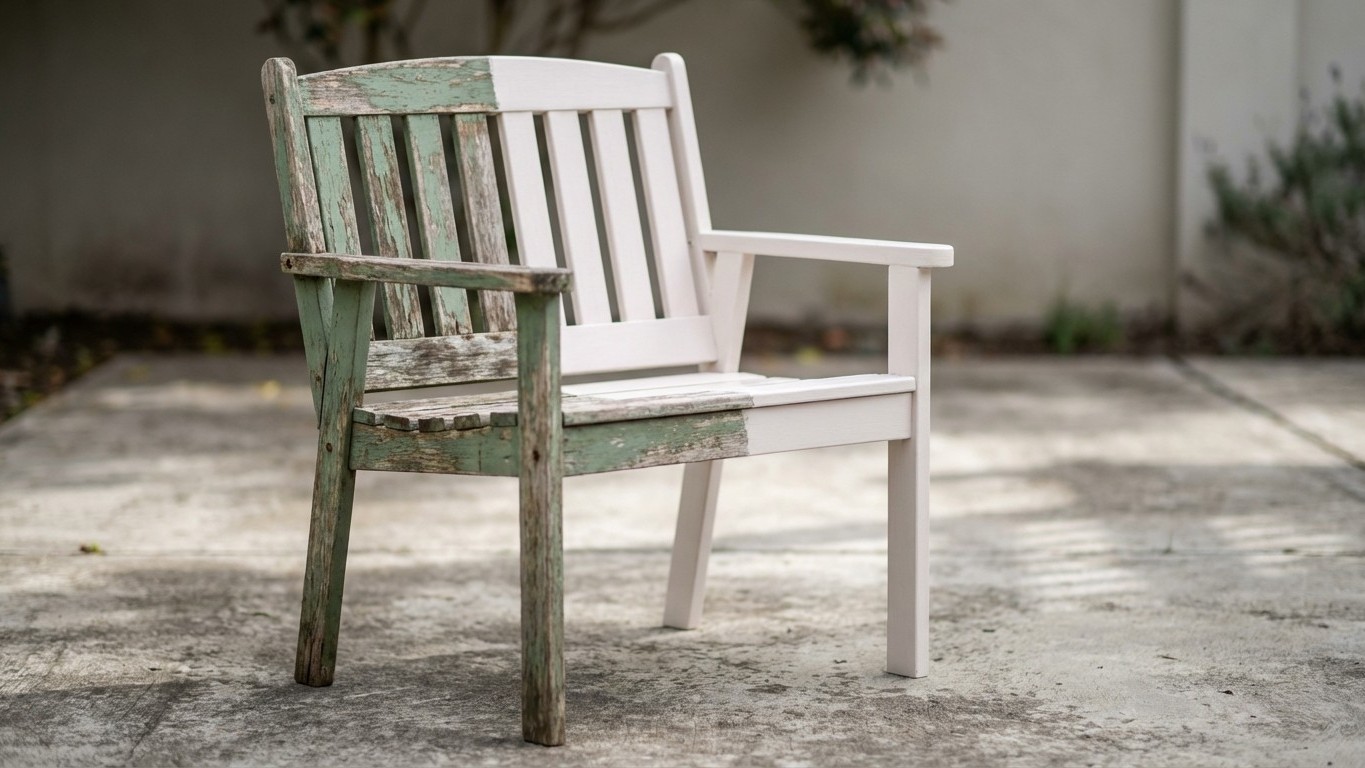
Your patio chairs spent the winter under a tarp, and they show it. Peeling paint, rust patches on the metal legs, maybe a few cracks in the wood. Before you drag them out for the season and pretend everything is fine, there’s a real conversation to be had about what actually makes an outdoor paint job last, and what makes it fail by August.
The short answer: preparation is the entire game. The paint itself matters, yes, but a premium finish applied to poorly prepped furniture will bubble, crack, and peel just as fast as the cheapest can you grabbed on clearance. Most people skip the tedious part and then blame the product. The tedious part is the product.
Key takeaways
- Why the paint you choose matters far less than the surface you’re painting on
- The specific prep steps for metal, wood, and plastic that most DIYers skip—and regret by mid-summer
- Which weather-resistant finishes actually survive UV exposure, humidity, and temperature swings
The Prep Work That Actually Matters
Start with a wire brush or coarse sandpaper, and get honest with yourself about what you’re working with. For metal furniture, any rust needs to come off completely, surface rust you can sand away, but deep pitting means you have a bigger decision to make. A rust converter (basically a chemical that transforms iron oxide into a stable compound) is worth keeping in the kit. Apply it, let it cure fully, then sand lightly before priming. Skipping this step is how you end up repainting the same chair every single summer.
Wood furniture demands a slightly different approach. Softwoods like pine absorb moisture unevenly, which causes paint to lift in patches. Before anything else, check for loose fibers, splinters, and old finish that has lost adhesion. Sand with 80-grit to knock down the rough spots, then follow with 120-grit for a surface the primer will actually grip. If the wood has been treated previously with oil-based products, you need an oil-compatible primer, water-based primer over oil-treated wood is one of those combinations that seems fine for about three weeks before it starts peeling in sheets.
Plastic and resin furniture get overlooked because they seem low-maintenance. They are, until they aren’t. UV exposure breaks down the surface chemistry of most plastics, leaving a chalky residue that nothing will adhere to. Wipe it down with isopropyl alcohol first. Then scuff the surface with fine-grit sandpaper (220 works well) to give the paint something to hold onto. This matters more than most tutorials admit.
Choosing a Finish That Won’t Give Up in July
Weather-resistant doesn’t mean the same thing across every product category. A paint labeled “exterior use” is a starting point, not a finish line. What you’re really looking for is UV resistance (to prevent color fade and chalking), flexibility (so the finish moves with the material as it expands and contracts in heat), and moisture resistance (the obvious one, but often the first to fail on cheaper formulations).
For metal surfaces, alkyd-based or oil-based exterior paints have a long track record outdoors, they bond well to metal, resist moisture, and hold up against temperature swings. The trade-off is drying time and cleanup. Water-based acrylic enamels have closed the gap considerably in recent years and are now a legitimate alternative, especially if you want faster recoat times and less fume exposure. The critical addition for any metal project: a purpose-made metal primer. Without it, you’re relying on the topcoat to do two jobs, and it won’t do either particularly well.
Wood furniture responds best to 100% acrylic exterior paint. Acrylic expands and contracts close to the rate of the wood itself, which reduces cracking over time. Semi-gloss or satin sheens hold up better than flat finishes outdoors because they repel water more effectively. Flat paint has its aesthetic appeal, I’ll grant it that, but on outdoor furniture it’s essentially a sponge for humidity. The slightly higher sheen is worth the trade.
Spray paint designed specifically for outdoor furniture, particularly the formulas built for plastic and resin, have genuinely improved. Brands have developed bonding primers that are packaged in the same can as the topcoat, convenient, and effective enough for seasonal use on chairs and side tables. For anything you’re investing time in refinishing, though, a separate primer and topcoat will almost always outlast the combo approach.
Application Conditions Nobody Talks About Enough
The day you choose to paint matters as much as the products you choose. Most exterior paints need temperatures between 50°F and 90°F to cure properly. Paint in direct midday sun and you risk the surface skinning over before the underlying layers have dried, which traps solvents and leads to bubbling. Early morning, when surfaces are dry and temperatures are moderate, is genuinely the best window, not just a minor preference.
Humidity is the other variable. Above 70% relative humidity, drying times extend dramatically and adhesion suffers. Check the forecast for the 48 hours after application, too. A paint that looks dry to the touch after a few hours hasn’t fully cured, and a sudden rainstorm on day one can ruin an otherwise solid paint job. Most water-based acrylics need 24 to 48 hours before they can handle exposure; oil-based products often need longer.
Multiple thin coats consistently beat one thick coat. This is the advice that appears in every guide and gets ignored almost every time, because thin coats feel like you’re not making progress. A thick coat sags, takes forever to dry, and creates uneven texture. Two or three thin coats, with light sanding between them, produce a finish that looks intentional and lasts through seasons, not just weeks.
There’s Something satisfying about sitting on a chair you’ve properly refinished, one that looked ready for the curb three weeks ago. But the real test isn’t June. It’s whether that paint job survives the full arc of summer: the heat, the afternoon storms, the UV bombardment, the cold drinks sweating on the armrests. Prep it right, choose intelligently, and you might Actually stop repainting the same furniture every spring.