
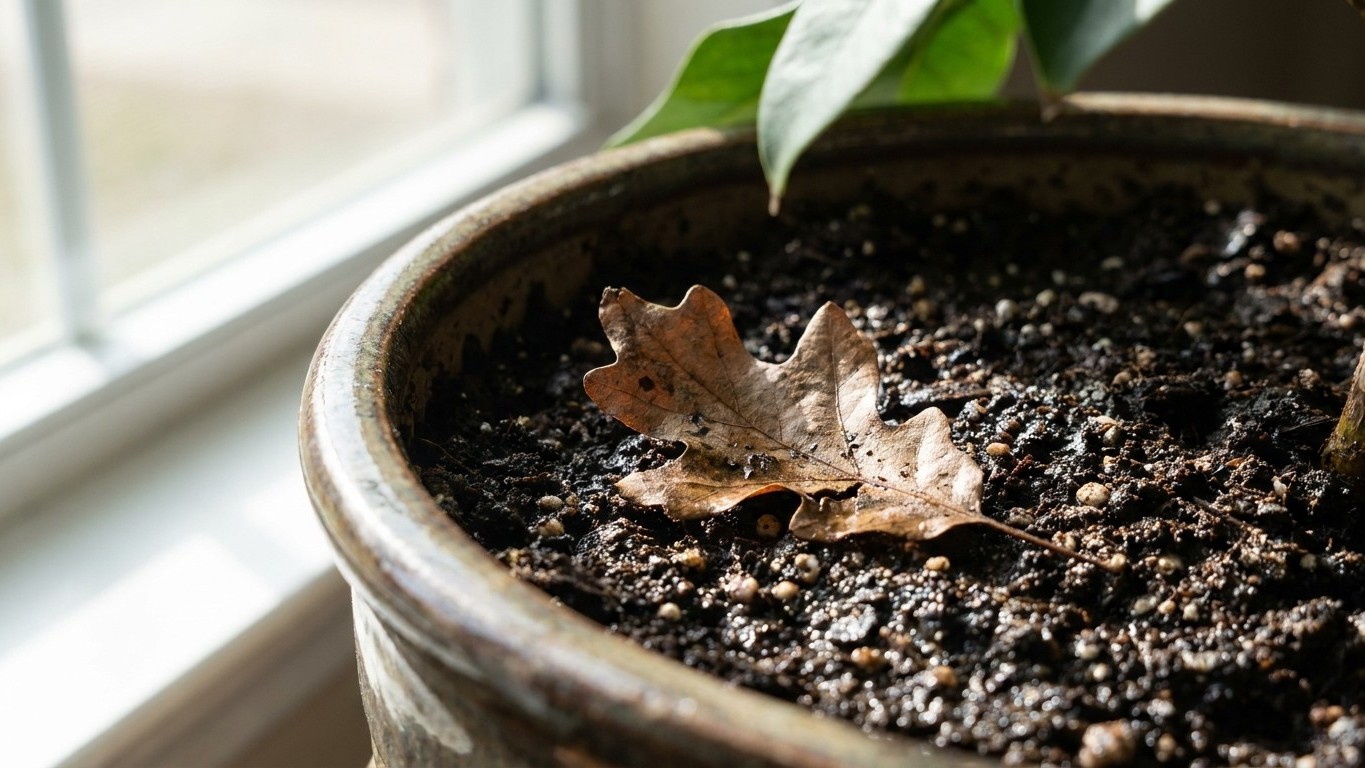
A single fallen leaf. Sitting on the soil. You’ve glanced at it a dozen times and kept scrolling through your phone, telling yourself you’ll deal with it later. That leaf, however, is not passively waiting. It is actively decomposing, trapping moisture, and potentially setting off a chain reaction that can compromise the health of the entire plant above it. Horticulturists who study indoor plant care have a clear, consistent position on this: plant debris on potting soil should be removed promptly. Here’s the science behind why, and what to do about it.
Key takeaways
- A single decaying leaf creates ideal conditions for gray mold and fungal spores to spread to neighboring plants
- Fungus gnat females lay up to 200 eggs on moist debris, with the entire life cycle completing in just three weeks
- Trapped moisture beneath fallen leaves accelerates root rot, a silent killer that destroys plants from underground
A Breeding Ground Hidden in Plain Sight
Mold and other fungal infections feed on decomposing plant matter, so a buildup of dead leaves will encourage moldy soil. That process starts faster than most people expect. A single leaf introduces organic decay right at the soil surface, where humidity is highest and airflow is weakest, two conditions that allow fungal spores to colonize almost immediately.
The culprit most commonly behind this is Botrytis cinerea, the fungus responsible for gray mold. The fungus responsible for causing gray mold survives on dead plant debris. Gray fungal spores develop covering the debris and, once the infected area dries, the spores are released into the air, which can then infect additional Houseplants. Think about what that means spatially: a potted monstera on your bookshelf sits less than twelve inches from the pot next to it. Airborne spores from one decaying leaf can easily reach a neighbor.
Diseased debris will fall onto the soil line, causing it to mould-over and become highly infectious. This is particularly relevant if the leaf that dropped wasn’t simply old and yellow, but showed spots, browning, or any signs of stress before it fell. A diseased leaf on top of your soil is not just organic waste; it’s an active reservoir of pathogens sitting centimeters from your plant’s root zone.
The Pest Connection You Didn’t See Coming
Gray mold is only part of the story. That decomposing leaf is also dinner for fungus gnats, one of the most persistent indoor plant pests in the country. Fungus gnat larvae typically feed on decaying organic matter and fungi in the soil. However, if larval numbers are high, they may damage roots by feeding on root hairs or tunneling into the roots themselves. A single fallen leaf on moist soil is, from a gnat’s perspective, a five-star hotel with a buffet.
Fungus gnat females lay up to 200 eggs in clusters in cracks and crevices on the surface of the moist soil of potted plants. Two hundred eggs. From one female. That’s roughly the population of a small apartment building, generated from a single visit to your pot. The entire life cycle from egg to adult may be completed in as little as three weeks, depending on temperature. So that one leaf you left there two weekends ago may have already seeded an infestation. The adults swirling around your lamp at night aren’t a mystery; they’re a consequence.
It’s a good idea to clean up any fallen leaves or other old plant matter in your plant pots so fungus gnats will have less organic matter to feed on. Unsurprisingly, this is one of the first recommendations from every university extension program that covers indoor pests. The logic is simple: remove the food source, and you remove the incentive.
What’s Happening Below the Soil Line
The visible threat is fungus and gnats. The invisible one is what happens to the roots. A fallen leaf traps moisture against the soil surface. That sustained dampness doesn’t stay topical; it changes the microclimate throughout the pot. Indoor plants don’t always get adequate air circulation, especially in the winter when windows are closed. Plants that are kept in dark corners or on cramped shelves are particularly susceptible to moldy soil. Air movement helps houseplant soil dry out between waterings. A leaf acting as a mini-mulch pad undermines exactly that drying process.
Persistently wet soil is the express lane to root rot. Root rot is a destructive disease caused by various soil-borne pathogens such as Pythium, Phytophthora, and Rhizoctonia, favored by waterlogged soil and poor drainage. Symptoms include wilting, yellowing of the leaves, and stunting, while the roots appear soft, dark, and mushy. The rot destroys the root system, preventing water and nutrient absorption, leading to irreversible decline and plant death. The particularly cruel twist: because the initial damage happens underground, the symptoms you see on the leaves often look like something else entirely, like drought stress. You see a wilting plant and water it more. The root rot accelerates. The plant declines further. That fallen leaf, weeks ago, started a spiral most people never trace back to its origin.
The Fix Takes Fifteen Seconds
Keep the top of the potting mix free of fallen plant debris. That’s the recommendation from plant disease specialists, and it genuinely does not require more than a quick check every few days. Remove the leaf, drop it in the compost or trash (not back into the pot), and move on. Never leave plant debris on the soil. For plants already showing signs of powdery mildew or fungal spotting, the Clemson University Extension advises taking it a step further: pick off and destroy infected leaves.
If you’ve already noticed mold on your soil surface, remove the plant from its pot and wash away all the soil from the roots. Clean the pot with a 1:10 bleach to water mixture and repot with fresh, clean soil. That’s a more involved intervention, but it’s fully correctable when caught early.
The fungus gnat angle has its own targeted countermeasure. Let the top one to two inches of soil dry completely before watering again. This disrupts their life cycle, as larvae can’t survive in dry soil. Pair that with debris removal and you’ve addressed both the insect and the fungal risks simultaneously.
One last detail worth knowing: as the growing medium ages or degrades it tends to retain more moisture, which will also attract fungus gnat adults. Soil in pots that hasn’t been refreshed in two or three years is already more hospitable to pests and pathogens, even before any leaf ever falls. That single leaf on old, compacted, moisture-retaining soil isn’t just a problem in isolation; it’s the final variable in a setup that was already trending the wrong way.
Sources : extension.colostate.edu | guide-to-houseplants.com