
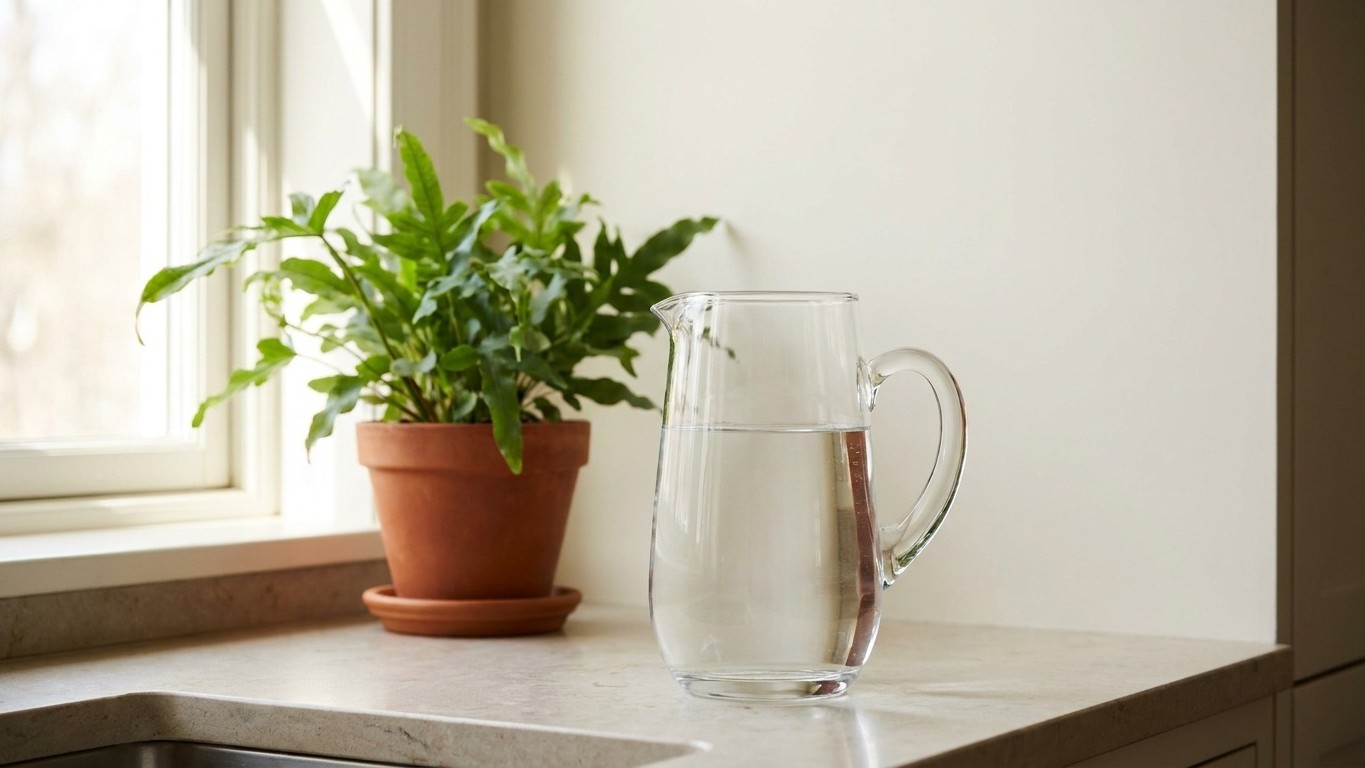
For years, the ritual felt almost meditative: fill a pitcher before bed, leave it on the counter, water the plants in the morning. The logic seemed airtight, letting tap water sit overnight would allow the chlorine to evaporate, making it gentler on plants. Millions of plant owners follow this exact routine. A water engineer I spoke with recently had one thing to say about it: it barely works, and in some cities, it doesn’t work at all.
Key takeaways
- Chlorine does evaporate from standing water, but municipal levels are already too low to harm most plants
- Many cities have switched to chloramine, which doesn’t evaporate no matter how long you leave water sitting
- The overnight trick actually solves a completely different problem that most people never realize
The chlorine myth that refuses to die
Chlorine does evaporate from standing water. That part is true. Leave a glass of tap water out for several hours and the chlorine concentration will drop. But the keyword is concentration. Municipal water supplies in the United States typically contain between 0.2 and 4 parts per million of residual chlorine, levels set by the EPA to keep water safe from bacteria through the distribution system. At those concentrations, your plants were never in serious danger to begin with. The threshold at which chlorine begins to visibly damage sensitive plants sits considerably higher than what comes out of most American faucets.
The bigger problem is what happens when water utilities have modernized their disinfection methods. A growing number of U.S. cities have shifted from chlorine to chloramine — a compound formed by combining chlorine with ammonia. It’s more stable, which is exactly why water treatment engineers love it: it persists longer through the pipes and reduces the formation of certain disinfection byproducts. For plant owners leaving water out overnight, that stability is the catch. Chloramine does not evaporate. Twelve hours on your kitchen counter does essentially nothing to remove it.
How to know what’s actually in your tap water
The fastest way to find out whether your utility uses chlorine or chloramine is to check your annual water quality report, called a Consumer Confidence Report. Every public water system in the U.S. is legally required to publish one, and most post them online. You can also call your water utility directly, they’ll tell you in about thirty seconds. The EPA’s CCR page lets you search by zip code.
If you live in a major metropolitan area, the odds are increasingly good that your water contains chloramine. Chicago, San Francisco, Denver, Philadelphia, these cities and many others have used chloramine as the primary disinfectant for years. New York City still primarily uses chlorine, but the patchwork of systems across the country means the overnight trick is genuinely a coin flip depending on your address.
There’s also the question of fluoride. Leaving water out does nothing to remove fluoride, and while the debate over fluoride’s effect on houseplants has a long history in gardening forums, most research suggests the concentration in tap water is low enough to cause problems only in a handful of highly sensitive species, spider plants, dracaenas, and peace lilies are the most frequently cited. Brown leaf tips on these plants are sometimes fluoride-related, but just as often point to inconsistent watering, low humidity, or root stress.
What actually works better
A standard pitcher-style carbon filter removes chlorine effectively and significantly reduces chloramine, not completely, but enough that most plants will never notice the difference. If you’re already using a filtered pitcher for drinking water, using that same water for your most sensitive houseplants costs you nothing extra. Refrigerator filters with activated carbon work on the same principle.
Collected rainwater remains the gold standard for indoor plants. It’s naturally soft, free of chloramine and fluoride, and slightly acidic, a quality that tropical plants, which dominate most home collections, genuinely appreciate. A simple rain barrel connected to a downspout can collect enough water during a single decent storm to supply indoor plants for weeks. The one caveat: in heavily polluted urban environments, rainwater can carry particulates and trace contaminants, though at levels that rarely affect plant health.
Distilled water is the nuclear option. Completely pure, no minerals, no disinfectants. The problem is that it’s almost too pure. Plants absorb some minerals directly through their roots, and while most of what they need comes from soil and fertilizer, using exclusively distilled water long-term can slowly deplete soil mineral content. It’s a perfectly fine choice for carnivorous plants like sundews and Venus flytraps, which are genuinely sensitive to mineral buildup, but overkill for a pothos or a rubber tree.
The temperature variable that matters more than chlorine
Here’s where leaving water out overnight actually does something useful, just not what most people think. Tap water in winter often comes out of the faucet at 45 to 55 degrees Fahrenheit. Watering a tropical houseplant with cold water causes a mild shock to the root system, not catastrophic, but over many watering cycles, it can contribute to stress responses, slowed growth, and increased susceptibility to root problems. Letting water sit at room temperature overnight genuinely addresses this. The temperature equilibration is real, and for cold-climate households especially, probably worth doing for that reason alone.
The irony is that most plant owners who practice the overnight rest are solving the right problem by accident. Cold water stress is more consistently documented in houseplant care research than low-level chlorine damage. Room-temperature water, delivered consistently, does more for plant health than nearly any water chemistry tweak. The engineer’s advice, in the end, wasn’t to stop letting water sit, it was to understand what you’re actually accomplishing when you do.