
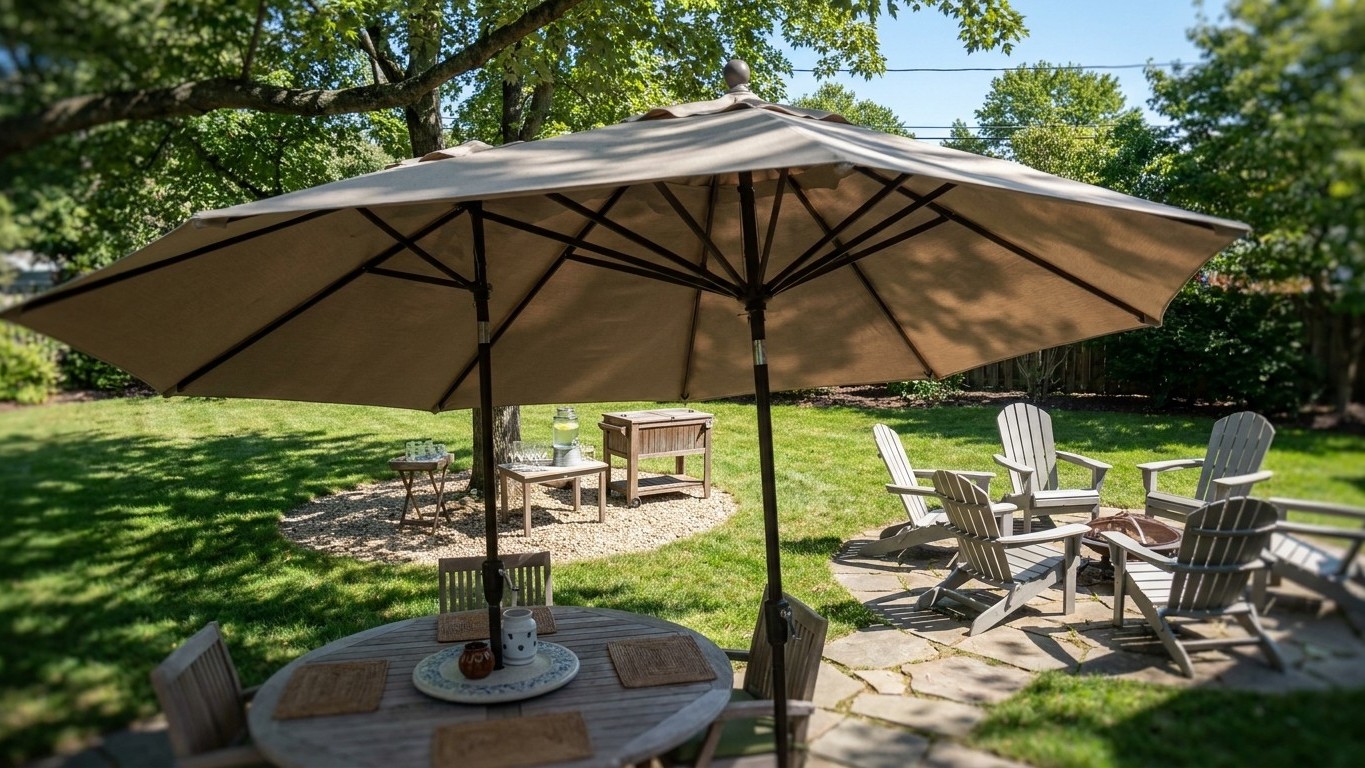
Memorial Day weekend is the unofficial starting gun of outdoor entertaining season, and the backyard is where most Americans mark it. The average cookout hosts somewhere between 15 and 30 people, a number small enough to feel intimate, large enough to overwhelm a poorly organized space. Getting the setup right before the first guest arrives is the difference between a relaxed afternoon and a frantic one.
Key takeaways
- Why placing furniture LAST instead of first changes everything about how guests move through your space
- The exact shade strategy that keeps guests from leaving early—and prevents food safety disasters
- How separating your drink, food, and condiment stations eliminates the bottleneck that ruins every cookout line
Start With Traffic Flow, Not Furniture
The most common mistake when arranging a backyard gathering is placing furniture first and hoping people navigate around it. Flip that logic. Walk the space as a guest would: from the entry point, toward the food, then toward seating, then back to drinks. That natural circuit should never require squeezing past a table or doubling back through a cluster of chairs.
Keep the grill at least eight to ten feet from any seating area, not just for safety, but because a steady stream of smoke in someone’s face ends conversations faster than anything. Position it near a fence line or corner so it becomes a station guests approach, not a hazard they walk around blindly. The cook should have clear sightlines to the rest of the yard, because nobody wants to flip burgers while feeling isolated from the party.
One underrated principle: leave 36 inches of clearance between furniture groupings. That’s the minimum comfortable walking width for an adult carrying a plate and a drink. Tighter than that, and your space starts feeling crowded even when it isn’t.
Building a Shade Plan That Actually Works
A Memorial Day afternoon in late May sits right at the edge of intense UV exposure, peak sun hours typically run from 11 a.m. to 3 p.m., which is exactly when most parties are in full swing. Shade isn’t a luxury at this point; it’s retention. Guests without shade leave early, full stop.
A large market umbrella (9 to 11 feet) covers a round table of six comfortably, but struggles with rectangular setups. For longer tables, two smaller umbrellas are often more effective than one oversized one, and they give you more flexibility to angle coverage as the sun moves. If you’re working with a deck or patio, a retractable awning attached to the house wall solves the whole problem in one move, though the upfront cost is real.
Pop-up canopy tents (the 10×10 variety sold at most hardware stores) are genuinely useful, especially over serving areas. A tent over the buffet table keeps direct sun off food, which matters more than people realize, mayonnaise-based dishes left in direct sun above 75°F enter the food safety danger zone within two hours. Shade over the food station is as much about safety as comfort.
Natural shade from trees, if you have it, is the best option and worth planning around. Trace where the shadows fall around 1 p.m. and position your main seating cluster there. A simple observation on a sunny day the week before saves more rearranging on the day itself than any amount of planning on paper.
Seating Arrangements That Encourage Actual Conversation
The classic row of lawn chairs along a fence is a gathering killer. People sit, stare at the yard, and talk only to whoever happens to be next to them. Clusters work better, groups of four to six chairs arranged so everyone can see everyone else. Think of the configuration you’d find at a hotel lobby seating area, not a movie theater.
Mix seating heights deliberately. A low Adirondack chair next to a standard folding chair creates the kind of casual, layered look that makes a backyard feel curated rather than thrown together. It also gives guests options, which matters for older relatives or anyone with back issues. Keep at least one area with higher seating, bar-height tables with stools work well near the drink station — so guests who want to stand and move don’t disrupt those who are settled.
Ground-level seating (blankets, outdoor floor cushions, low poufs) is excellent for families with young children because it removes the anxiety of kids climbing on furniture. Designate a patch of grass with a large outdoor blanket as the kids’ zone and watch parents visibly relax.
Serving Stations: One Table Is Never Enough
A single folding table trying to handle food, drinks, condiments, plates, and utensils is a bottleneck machine. Separate the functions and the flow opens up immediately. Three dedicated stations handle a party of 20 to 30 without anyone waiting in line.
The drink station should be the most accessible and self-serve from start to finish. A large cooler or two, cups nearby, ice, and mixers arranged so nothing requires asking anyone for anything. Place this station away from the food to split the two biggest traffic magnets in your space, when both are in the same corner, that corner becomes impenetrable. A small side table or rolling cart works well here, and keeps the main food table from disappearing under bottles and cans.
The food table benefits from one-directional traffic: guests enter from one end, move down the line, and exit from the other. Placing the plates at the start and utensils at the end means people aren’t reaching over food to grab a fork. A tip that sounds small but changes everything: label dishes, especially if any contain allergens. A handwritten tent card takes 30 seconds and prevents five awkward conversations.
The condiment station, ketchup, mustard, hot sauce, relish, deserves its own small surface near the grill rather than crowding the buffet table. It’s also the one station where a lazy Susan turntable earns its keep, letting guests rotate through options without the bottle traffic jam that slows every cookout line.
One last detail worth building in: a designated trash and recycling station, clearly marked, positioned mid-yard rather than tucked in a corner. Guests who can’t easily find a trash can leave cups and plates on every available surface, and suddenly your serving stations are half covered before the main course hits the grill.