
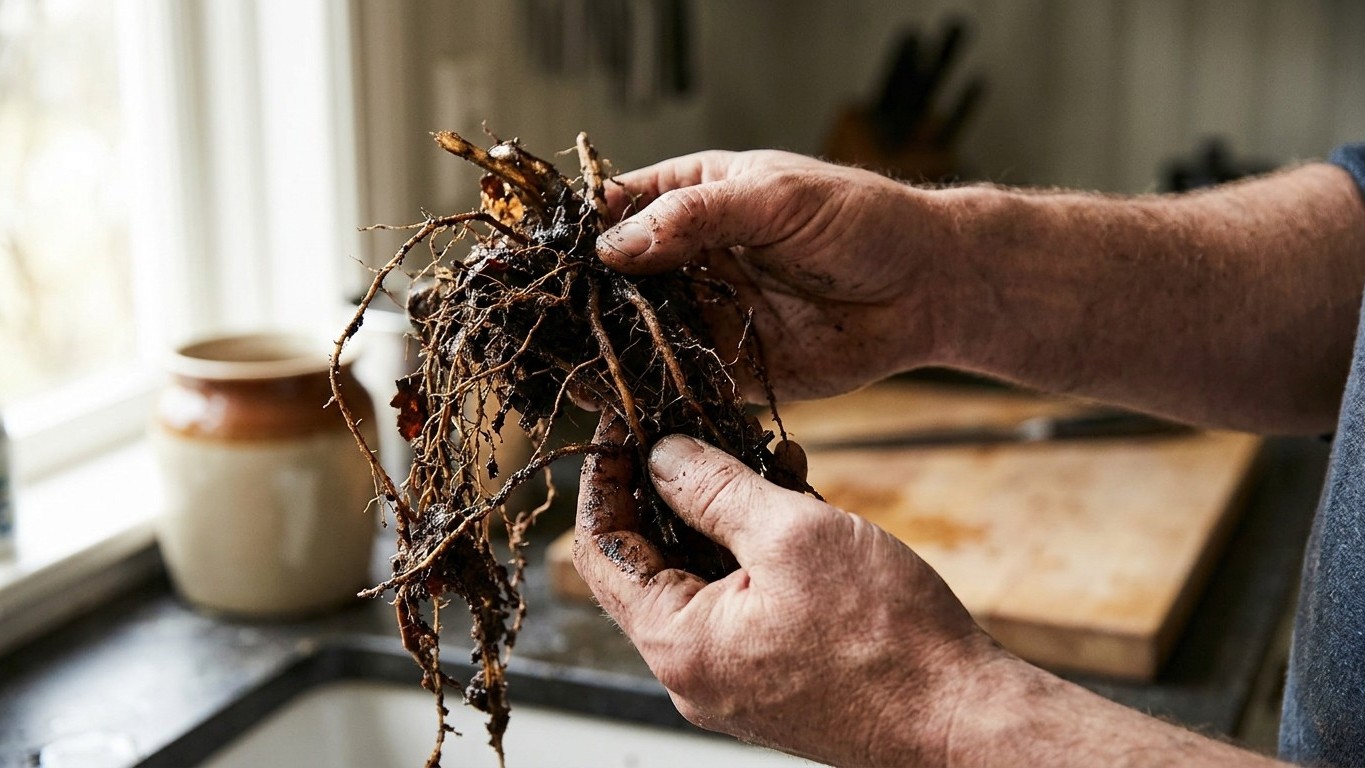
Every evening for a full year, I showed up with the watering can. Basil, thyme, rosemary, oregano, all sitting in their terracotta pots on the kitchen windowsill, looking green enough. But something was off. The pesto was flat. The roasted chicken smelled like nothing. The thyme barely registered. When I finally pulled the plants out to repot them, the roots told the whole story: a brown, matted, mushy tangle barely an inch deep. A year of daily care had quietly strangled the very thing I was trying to grow.
Key takeaways
- Daily watering creates waterlogged roots that can’t absorb nutrients, even while the leaves look perfectly green
- Mediterranean herbs produce essential oils as a stress response—drought actually intensifies flavor by 30%
- Evening watering traps moisture overnight, breeding fungal disease while morning watering dries leaves and prevents rot
Roots That Drown Instead of Dig
Waterlogged soil pushes out all the oxygen, and without oxygen, roots literally can’t function, they lose the ability to absorb water, and the plant wilts even while swimming in it. This is the central paradox of overwatered herbs, and it fools almost every home gardener at least once. The plant looks like it needs more attention. So you give it more water. Which makes things worse.
One of the first things overwatering will do to a plant is suffocate its roots. Unlike the above-ground parts of a plant, the roots actually breathe in oxygen and out carbon dioxide, because underground they have no sun to assist with photosynthesis and must break down sugars made by the rest of the plant for energy to grow. Once that oxygen supply is cut off, the roots stop absorbing nutrients. The leaves stay technically alive, green, upright, but they’re running on fumes. Healthy roots are firm, white, or tan. Rotted roots are black, brown, or gray, mushy to the touch, and smell unpleasant. Mine were the second kind, almost entirely.
Symptoms of overwatering include wilted leaves when the soil is wet and foliage becoming discolored to yellow or black. Leaves may also fall off the plant or display blisters and lesions, and mildew can develop on the plant or on the ground. Growth may be stunted, and in severe cases, plant stems and roots can grow soft and become easy to break. If that sounds like a plant that’s slowly falling apart while being generously cared for, it is. That’s exactly the trap.
Why Stressed Herbs Taste Better
The flavor of an herb isn’t magic. It’s chemistry, specifically, the concentration of essential oils packed into the leaves and stems. And here’s the counterintuitive part: those oils are produced as a stress response. When subjected to various stress conditions, rosemary intensifies the production of essential oils as a defensive mechanism, as occurs when it is subjected to drought stress. A plant that’s fighting for moisture makes more of the compounds you’re cooking with. A plant drowning in water has no reason to bother.
As with all plants, a thorough watering with a period of drying is preferred over frequent sprinkling. Virginia Tech’s herb gardening guidance puts it plainly. The logic holds across almost every culinary herb, but it’s especially true for the Mediterranean varieties most people grow at home. Mediterranean herbs are drought resistant as they are specially adapted to the climate of Southern European countries such as Spain, Italy, and Greece, where they experience infrequent rainfall, full sun, and grow in sandy well-draining soils. Transplant that plant to a pot watered every single evening in a kitchen, and you’ve moved it from a rocky hillside in Tuscany to a perpetually flooded lowland. The flavor reflects that.
Dry soil actually concentrates the aromatic oils in thyme, and it thrives in rocky conditions. Same logic applies to oregano, sage, and lavender. These herbs often produce more concentrated essential oils with less watering, resulting in better fragrance and flavor. Less, in this case, genuinely means more.
A published field study out of Sicily confirmed it with data: essential oil yield increased by 30% in plants subjected to drought stress conditions, and drought stress altered the aromatic profile of the essential oil, resulting in differing percentages of key compounds between stressed and unstressed plants. Thirty percent more flavor, from deliberately watering less. That’s not negligible.
The Evening Problem Nobody Mentions
Watering every day was mistake number one. Watering every evening was mistake number two, and they compounded each other badly. Consistently wet leaves overnight increase fungal disease risk. Herbs sitting in damp soil through the night, without the daytime warmth to help the moisture move through the root zone — are prime candidates for the mildew and fungal rot that quietly degrade both the plant’s health and its flavor over weeks.
Watering herbs is best done in the early morning hours. If you water when the temperature is cooler, the water that you apply will efficiently reach the root system of your plants. This schedule of watering will also allow the gradual warming to dry the leaves of your herbs, preventing excess water from causing mildew or disease. Morning watering isn’t a minor preference, it changes what happens to both the soil and the foliage across the entire day. Evening watering leaves moisture trapped overnight, with nowhere to go.
There’s also the question of when to harvest for maximum flavor. Harvest herbs in the morning after dew has dried but before the heat of the day, this is when essential oils, responsible for flavor and aroma, are at their highest concentration. Which means that not only should you be watering in the morning, you should also be snipping in the morning. Evening harvesting, grabbing a handful of thyme before dinner, compounds the flavor loss that’s already happening underground.
How to Fix It Without Starting Over
The first step is honest assessment. Gently remove the plant from its pot to inspect the roots, being careful when handling the plant, especially if it’s already fragile. Healthy roots will be white or tan and firm. Rotten roots will be brown, black, mushy, and may give off a bad smell. If most of what you see is brown and soft, the plant can still be saved, but it needs immediate action. Trim all damaged roots with sterilized scissors, cutting back to firm, healthy tissue, then repot in fresh, well-draining potting mix — ideally one blended with perlite or coarse sand for improved aeration.
One of the most common causes of overwatering is sticking to a rigid watering schedule. Replace the schedule with a physical check: stick your finger an inch or two into the soil where plants are growing. If soil clings to your skin, it’s still wet and watering is not needed, but if it’s dry, it’s time to water your plants. This alone will prevent most of the damage. The soil is a better guide than the calendar.
For the Mediterranean herbs specifically, rosemary, thyme, oregano, sage, the target frequency is much lower than most people assume. Even at the hottest times of year, do not water Mediterranean herbs more than once a week even if they are drooping in the heat, as they are very sensitive to root rot from overwatering. They droop dramatically in afternoon sun. They look like they’re dying. Then the temperature drops, and they’re fine. It’s performance, not distress. Watering your plant deeply and less frequently is a more effective technique than frequent, shallow watering. Deep, infrequent watering trains roots to grow downward in search of moisture, which is exactly what builds the strong root system that produces flavorful, resilient plants.
One detail that rarely comes up in basic herb care guides: over-fertilizing herb plants can lower the plant’s essential oil content, and highly fertile soil tends to produce excessive amounts of foliage that is poor in flavor. Rich soil and frequent water both push the same result, fast, lush, tasteless growth. The plants that end up on a plate in a good Italian kitchen were probably grown in conditions that would alarm a well-meaning home gardener.
Sources : gardeningknowhow.com | plantfoodathome.com