
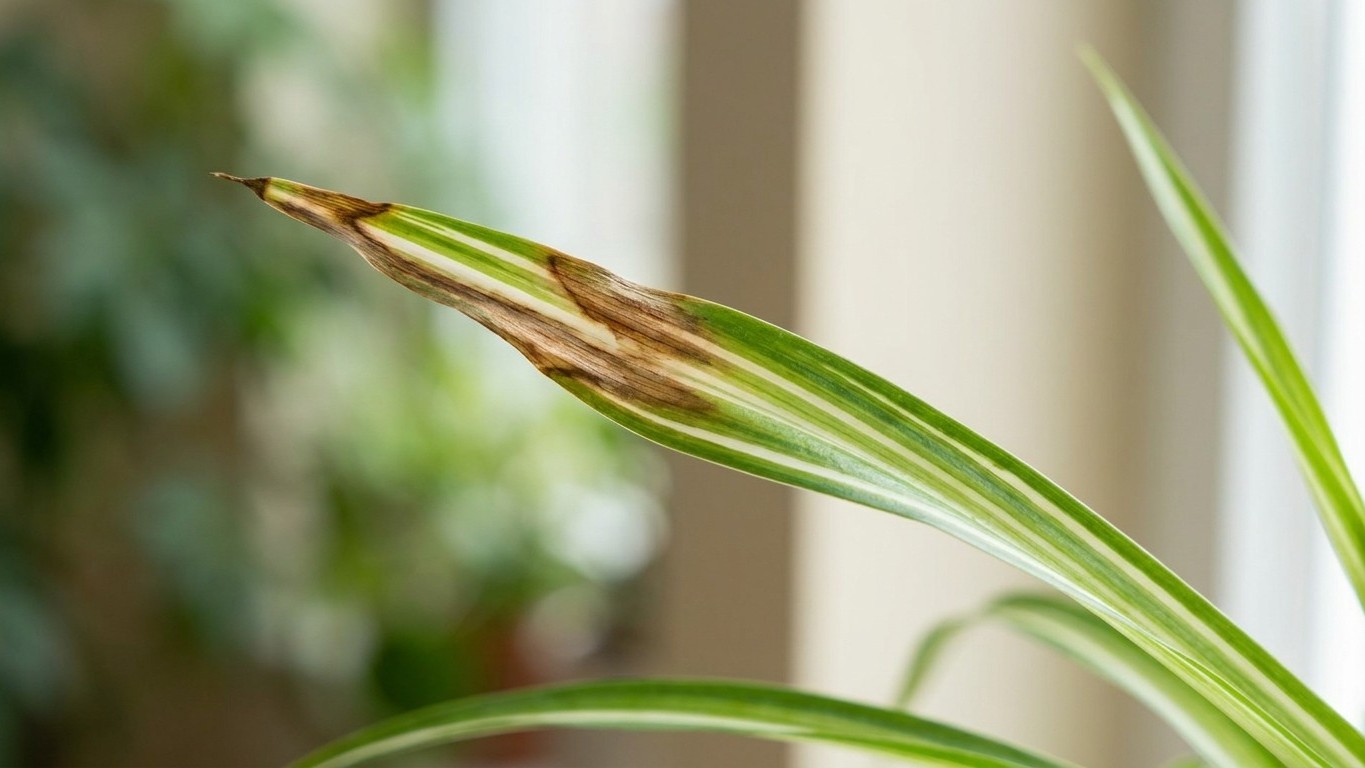
Letting tap water sit overnight is one of the most widely repeated tips in the Houseplant community. The logic sounds solid: leaving water uncovered for 24 hours allows chlorine to off-gas, making it gentler on your plants. Spider plants, notorious for developing crispy brown tips, seem like the perfect candidate for this fix. The problem is, for most tap water in the United States, this advice is decades out of date, and following it may not change a thing about your spider plant’s appearance.
Key takeaways
- Most U.S. water utilities switched from chlorine to chloramine decades ago, and chloramine doesn’t evaporate
- Fluoride, not chlorine, is the chemical that causes brown tips on spider plants, and it accumulates in the soil over time
- Distilled water, rainwater, and reverse osmosis filters genuinely reduce brown tips—but standard activated carbon filters don’t remove fluoride
Why the “let it sit” method mostly doesn’t work anymore
Until the 1990s, most municipal water systems used free chlorine as their primary disinfectant. Free chlorine does evaporate when exposed to air and light, so yes, letting water sit overnight genuinely helped back then. But the majority of U.S. water utilities have since switched to chloramine, a compound made by combining chlorine with ammonia. Chloramine does not evaporate. You could leave your watering can on the counter for a week and the chloramine content would barely budge. The EPA acknowledges chloramine’s stability explicitly, it’s actually the reason utilities prefer it over free chlorine.
To find out which disinfectant your water utility uses, check your annual Consumer Confidence Report (CCR), which every public water system is required to mail or make available online each year. The switch to chloramine is far more common in cities than in rural areas, but it’s worth verifying rather than assuming.
The real culprit behind brown tips on spider plants
Here’s where most online guides get it wrong: fluoride, not chlorine or chloramine, is the chemical most consistently linked to brown tip damage in spider plants. Spider plants (Chlorophytum comosum) are classified as fluoride-sensitive, alongside peace lilies and dracaenas. Fluoride accumulates in leaf tissue over time and causes a condition called fluoride toxicity, which shows up as brown, scorched-looking tips, starting at the very end of the leaf and working inward.
The troubling part? Fluoride does not evaporate. Sitting tap water overnight removes nothing from the fluoride content. The concentration in U.S. municipal water is typically maintained at around 0.7 mg/L, a level set for dental health benefits. For a spider plant watered twice a week, year after year, that fluoride builds up steadily in the soil as the water evaporates and the mineral stays behind.
Soil pH compounds the issue. Fluoride becomes more available to plants in acidic conditions. Many standard potting mixes start neutral but acidify over time, especially in containers where fertilizer salts accumulate. A pot that’s never been flushed or refreshed is essentially concentrating the problem with every watering.
What actually reduces brown tips
Switching to distilled water or rainwater makes a measurable difference for fluoride-sensitive plants, this is well-documented in horticultural research and regularly confirmed by growers. Distilled water contains virtually no dissolved minerals, including fluoride. Rainwater is naturally soft and fluoride-free, though collecting it requires some setup depending on where you live.
If buying distilled water for every watering feels excessive (and for a large collection, it genuinely is), a targeted approach works better. Use distilled or filtered water for your most sensitive plants, spider plants, dracaenas, peace lilies, and continue tap water for the rest. A reverse osmosis filter removes fluoride effectively, which a standard activated carbon filter (like the Brita-style pitchers most people have at home) does not. Activated carbon filters are good at improving taste and removing some chlorine compounds, but fluoride passes right through them.
Flushing the soil periodically helps too. Running a generous amount of water through the pot, enough to drain freely from the bottom for several minutes, leaches accumulated salts and fluoride out of the growing medium. Doing this every few months resets the mineral buildup that’s been concentrating since the last repotting. It’s not glamorous advice, but it’s more effective than adjusting your watering schedule.
Repotting into fresh soil every one to two years removes the accumulated mineral deposits entirely. Using a lime-free, slightly alkaline potting mix (or adding a small amount of dolomite lime to a standard mix) can help buffer the soil pH upward, which reduces fluoride uptake by the roots.
The tips that are already brown won’t recover
One thing worth setting expectations on: once the tip of a spider plant leaf has turned brown, that tissue is dead. No change in watering practice will reverse existing damage. The goal of switching to better water is to stop new browning from progressing, not to restore leaves that are already affected. If the cosmetics bother you, trimming the brown tips with clean scissors, cutting at a slight angle to mimic the natural leaf shape, is a reasonable option. New growth coming in after the water adjustment should show less browning over the following months.
Overwatering and low humidity are also contributing factors that often get overlooked in the rush to blame tap water chemistry. Spider plants prefer to dry out slightly between waterings, and they struggle in environments where indoor humidity consistently drops below 40%, which is common in centrally heated homes during winter. A plant dealing with both fluoride buildup and chronically soggy roots is fighting on two fronts.
One detail that rarely comes up in houseplant guides: fluoride sensitivity in spider plants is partly genetic. Variegated cultivars, the classic green-and-white striped types most people grow, tend to show more tip burn than the all-green species form. If you’ve tried every water adjustment and still see browning, the variety itself may simply be more reactive, and some degree of tip discoloration may be the baseline for that particular plant in an indoor environment.