
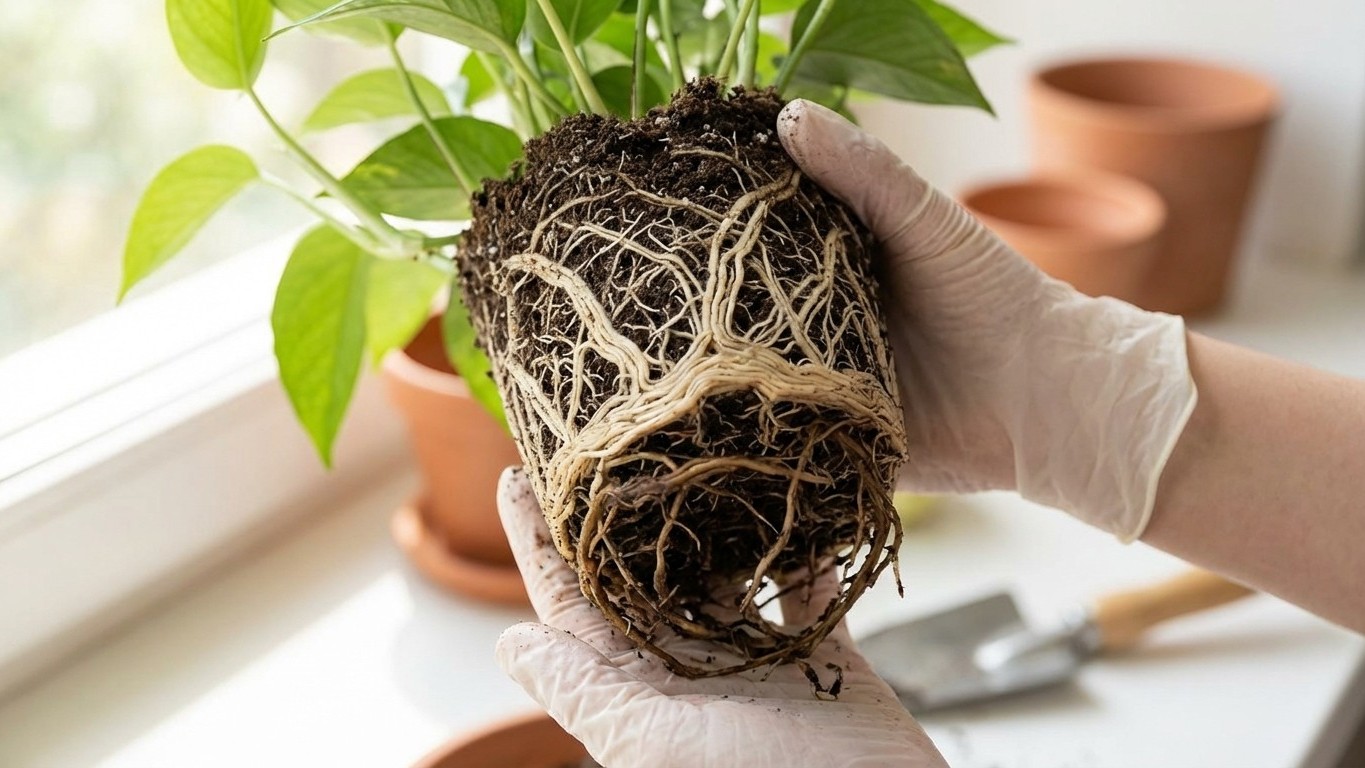
Coffee grounds in Houseplant soil sounds like a Pinterest hack that belongs in the same category as putting banana peels on your roses or watering with club soda. Charming, slightly eccentric, probably harmless. After twelve months of applying used espresso grounds directly to the top of my potted plants, the results were anything but neutral, and one particular root system told a story I wasn’t expecting.
The experiment started with simple logic: coffee grounds are rich in nitrogen, and nitrogen feeds leafy growth. Every gardening forum you land on will confirm this. What those forums rarely discuss is the difference between composted grounds and fresh, direct application, and that distinction turned out to matter enormously.
Key takeaways
- Lush new growth masked a silent problem developing beneath the soil surface
- Coffee grounds compact over time, creating an anaerobic layer that traps water and suffocates roots
- The plant looked thriving while 40-60% of its root system was already compromised
The First Few Months: Misleading Success
Through spring and into early summer, things looked genuinely promising. My pothos and monstera were pushing out new leaves at a pace I hadn’t seen before. The dark, crumbly grounds blended into the topsoil visually, and with each watering, nutrients were slowly leaching down. I was adding roughly a tablespoon of grounds per six-inch pot every two weeks, which felt conservative. The foliage was dense, vibrantly green, and I was ready to declare victory by July.
Then something shifted. The soil in two of my pots started staying wet for longer than it should have. A healthy potting mix drains and dries within a couple of days in moderate light. These pots were still damp four or five days later. Coffee grounds, as it turns out, have a very fine particle structure. Over time, they compact and create a layer that water struggles to penetrate evenly, and drainage slows dramatically. This is one of those processes that’s invisible until the damage is already accumulating underground.
What the Roots Actually Looked Like After a Year
When I finally unpotted two of the plants for inspection at the twelve-month mark, the difference between them was striking. The monstera, which had been in a terracotta pot with excellent base drainage and received a bit more airflow, had a reasonably healthy root ball. There were some brown tips, but the core was white and firm. A decent root system, if a little stressed.
The pothos in a ceramic glazed pot with a single drainage hole was a different picture. The lower third of the root ball was soft and brown, classic early-stage root rot. The compacted grounds had essentially created an anaerobic layer at mid-depth. Water pooled there, oxygen couldn’t reach the roots, and the conditions that fungal pathogens love most took hold quietly over several months. The plant had been sending out new leaves the whole time, cheerfully signaling health while slowly suffocating below the surface.
Root rot doesn’t announce itself. That’s its particular cruelty. By the time you see yellowing leaves or a plant that suddenly stops responding to water, the root system is often 40 to 60 percent compromised. My pothos survived after I trimmed the affected roots and repotted it, but I’d set the plant back by a full growing season.
Why the Science Doesn’t Quite Match the Hype
Coffee grounds do contain nitrogen, phosphorus, and potassium, the three nutrients at the heart of most plant fertilizers. Fresh grounds are also mildly acidic, sitting around pH 6.0 to 6.5 depending on the brew method, which is actually not dramatically acidic, despite what many sources claim. The acidity alone won’t transform your soil chemistry in a meaningful way for most common houseplants.
The bigger issue is the caffeine. Research from multiple university extension programs has documented that caffeine can inhibit seed germination and suppress the growth of competing plants, a natural defense mechanism that served the coffee plant well in the wild. Applied repeatedly to established root systems, it doesn’t kill plants outright, but it can interfere with the beneficial microbial communities that healthy soil depends on. Mycorrhizal fungi, in particular, seem to be sensitive to repeated caffeine exposure. These fungi form symbiotic relationships with plant roots, dramatically extending their effective reach. Disrupting that network has Long-Term consequences that no amount of nitrogen can compensate for.
The other thing worth knowing: fresh grounds from a daily espresso routine are quite dense and wet. They mat together almost immediately on the soil surface, creating a physical barrier that can repel water rather than absorbing it. Dry, aged grounds behave better, but by the time you’ve collected enough to use, they’ve often started to mold.
What Actually Works (And Still Uses Your Coffee)
Composting is the path that makes sense here. When coffee grounds go through a proper compost process, the caffeine breaks down, the particle structure loosens, and the nitrogen becomes bioavailable in a form soil microbes can work with effectively. The resulting compost, mixed into potting soil at around 10 to 15 percent by volume, delivers the nutritional benefits without the drainage and chemical downsides.
If you don’t compost, a heavily diluted coffee water solution (cold brew dregs diluted to a pale tan color) applied once a month gives acid-loving plants like gardenias, African violets, or ferns a mild boost without the compaction risk. The key word there is diluted, you want a color closer to weak tea than actual coffee.
For the plants that genuinely thrive in acidic conditions, occasional top-dressing with a small amount of grounds (and I mean small, a teaspoon, not a tablespoon) mixed with coarse perlite before application reduces the compaction problem significantly. The perlite maintains air pockets and prevents that suffocating layer from forming.
The real lesson from twelve months of this experiment wasn’t that coffee grounds are bad for plants. The lesson was about the gap between an ingredient’s properties and what actually happens when you apply it repeatedly in a closed, contained system like a houseplant pot. A garden bed is forgiving; it has drainage, microorganism diversity, and room to breathe. A six-inch ceramic pot is not a garden bed. And perhaps the more interesting question is how many other “natural” hacks we apply to our indoor plants while misreading the signals our soil is quietly trying to send us.