
Three days. That’s the average return window for drain flies after a bleach treatment, according to pest control data pulled from real infestations. Pour a full bottle down the sink, watch the tiny moth-like insects vanish, and celebrate too soon: they’re not gone, they’re just regrouping in a place bleach never actually reached.
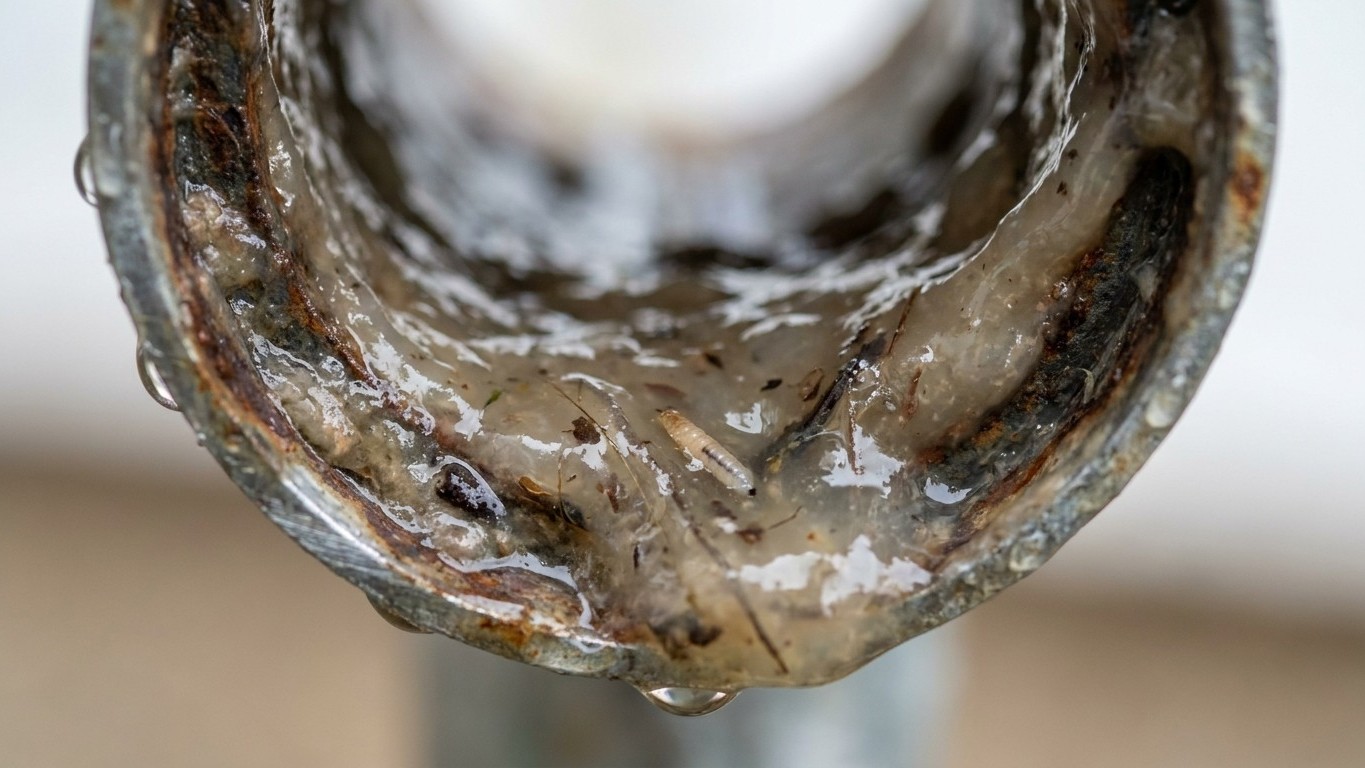
Here’s what’s really happening in that pipe. Bleach does not dissolve biofilm, which is a structured matrix of bacteria, polysaccharides, and lipids that has adhered to the pipe wall. That gelatinous coating isn’t dirt in the way a smudge on a countertop is dirt. It’s a living, self-protecting film, and it laughs at chemicals designed to disinfect flat surfaces.
Key takeaways
- Bleach flows too fast to kill drain fly larvae buried deep in pipe biofilm
- Female flies lay 30-100 eggs that hatch in 48 hours—perfectly timed to your three-day defeat
- The gelatinous coating in your pipes is a living matrix that laughs at surface disinfectants
Why Bleach Loses This Fight Every Time
The physics alone should have been the tip-off. The main problem with using bleach for drain flies is its inability to stay in contact with the larvae long enough to be effective. Bleach is a thin liquid that quickly flows down your pipes, barely touching the areas where drain fly larvae hide. Think of it like spraying a garden hose at a barnacle-covered hull. The water moves, the barnacle stays.
Even the bleach that does make contact can’t do much damage where it matters. Bleach kills surface bacteria but rinses out before penetrating the biofilm matrix. The larvae, meanwhile, are tucked well below that surface layer. The larvae are the key stage. They are legless, translucent, and roughly 4 to 10 millimeters long. They live inside the biofilm, feeding on the bacteria, fungi, and organic sediment that make up its structure. Bleach passing overhead doesn’t reach a creature that’s essentially burrowed into its own food supply.
There’s also a numbers problem working against you. Female drain flies lay 30 to 100 eggs at a time in irregular masses directly on the biofilm surface inside drain pipes. The eggs are pale, elongated, and nearly invisible to the naked eye. And they hatch fast. Eggs hatch in 32 to 48 hours under warm conditions. Kill every visible adult flying around your bathroom mirror, and a fresh batch is already incubating in the trap below, timed almost exactly to that three-day comeback.
What’s Actually Coating Your Pipes
The gunk itself is more mundane than it sounds, which is oddly reassuring. It’s the layer of organic buildup that coats the inside of pipes: a mix of hair, soap residue, skin cells, grease, and bacteria that forms a slimy biofilm. Every shower, every dish rinsed, every hand washed contributes a little more. It’s not a sign of a dirty house, it’s a sign of a used one.
Drains that sit idle are, counterintuitively, the worst offenders. A drain that goes unused for a few weeks is particularly vulnerable. The water in the trap may still be there, but the organic film on the pipe walls stays moist and undisturbed, giving larvae a safe, food-rich environment. This is why drain flies often appear in guest bathrooms, vacation homes, or basement utility sinks that don’t see regular water flow. The guest bathroom nobody uses between visits from the in-laws? That’s basically a fly nursery with a “do not disturb” sign.
The full life cycle explains the persistence better than any bottle of cleaner ever could. Drain flies have a complete life cycle consisting of egg, larval, pupal, and adult stages. They breed in the sludgy biofilm and standing water in drains, filters, and sewers. According to Virginia Cooperative Extension, adults usually emerge in a week or two, although development may take longer during the colder months of the year. Adult drain flies do not bite but can be annoying, pesky flies in the house. Drain flies do not cause any damage to indoor plumbing. Annoying, yes. Dangerous to your plumbing, no. That distinction matters, because the “fix” shouldn’t cause more damage than the flies themselves.
What Actually Breaks the Cycle
Mechanical disruption comes first, and it’s the step most people skip because it’s the least satisfying. This requires mechanical action to break up the biofilm and fully dislodge the larvae. Using a flexible drain brush or a plumber’s snake to scrub the walls of the pipe is necessary to scrape away the gelatinous material. No spray bottle replaces physical scrubbing here, the same way no air freshener replaces actually taking out the trash.
After the scrubbing, enzymatic or microbial cleaners finish the job chemically. The most recommended solution is an enzymatic or microbial drain cleaner. These products contain live bacteria and enzymes specifically formulated to digest and break down the fats, oils, grease, and organic matter that constitute the drain fly habitat. The cleaner removes the flies’ food source and breeding ground. Unlike bleach, these products are designed to sit and work slowly rather than rinse away. These biological cleaners are often formulated as thick gels that cling to the vertical pipe walls, allowing extended contact time with the biofilm. For best results, apply them after the last use of the drain at night and allow them to sit undisturbed for several hours.
One more thing worth flagging, and it’s not a small detail: never combine bleach with other drain products in an attempt to “boost” the effect. This mixture is extremely dangerous. Combining these chemicals may create chlorine gas, which is potentially fatal if inhaled. If you’re on a septic system, there’s an added reason to leave the bleach bottle in the cabinet. Pouring full-strength bleach down household drains can permanently damage septic systems.
If you want to confirm which drain is actually the source before tearing into anything, there’s a low-tech trick professionals still recommend: place a strip of clear packing tape or adhesive tape over a suspect drain at night, sticky side down, leaving enough gap for air to flow. Adults emerging from the drain overnight will get stuck to the tape. Check it in the morning. It won’t win any design awards, but it’ll tell you exactly where to point that pipe brush, instead of dumping chemicals down every drain in the house and hoping.
Sources : thepestcontrolguide.com | plumbingsniper.com